
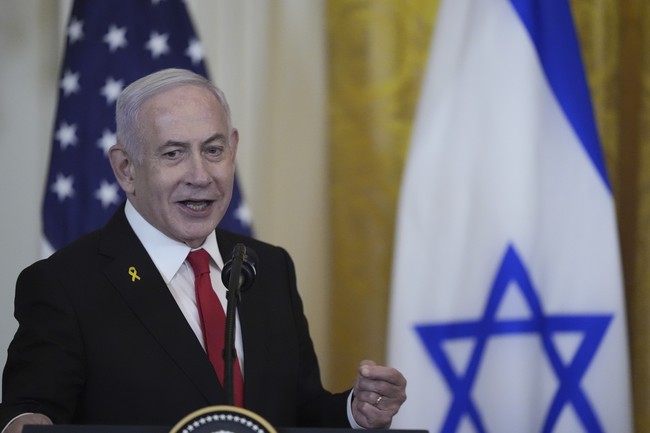
Netanyahu responded to Iranian disinformation by posting a casual video of himself in a Jerusalem-area café, proving he was alive and mocking the rumor mill. The clip was a deliberate, public rebuttal after Iranian state media and social accounts pushed claims that he had been killed or badly wounded amid the February 28 strikes. Officials and independent reviewers debunked AI and six-finger theories, while Netanyahu used the moment to reassure Israelis and underline the need for vigilance as the conflict with Iran escalates. Tehran’s propaganda campaign and threats in response only highlight how information warfare is now part of kinetic confrontation.
After Iran Tries to Claim Netanyahu Is Dead, He Informs Them Over Coffee That He’s Very Much Alive
Benjamin Netanyahu chose a small act of normalcy to answer big lies: a short, casual video clip of him ordering coffee in a Jerusalem-area café. The timing was no accident; Tehran’s media had spent days floating a story that he was dead or gravely wounded after the joint U.S.-Israel strikes began on February 28. For Republicans who value decisive messaging, the clip was a clear, effective rebuttal: show up, be visible, and deny the narrative at the source.
The original death rumor came from Tasnim News Agency, an outlet tied to Iran’s Revolutionary Guards, which seized on gaps in Netanyahu’s public appearances and text-only statements to build a false narrative. Social media amplified that claim, with viral posts alleging the prime minister’s March 12 press conference was AI-manipulated because he supposedly showed six fingers. Independent fact-checkers examined the footage and found no evidence of extra digits, and frame-by-frame review showed five fingers on each hand.
Netanyahu’s office cut through the noise with a blunt statement: “This is fake news; the Prime Minister is fine.” The café video reinforced that message and added a touch of wordplay that landed in Hebrew, where the word “met” literally means “dead” but can also convey being crazy about something. He quipped that he was “met on coffee” and “met on his nation,” using the language to turn the rumor into a joke while reminding people he was active and aware.
He then held up both hands to the camera, showing ten fingers and directly addressing the claims of AI tampering. The location and timing of the video were corroborated by independent verification that matched the cafe’s interior and social posts from that day, confirming the clip was genuine. That transparency matters; in an environment where Iran mixes fact and fiction to shape perceptions, visible proof from leaders is vital.
Netanyahu also used the short appearance to urge citizens to remain close to shelters even as normal activity resumes in small ways. “Your strength,” he said, “gives me, the government, the IDF, and the Mossad strength.” Those words were both rallying cry and practical counsel, delivered in a moment meant to calm and mobilize rather than to flaunt bravado.
The broader context is alarming: Tehran’s information operations have been active since the February 28 strikes, which reportedly inflicted heavy damage on Iran’s leadership and military infrastructure. In the weeks since, Iran has launched repeated missile and drone attacks against Israeli territory, U.S. bases in the region, and Gulf states. Propaganda and threats have become extensions of kinetic attacks, aimed at sowing confusion and weakening resolve.
Iran’s latest rhetoric included a direct threat after the café video, with Revolutionary Guards spokespeople saying that if Netanyahu is alive, they “will continue to pursue and kill him with full force.” That kind of statement is meant to intimidate, but it also exposes Tehran’s strategic reliance on fear as a tool. For those watching from a Republican perspective, it underscores the need to hold Iran accountable for both its military strikes and its information warfare.
Throughout this conflict, Israel’s wartime security rules have kept public appearances limited, so Netanyahu’s low profile was expected and prudent from a security standpoint. Even so, the deliberate choice to post a short, humanizing video worked: it denied Iran a propaganda victory, reassured citizens, and sent a message to allies that leadership remains intact. In an era where digital manipulation and real-world violence collide, showing is often the best way to counter lies.


Add comment