
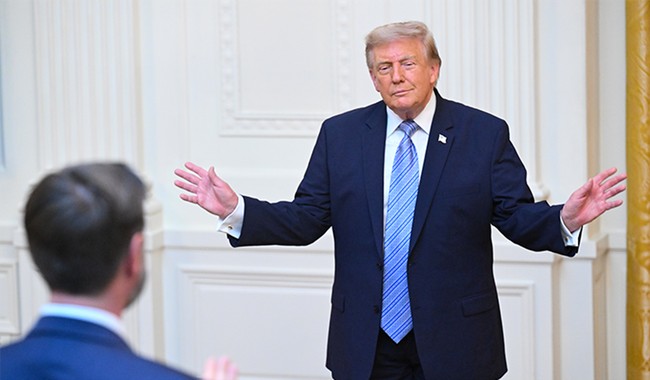
President Trump celebrated after Abdul El-Sayed, backed by the Democratic Socialists of America, narrowly upset Rep. Haley Stevens in Michigan’s Democratic Senate primary, setting up a high-profile November matchup with former Rep. Mike Rogers in a state Trump carried in 2024.
El-Sayed edged Stevens by roughly one percentage point, about 48.5 percent to 47.5 percent, with fewer than 15,000 votes separating them out of more than 1.5 million cast. The result surprised observers because Stevens had been the establishment favorite and benefitted from a massive spending effort. That money did not translate into victory, and the tight margin highlights a volatile electorate in a key battleground state.
Trump reacted quickly and publicly to the outcome, calling it a boon for Republicans and framing El-Sayed as a liability for Democrats heading into November. He pointed to El-Sayed’s policy agenda and endorsements from the left as clear material for the GOP to use on the campaign trail. The tone of Trump’s message left no doubt about how Republicans plan to position the race.
https://x.com/RapidResponse47/status/2085006431229538568
Great news for the Republican Party. El-Sayed, a Communist loser who hates Jews and Israel, is the projected winner in his race with the Socialist. As usual, the Polls were way off on this one. She was not expected to do nearly as well as she did. Now, the Democrats’ crazy policies will only get worse!
El-Sayed’s platform includes Medicare for All, a billionaire wealth tax, abolishing the Senate filibuster, and ending unconditional American military aid to Israel. He has accused Israel of committing genocide in Gaza, a stance that has sharpened divisions within his own party and raised immediate questions about how Democrats will handle the general election. Major progressive figures have publicly backed him, signaling a clear ideological alignment with the party’s left wing.
Establishment Democrats who spent the primary warning voters about El-Sayed now face the task of rallying behind him, a familiar post-primary dynamic that has taken on extra significance here. Several prominent Democrats signaled they would support the ticket even while distancing themselves from specific positions he’s taken. That posture speaks to the party’s broader strategic calculus: unify for November while hoping controversial spots fade under general election scrutiny.
Rep. Debbie Dingell exemplified that tension, saying she would endorse the full Democratic ticket without endorsing every view El-Sayed has expressed. Haley Stevens, after a costly campaign, offered a gracious concession and pledged to back the nominee. Those public reconciliations matter, but they do not erase the clear policy differences voters will see highlighted by Republicans.
On the Republican side, Mike Rogers will head into the general election with Trump’s endorsement and a straightforward playbook focused on El-Sayed’s record and proposals. Rogers can frame the race around taxes, radical health care changes, abolishing filibuster rules, and foreign policy positions that many Michigan voters may find extreme. Michigan’s status as a swing state makes each messaging choice crucial over the next three months.
For conservatives and Trump allies, the result is viewed as a political opening: pitch El-Sayed’s agenda as out of step with average voters and tie the Democratic ticket to an activist left. Those arguments will emphasize concrete policy contrasts rather than abstract labels, aiming to show how proposals like Medicare for All and wealth taxes would affect the state’s economy and services. Campaign ads and debates will likely put substance ahead of slogans.
Progressives see a different upside: this is evidence that insurgent candidates can win statewide in competitive states, even where party machinery and cash favored a more conventional nominee. A DSA-backed victory in Michigan would embolden similar campaigns elsewhere and could reshape primary battles in blue and purple states. The organization’s strategy relies on proving electability where it matters most.
Practically, Republicans have a window to define El-Sayed for general election voters, and they will target his record and statements on Israel and domestic policy. The campaign will test whether Michigan voters reject those positions or respond to local arguments about pocketbook issues and national security. Either way, the contest will be a high-stakes referendum on which direction Democrats choose to take their party in battleground states.
The coming weeks will reveal whether El-Sayed moderates his message to appeal to a broader electorate or doubles down on progressive priorities and relies on turnout dynamics. Voters in Michigan will weigh those choices against their experience under current economic conditions and their views on foreign policy. The final outcome will carry implications beyond one seat, influencing national narratives about party identity and electability heading into future cycles.


Add comment