
Checklist: announce the Trump–Iran peace deal, quote Trump’s Truth Social post verbatim, include Pakistan’s statement and the Editor’s Note exactly, describe the reported terms and reactions, and note the planned signing ceremony in Switzerland.
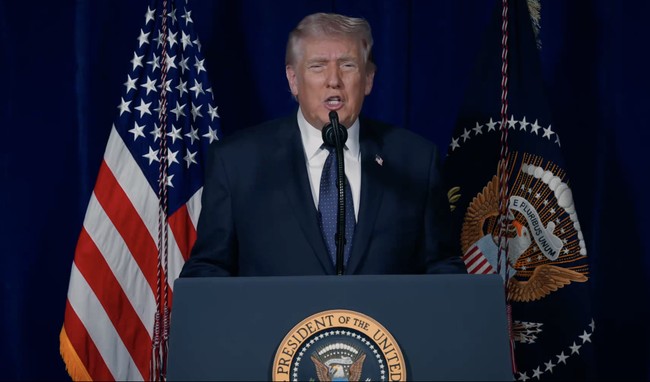
President Donald Trump announced Sunday evening on Truth Social that a peace deal has been reached with Iran, setting off immediate global attention and political debate. The statement signaled a rapid shift in a long-running regional standoff and was framed as a definitive end to hostilities by several parties. The announcement revived questions about how this agreement was brokered and what it means for U.S. naval posture and regional allies. Republican supporters quickly hailed the move as a bold diplomatic victory that restores American leverage and security.
https://x.com/WhiteHouse/status/2066272391525802417
The core of the announcement came in a short, forceful post that laid out immediate actions and a celebratory tone from the White House. The post reads:
The Deal with the Islamic Republic of Iran is now complete. Congratulations to all! I hereby fully authorize the toll free opening of the Strait of Hormuz, and, simultaneously herewith, authorize the immediate removal of the United States Naval blockade. Ships of the World, start your engines. Let the oil flow! President DONALD J. TRUMP
This language signals a dramatic operational change, including the end of a naval blockade and a reopening of a crucial oil chokepoint. For many conservatives, the move underscores a transactional approach to peace that leverages American strength to secure tangible benefits. Critics warn that rapid de-escalation risks leaving allies exposed or accepting concessions without sufficient verification mechanisms.
Pakistan’s Prime Minister Shehbaz Sharif was reported as confirming that a deal had been reached and that fighting would stop immediately. His statement included a timeline and diplomacy credits that highlight Gulf and regional actors stepping up as mediators. The full statement reads:
Following intensive talks, we are pleased to announce that the Peace Deal between the United States of America and Islamic Republic of Iran has been REACHED. Both sides have declared the immediate and permanent termination of military operations on all fronts, including in Lebanon.The official signing ceremony will be on Friday, 19 June in Switzerland. We would like to thank the United States of America and the Islamic Republic of Iran for their commitment to finding a diplomatic solution to the conflict. We would also like to extend our sincere appreciation to our brothers in this mediation effort, the great leadership of State of Qatar, for their support in reaching this agreement. I would also especially thank the visionary leadership of Kingdom of Saudi Arabia and Republic of Türkiye for their immense contributions in this regard. With the agreement now in place, mediators will facilitate a series of meetings this week. These pre-implementation discussions will lay the foundation for the technical talks and the official signing ceremony.
The mention of Qatar, Saudi Arabia, and Türkiye highlights a regional coalition working behind the scenes, which Republican commentators note as proof positive that allies can be effective partners when U.S. leadership is decisive. The plan for Switzerland to host a signing ceremony adds a diplomatic sheen and a neutral venue for formalizing terms. Still, details on guarantees, verification, and how Lebanon-related operations will be monitored remain thin.
Sources reported that negotiations encountered friction after strikes in Lebanon, showing how volatile the situation remains even as diplomats push forward. That kind of instability makes the timing of any withdrawal or blockade lift especially sensitive for military planners. Republican analysts argue that any pause in operations must be matched by ironclad verification and contingency plans to deter bad actors. Supporters of the agreement say it buys time and reduces the immediate risk of wider conflict while giving the U.S. room to pressure Tehran on other fronts.
The political optics are already in play. Trump’s direct, triumphant tone on social media aims to claim credit for preventing escalation and for reopening global energy flows. For conservative voters, the narrative of strength leading to peace is a familiar and persuasive one; it contrasts with critiques that past administrations relied too much on multilateral appeasement. Opponents caution that quick headlines do not equal durable peace and demand transparency on what concessions were made and what enforcement looks like.
On domestic lines, the announcement will likely spark debate over oversight and congressional role in ending military measures abroad. Some Republicans will push to frame the deal as a winsome example of smart American statecraft, while others will press for detailed briefings to ensure U.S. interests and allies are protected. Whatever the internal debates, the coming days of technical talks and the June 19 signing in Switzerland will be the real test of whether this agreement holds and whether it delivers the stability its backers promise.
Editor’s Note: Thanks to President Trump and War Secretary Pete Hegseth’s leadership, the warrior ethos is coming back to America’s military.


Add comment