
Checklist: report the hospitalization, revisit past health incidents, note political fallout among Republicans, compare ages of senior lawmakers, include original quoted material and the author’s embed token.
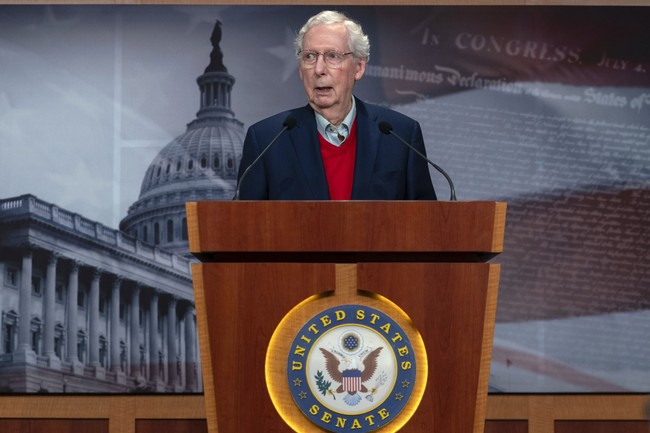
Senator Mitch McConnell (R-KY) was rushed to a hospital Sunday with a mysterious ailment that officials have not disclosed. The sudden trip triggered alarm in the Capitol and a rush of questions about his fitness to continue public service. Staff have offered few details, leaving colleagues and constituents to read between the lines as they await an official update.
McConnell’s move to the hospital is the latest in a string of health-related episodes that have made him a conspicuous figure in discussions about age and capability in Washington. Observers note that his public appearances in recent years have sometimes shown signs of vulnerability, which opponents and some allies have not hesitated to point out. For Republicans who want a vigorous, hands-on leadership in the Senate, those signs have become a growing concern.
This is far from the first time we’ve had reason to doubt the former Majority Leader’s health and well-being.
In 2023, McConnell (R-Ky.) made headlines for freezing up several times mid-speech after suffering a concussion and minor rib fracture earlier that year from a fall at a fundraiser at the Waldorf Astoria hotel in Washington, DC.
It was later revealed that McConnell had suffered two other tumbles earlier that year.
McConnell has often been seen in a wheelchair in recent months, as he serves out the remainder of his time in the Senate.
McConnell served as the Senate GOP’s leader from 2007 through early 2025, rendering him the longest party leader in the upper chamber’s history. Republicans tapped Senate Majority Leader John Thune (R-SD) as his successor.
The Kentucky sage announced last year that he would not vie for an eighth term in the Senate.
Beyond the medical questions, the hospitalization has political consequences. President Trump and several Senate Republicans have publicly criticized McConnell for opposing the SAVE America Act, and that disagreement has sharpened fractures within the GOP. Those clashes make his absence or diminished capacity not just a personal issue but a strategic one for the party as it maneuvers on high-stakes legislation and election-year positioning.
The conversation has turned to age across the chamber, not just to McConnell himself. McConnell is 84, and the Senate includes other octogenarians and nonagenarians whose continued service prompts candid talk about succession and energy in leadership. Once you list names like Chuck Grassley, 92, and Bernie Sanders, also 84, it’s hard to ignore that several key lawmakers are well past what many voters would consider the prime of life.
Age is not a disqualifier by itself, but it matters when effective representation and rapid decision-making are required. Constituents expect their elected officials to be alert and engaged, especially on security, the economy, and judicial confirmations—areas where the Senate still has outsized power. Republicans arguing for generational renewal frame the issue as one of results and readiness, not disrespect for service.
On the ground in Kentucky, debates are mounting about whether it’s time for fresh faces with new energy and clearer accountability. Voters and local leaders are already asking if incumbents can handle another term or if a transition would better serve state interests. That talk will only intensify if McConnell remains hospitalized or if any further medical updates suggest a longer recovery is needed.
For Senate Republicans, the practical concern is continuity of operations. Committee schedules, floor fights, and high-profile nominations require steady shepherding, and handoffs in leadership have ripple effects. Some GOP senators are now quietly assessing contingency plans and how to present a united front while still pushing for the legislative priorities they campaigned on.
Meanwhile, the media swirl and partisan commentary will not slow, and each new nugget of information will be parsed through both political and human lenses. Supporters will stress McConnell’s long record and institutional knowledge, while critics will point to recent lapses as evidence the institution needs stronger, more energetic leadership. The situation puts the spotlight on how the party balances respect for tenure with the need to govern effectively.
As the Capitol waits for clear updates, the broader debate about age, health, and leadership in Washington will continue to grow louder. Republican voices are likely to press the case for leaders who can meet the pace of current challenges and offer voters a clear path forward. The coming days should reveal whether this episode is a temporary scare or the start of a more serious transition in the Senate.



Add comment