
This article explains President Donald Trump’s expansion of Most-Favored-Nation drug pricing deals, which now include nine additional manufacturers and claim to cover 89 percent of the branded market, outlines which companies and medicines are involved, notes manufacturing commitments to U.S. production and reserves, and presents reactions and context around the policy change.
President Donald Trump announced that nine more drug makers have agreed to join his Most-Favored-Nation pricing initiative, bringing the total number of participating companies to 26. Officials say this cohort brings the program’s coverage to roughly 89 percent of the branded prescription market, a major increase from earlier stages. The administration describes the effort as a straightforward push to reduce the price gap between U.S. patients and patients in other developed countries. The move follows an earlier set of deals and sustained pressure on manufacturers.
The newest agreements are reported to include Alcon, Astellas Pharma, BeOne Medicines, BridgeBio, CSL, Kyowa Kirin, Sun Pharma, Teva Pharmaceuticals, and UCB. Each firm has reportedly agreed to let state Medicaid programs access prices tied to what they charge in certain foreign markets. The list of covered illnesses spans Parkinson’s disease, hemophilia, macular degeneration, glaucoma, liver disease, several skin conditions, and multiple cancers. Companies also committed to apply the same pricing framework to future medicines they bring to market.
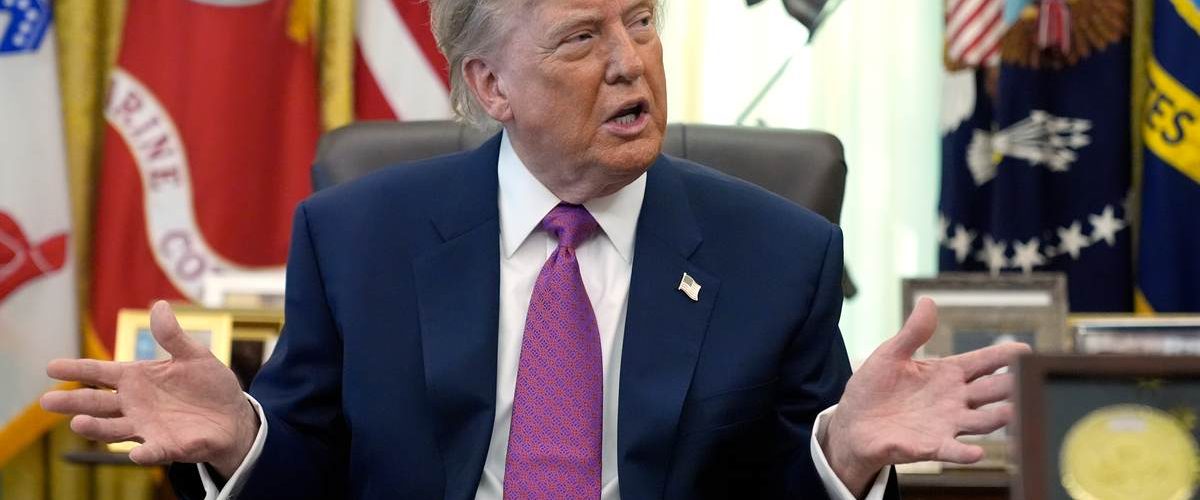
Trump announced the deals from the Oval Office, framing the expansion as a major affordability win. The president emphasized that this policy responds to long-standing differences in drug prices between the United States and other wealthy nations. The administration has coupled negotiation with the threat of trade penalties, including the possibility of 100 percent tariffs on imported pharmaceuticals under a Section 232 national security inquiry. Officials say that credible threats and sustained engagement are what kept companies at the table.
“I’m thrilled to announce a major expansion of one of our signature affordability initiatives. Something that people have been trying to get for years, for decades… and that’s most favored nation drug pricing.”
https://x.com/RapidResponse47/status/2094504100142412136
Health and Human Services officials say U.S. patients currently pay substantially more for many prescription medicines than patients abroad, and the policy aims to shrink that difference. Administration figures cited in announcements indicate that Americans pay nearly three times as much as patients in other developed countries for certain drugs. The program ties Medicaid pricing to international benchmarks with the goal of making costs more consistent and lowering out-of-pocket burdens for patients. That international comparison is the program’s central lever for price reduction.
Beyond price commitments, the nine companies reportedly pledged at least $19.6 billion in near-term U.S. manufacturing investment. Several firms agreed to supply active pharmaceutical ingredients to a Strategic Active Pharmaceutical Ingredients Reserve being assembled by the government. Specific contributions were noted: UCB pledged 163 tons of the seizure medication levetiracetam, Sun Pharma committed more than 78 tons of two antibiotics, Teva announced contributions of metronidazole and amlodipine, and Astellas agreed to supply tacrolimus, used to prevent organ rejection after transplants.
BeOne Medicines confirmed participation and also announced a substantial U.S. investment tied to manufacturing and research. The cancer-drug company said it will participate in the administration’s Medicaid pricing program and align future FDA-approved drug prices with those in other developed markets. BeOne added a $300 million expansion for its Hopewell, New Jersey manufacturing and research facilities, reporting more than $1 billion in U.S. manufacturing investment overall as part of its commitments.
Critics have raised concerns about transparency and scope, arguing that the individual terms of these deals are not fully public and that savings will vary by drug and coverage. Some analysts warned that the impact will differ across medicines and patient groups, and that detailed reviews are needed to quantify net savings. Still, others in the policy press have characterized the agreements as a substantive shift in federal drug-pricing strategy rather than mere political theater. Those assessments point to a mix of political signaling and tangible policy change.
The administration traces the initiative back to an initial agreement with Pfizer, announced last September, which kicked off the broader negotiation campaign. Over the last year officials say 17 major manufacturers originally targeted agreed to terms, and the latest nine have now joined, producing the claimed 89 percent coverage figure. Washington has long promised drug-price reforms across multiple administrations, and this effort represents an aggressive executive-branch strategy to secure lower prices through negotiated benchmarks and domestic production commitments.
Observers on all sides of the debate are watching how implementation unfolds: whether Medicaid programs will realize the promised savings, how manufacturers will price new products, and whether the manufacturing pledges translate into durable domestic capacity. The combination of price benchmarking and targeted industrial investment marks a distinctive approach, pairing cost containment with supply-chain resilience. That dual focus is central to how the administration frames this as both an affordability and a national security initiative.
Editor’s Note: Do you enjoy conservative reporting that takes on the radical Left and woke media? Support our work so that we can continue to bring you the truth.
Join RedState VIP and use promo code FIGHT to receive 60% off your membership.
Health and Human Services Secretary Robert F. Kennedy Jr. summarized the expansion by noting the cumulative company count and the program’s reach.
“Today brings us to a total of 26 companies that have now made agreements with us. These agreements cover nine out of 10 drugs that are used by Americans.”
Add comment