
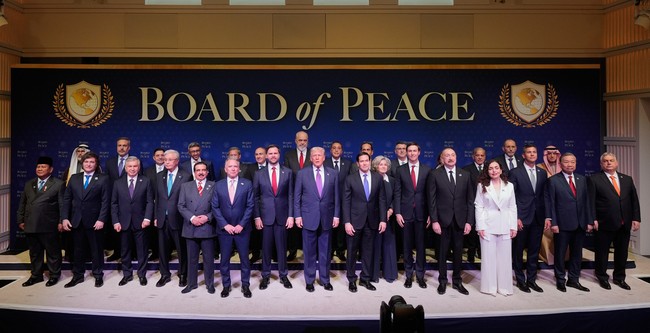
I’ll recap the Board of Peace meeting, outline key announcements on Gaza aid and rebuilding, note transparency and accountability steps, highlight President Trump’s remarks, examine Hamas as the central obstacle to lasting peace, and point to next practical steps for ensuring aid reaches civilians.
The first Board of Peace gathering, chaired by President Trump, matters because it shifts reconstruction from talk to an organized effort with clear participants and funding commitments. This meeting brought together governments and private donors with a stated focus on rebuilding Gaza’s infrastructure while trying to limit misuse of resources. For conservatives, the appeal is straightforward: use American leadership and leverage to secure outcomes that protect civilians and discourage extremist control.
U.S. officials emphasized the sheer scale of the humanitarian flow being organized for Gaza, describing thousands of aid deliveries and coordinated logistics meant to keep supplies moving into civilian areas. Ambassador Mike Waltz’s remarks underscored progress in getting more convoys through with fewer diversions, a crucial step toward restoring basic services. Practical details matter here; more trucks and fewer thefts mean more lives saved and less opportunity for militants to profit from suffering.
The Board pushed a transparency agenda before the session even began, with a presidential pledge designed to stop funds from being rerouted or lost in murky channels. White House officials said the President signed a compact committing participants to financial integrity and public reporting. The vote among Board members was unanimous, signaling broad appetite among allies to make reconstruction accountable and to avoid past mistakes where money disappeared into the wrong hands.
Members received a detailed blueprint for reconstruction that lays out timelines, resource allocations, and oversight mechanisms to keep projects on track. The list provided by the White House maps out who will handle power restoration, water systems, medical care, and housing, along with benchmarks to measure progress. That kind of organization is a conservative strength: set clear objectives, tie funding to milestones, and hold implementers to account.
President Trump closed the meeting by pitching the Board of Peace as a model that could be exported to other hotspots, using American influence to encourage stable, prosperous outcomes rather than endless aid with no change on the ground. He framed the effort as both humanitarian and strategic, arguing that rebuilding places like Gaza under transparent conditions reduces the appeal of extremist rule. The idea is to turn short-term relief into long-term resilience under institutions that reject radical theocracy.
The president’s exact words were quoted in full at the meeting:
We’re going to straighten out Gaza, we’re going to make Gaza very successful and safe. And we’re also maybe going to take it a step further, where we see hotspots around the world, we can probably do that very easily. This is a tremendous group of powerful people, and brilliant people. And, I think that we can do things that a lot of other people would not be able to even conceive of, think of. We will help Gaza, we will straighten it out, we’ll make it successful, we’ll make it peaceful, and we will do things like that in other spots.
No plan works if militants are running the show, and that reality was front and center: Hamas remains the single largest obstacle to any sustainable recovery in Gaza. Reconstruction money and rebuilt infrastructure can be co-opted by armed groups unless authorities have the capacity and will to prevent diversion and violence. Removing or neutralizing militant influence is not an optional political preference; it is a necessary precondition for genuine reconstruction and long-term stability.
Practical next steps discussed at the meeting include tighter vetting of vendors, independent monitoring teams, and a public ledger for major expenditures so donor nations and citizens can see where money goes. Those mechanisms are meant to reduce corruption and create a clear chain of custody for supplies and projects. For taxpayers who fund reconstruction, transparency is the only way to ensure aid helps people, not terrorists.
There are political benefits too: leadership that combines muscle and mercy can strengthen alliances, protect regional partners, and deny rogue regimes and militias the chaos they exploit. Conservatives who support strong borders and secure aid see this approach as consistent with both national security and humanitarian instincts. The Board of Peace is an attempt to institutionalize that blend of firm strategy and generous assistance.
What happens next will determine whether this is a genuine turning point or another well-intentioned but fleeting initiative. Success will be judged by whether water flows reliably, hospitals run, schools reopen, and local governance is rebuilt without militant interference. Until Hamas is removed as a power broker in Gaza, any reconstruction remains fragile; the work now is to make fragile measures tough enough to last.



Add comment