
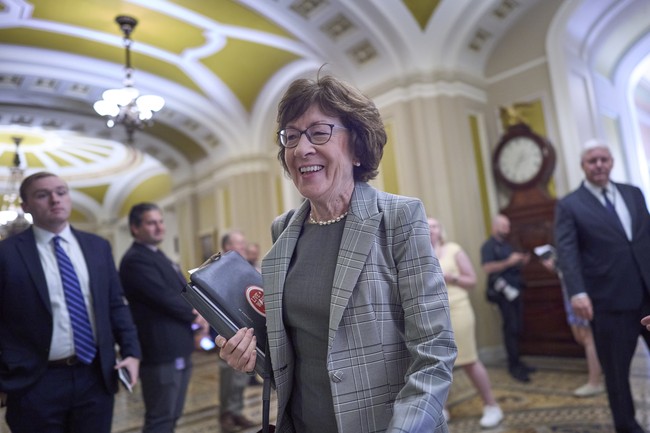
Susan Collins is running a meticulous, hands-on campaign in Maine while also carrying the heavy responsibility of helping Congress avoid a second government shutdown before the midterms, and this piece looks at her campaign posture, the shutdown risk, key players whose absences or stances matter, and the political stakes tied to appropriations fights this year.
Sen. Susan Collins has been visible and active in Maine, turning up for community events and reminding voters she will put in the hours necessary to keep her seat. She told reporters plainly that “nobody will ever outwork me,” and that gusto is central to a campaign that knows nothing can be taken for granted. Meanwhile, Democrats in Maine are scrambling, which creates an opportunity but not a guarantee for Republicans. Collins is betting that steady, local engagement and a relentless work ethic will win the day.
https://x.com/SenatorCollins/status/2076000105946046783
For more than four decades, the Moxie Festival has drawn people from near and far to Lisbon for a celebration that is truly one of a kind and uniquely Maine.
It was a pleasure to walk in the annual Moxie Day Parade today and see the creativity, enthusiasm, and unmistakable Moxie that make this event such a memorable highlight of the summer.
On the national front, Collins wears another hat that matters to voters: her role on the Senate Appropriations Committee. That position gives her a direct hand in funding bills and a major say in whether the government avoids a shutdown. With a September 30 deadline looming, the mechanics of budget negotiation and floor time will decide whether the federal government keeps running into the midterms or stalls again.
Collins’ workload isn’t just political theater; it’s procedural muscle. As a senior appropriator who also sits on the Defense Appropriations subcommittee, she is involved in complex negotiations over supplemental defense packages and baseline spending. The stakes include funding for ongoing operations and sensitive items like aid tied to national security. That level of responsibility requires both political savvy and technical know-how, and Collins is publicly embracing both.
Part of the challenge is personnel and presence. Sen. Mitch McConnell has been absent from Capitol proceedings while hospitalized, and his absence has had a ripple effect on markup schedules and subcommittee work. That gap matters because McConnell chaired key panels related to defense appropriations, and his temporary withdrawal has forced colleagues to pick up slack and recalibrate timelines. In tight, timed negotiations, missing players can tip the scale toward gridlock.
On the partisan front, Democrats have signaled a hard line that complicates compromise. Appropriations ranking member Sen. Patty Murray has warned colleagues she will oppose bills brought forward by the current committee leadership, and Collins directly criticized that posture. “Appropriations Vice Chair Patty Murray’s (D-Wash.) ‘threat to vote against all of the appropriations bills, including those Democrats have helped draft, is contrary to the way I always operated with her when our roles were reversed,'” Collins told reporters, a pointed reminder of norms that once guided mutual cooperation.
That breakdown of trust has tangible consequences. Sen. John Kennedy bluntly accused Democrats of obstruction, saying they would not back top-line spending numbers and that Senate Majority Leader Chuck Schumer would be content to let government funding lapse. “I think my Democratic friends at the direction of Sen. Schumer are not going to agree to a top-line [spending number], and they’re not going to agree to vote for any appropriations bill, and Sen. Schumer is going to shut down government,” Kennedy said. Those charges feed a narrative that resistance from one side, not negotiation breakdowns on both sides, is driving the risk.
Sen. Rick Scott has echoed that view and suggested there are political reasons some Democrats might tolerate the chaos. The irony is that a shutdown would hurt incumbents across the board, making it an odd strategy if the goal is electoral survival. For Collins, who is running hard in Maine and expected to campaign through the summer, the specter of a shutdown could undo months of work with a single headline and a week of dysfunction.
Complicating the calendar is the Senate recess schedule that gives lawmakers a long stretch to campaign in October. That creates both pressure and urgency: appropriators have to secure funding before big blocks of time when votes and debates will be scarce. Collins will have to manage negotiations tightly in the weeks ahead and rely on allies who can deliver votes when floor schedules slip. If leadership can’t marshal enough support before recess, the consequences will be political and practical.
The tactical picture is simple but brutal: a lot depends on who shows up, who is willing to negotiate, and who prioritizes governing over messaging. Collins is staking her campaign on competence and presence, while opponents on the other side appear comfortable with obstruction as a strategy. Voters in Maine will watch how her balancing act—running a tough campaign while tackling the appropriations gauntlet—plays out in practice and on election day.
What Collins knows and what her GOP allies keep stressing is that steady performance and the ability to move policy matter to swing voters. She’s trying to demonstrate both: a relentless retail campaign at home and careful, technical work on Capitol Hill to keep the lights on. That combination is precisely what she hopes will leave nothing to chance this fall.



Add comment