
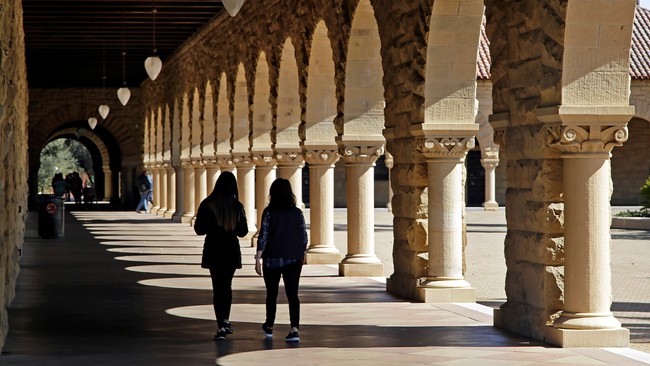
The piece examines a controversy at Stanford commencement where hundreds of students walked out during Google CEO Sundar Pichai’s speech, links the protest to broader campus radicalism and Project Nimbus controversies, cites chants and organizer groups, notes reactions including a Jerry Seinfeld anecdote, and highlights concerns about career consequences for protesters and the challenges facing higher education.
Graduation day at Stanford turned into a public relations problem when large numbers of students left the ceremony as the Google CEO took the stage. That walkout became a focal point for debates about campus politics, free expression, and where elite institutions are headed. For many observers, it reinforced a sense that some universities are breeding grounds for grievance politics rather than places focused on preparation for the workforce.
The protesters made clear their grievances with Google and with Israel, chanting slogans and leaving en masse. Videos from the scene show groups rising from their seats and shouting, “Free, free Palestine.” The demonstration was described as organized by activist networks that have long pushed anti-Israel and tech-targeted campaigns.
“Videos circulating on social media showed leaving their seats at Stanford Stadium while chanting, “Free, free Palestine.”
https://x.com/SamAntar/status/2066312340883059182
Part of the anger aimed at Google stems from Project Nimbus, the multiyear, multibillion-dollar cloud work with the Israeli government that has drawn internal and external criticism. Project Nimbus was framed by some critics as a $1.2 billion contract, and detractors argued the tools might be used in ways that harm Palestinians. Google has defended the work as standard government cloud services and pushed back on claims its technology is being repurposed for harm.
The protest at Stanford felt like a collision of causes: opposition to ICE and complaints about big tech mixed with the campaign against Israel-related contracts. That blend of issues makes the movement hard to parse for outsiders and signals how campus activism often layers many grievances together. For parents and employers watching, it raises questions about priorities and professional readiness among graduates who choose public spectacle over listening to an invited speaker.
Those participating in the walkout may believe they are making a moral point, but the action also carries practical costs. Silicon Valley employers notice behavior that suggests a willingness to disrupt professional settings, and many hiring managers value judgment and professionalism. Walking out on a major commencement address could be remembered by future references and networks that matter in a competitive job market.
Public reactions included a viral moment involving comedian Jerry Seinfeld confronting a heckler after a New York Knicks game, a snippet used by commentators to mock certain protest behaviors. The anecdote was invoked to underline how some public figures and everyday citizens reject performative displays that lack clear strategy or constructive goals. Such moments are often amplified to make the larger argument that spectacle substitutes for sustained engagement.
Despite the disruption, Sundar Pichai continued his remarks and kept a composed tone, stressing optimism and future-focused ideas. He sought to steer the conversation back to innovation and the role tech plays in creating opportunity. That composure contrasted with the charged atmosphere in the stadium and underscored the different approaches between institutional leadership and campus activists.
Critics on the right see the incident as symptomatic of a wider failure in higher education: institutions that preach diversity and inclusion while tolerating, or even enabling, tribal displays that alienate parts of their communities. They argue universities have to do better at preparing students to operate in real-world settings where compromise, debate, and professional conduct matter. The Stanford walkout became a high-profile example used to question whether many elite campuses still prioritize academic rigor and civic formation.
Supporters of the protesters frame their actions as principled resistance against policies they view as unjust and insist that direct action is sometimes necessary. That moral certainty, however, often clashes with career imperatives and public opinion, especially in industries like technology where employers assess cultural fit and judgment. The tension between conscience and consequence remains central to how these episodes play out for individuals involved.
The incident also revived policy debates about the responsibilities of big tech firms when they contract with governments and militaries, a subject likely to persist as artificial intelligence and cloud services expand. Questions about transparency, oversight, and ethical guardrails around these partnerships will keep resurfacing as activists, employees, and lawmakers press for answers. Meanwhile, campuses will continue to be arenas where those disputes are staged, for better or worse.



Add comment