
Checklist: describe the concert atmosphere; explain how Rush returned; introduce Anika Nilles’s role; recount the set and performances; note emotional and musical impact.
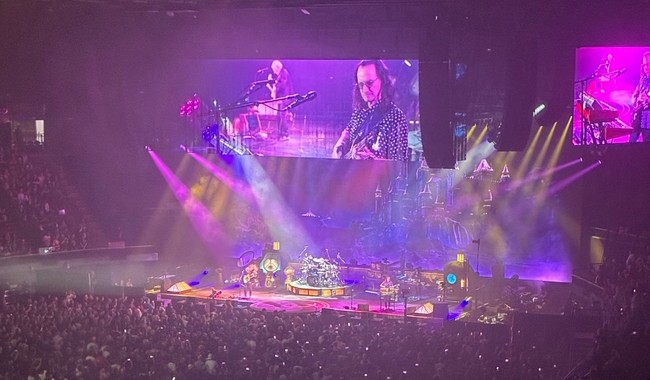
On Sunday, June 7, 2026, about 15,000 fans packed the Kia Forum in Inglewood to witness Rush live once again, and the night felt like a reunion more than a show. The arena sat across from SoFi Stadium, the warm California evening giving way to lights and anticipation. People milled about, buying shirts and overpriced drinks, trading stories about kids and the years that have flown by.
Rush has been the soundtrack for many of us, those who once blasted eight-tracks or cassettes from car stereos while friends scratched their heads over our obsession. They were never a glossy, manufactured act; instead they were clever, heavy, and strangely cerebral. The band spoke to those raised on Star Trek and Star Wars who preferred imagination to the glam and excess of 1970s pop culture.
The band at the center of that world was Rush. After retirement in 2015 and the 2020 death of drummer and lyricist Neil Peart, imagining new live shows seemed impossible. The spark that brought Geddy Lee and Alex Lifeson back together came through benefit performances and encouragement from peers, including a backstage nudge by Paul McCartney at the London memorial for Taylor Hawkins. Still, the big question remained: who could fill Peart’s enormous shoes behind the kit?
Enter Anika Nilles. Recommended to Geddy Lee by his longtime bass tech, whose own work with Jeff Beck overlapped with Nilles, she arrived with the technical skill and the stage presence needed to make Lee and Lifeson commit to touring again. Fans on both sides of the debate had to wait and see, but the trio’s performance at the 2026 Juno Awards, bolstered by Loren Gold on keys and backing vocals, offered a tantalizing preview. They ripped through “Finding My Way” and proved a refreshed Rush could command attention.
One song is one thing; the real test was the complex catalog that defines Rush. Tracks like “Xanadu” demand precision, dynamics, and stamina, not just nostalgia. Early in the set, after a playful intro video, the band launched into “Xanadu” from the 1977 album “A Farewell to Kings,” a bold choice that signaled they intended to honor the material fully.
The crowd reaction made it clear the gamble paid off. From the opening passages, Nilles announced herself as a force to be reckoned with, her intensity and grin lighting up the stage while she played with astonishing clarity. Geddy Lee and Alex Lifeson moved through the material with practiced chemistry, trading looks that showed mutual respect and relief at hearing those parts come back to life.
The production leaned into immersion rather than spectacle, with lights and animations that enhanced each passage without drowning the performance. The set balanced the familiar and the deep cuts, showcasing the band’s evolution from sci-fi and fantasy themes to more reflective, human concerns. That balance came into sharp focus when Aimee Mann joined for “Time Stand Still,” her voice matching the recorded harmony and lending the moment an unexpected tenderness.
The evening did not shy away from the darker, weightier side of the catalog either; “Red Sector A” landed with the emotional force intended, a reminder of Rush’s capacity for hard-hitting commentary wrapped in complex arrangements. Lifeson navigated the guitar textures with care despite any physical wear, and Lee’s voice, though not what it was in his twenties, found ways to deliver the songs’ emotional core.
Throughout the night, the performance honored Neil Peart without becoming a tribute act centered on one man’s shadow. Instead, the band presented itself as a living, breathing unit that could carry the music forward. Tears and cheers mixed in the audience as people processed the fact that a band many had feared gone for good was back onstage and sounding vital.
By the final notes, the sense was not merely of nostalgia satisfied but of music renewed. Rush’s songs still hold up under scrutiny, and the reconfigured lineup proved capable of meeting the technical and emotional demands of the material. Fans left the Kia Forum with worn voices and buzzing ears, grateful they had witnessed a rare and bold resurrection on a night that honored the past while moving forward.
Add comment