
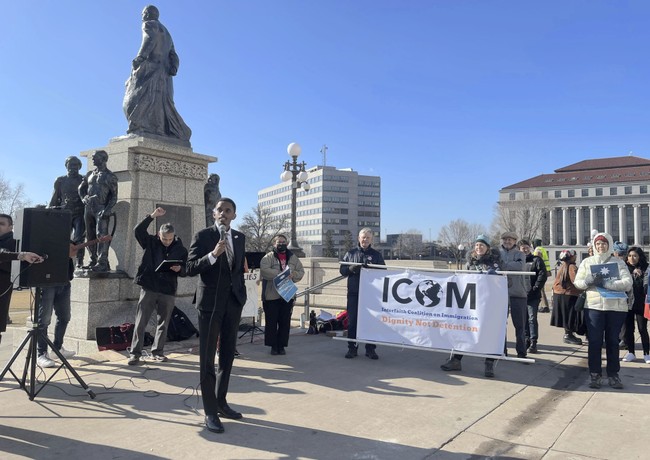
Karl Marx could not be reached for comment — but Republicans should cheer one clear result from Tuesday: Omar Fateh, the Minnesota state senator branded the “Mamdani of Minneapolis,” lost the mayoral contest to incumbent Jacob Frey after ranked-choice voting. Fateh ran as an avowed Democratic Socialist and embraced policies that alarmed conservatives, drew high-profile endorsements, and then saw controversy and a pulled party endorsement before election night. The campaign exposed intra-party fights, questions about convention voting systems, and a choice between two imperfect Democrats, with Minneapolis avoiding a more radical shift for now. This piece walks through the candidate, the controversy, the endorsements, and the election outcome from a conservative viewpoint.
Omar Fateh ran as a declared Democratic Socialist and member of the state Democratic-Farmer-Labor Party, pushing a platform that worried many voters. He vowed to raise the minimum wage, expand affordable housing, and trim police responsibilities in favor of community alternatives, stances that played well with the party’s left flank but alarmed mainstream and conservative observers. Fateh also said he would alert illegal aliens about planned ICE raids, a position that fed concern among voters who prioritize law and order. Those policy positions framed him as a far-left challenger to a Democratic incumbent who himself has a checkered record.
He had pledged to raise the minimum wage in Minneapolis, increase the supply of affordable housing, and has railed against the police department — calling to replace some of its duties with community-led alternatives.
He’s also said he would alert illegal aliens about planned ICE raids in the city.
The campaign drew national attention when Representative Ilhan Omar backed Fateh, signaling his alignment with the party’s most progressive wing. That support helped Fateh secure an initial DFL endorsement at the party convention, a boost that suggested momentum against Mayor Jacob Frey. But the boost was short-lived when questions about the party’s online voting system began to surface and opponents alleged a flawed electronic count. The controversy spiraled into a formal challenge that forced party officials to revisit the endorsement process.
When party investigators reviewed the convention vote, they found enough irregularities to withdraw the endorsement, a move that infuriated some activists and allies. The committee determined there had been a substantial undercount on the first ballot and procedural problems that affected who advanced in the endorsement process. That finding prompted fierce backlash from supporters who insisted the will of delegates had been overturned. Ilhan Omar publicly condemned the decision as “inexcusable” and argued it flouted Minneapolis volunteers who participated in the DFL process.
Ilhan Omar was bigtime mad, out, “It is inexcusable to overturn the DFL endorsement from Omar Fateh. A small group, a majority living outside Minneapolis, met privately to overturn the will of Minneapolis delegates who volunteered, organized, and participated in a months-long DFL process. Unacceptable.”
Against that chaotic backdrop the general election moved forward and Minneapolis voters faced a choice in a city still grappling with the fallout from the 2020 unrest and public safety concerns. Jacob Frey, who had been mayor during those turbulent years, carried baggage from how he handled protests and from other controversies during his tenure. Still, for many voters Frey represented a less radical option than Fateh, so the ballot became a referendum on how far left city leadership should go.
After three rounds of ranked-choice counting, Jacob Frey was declared the winner, which conservative readers will see as a relief. Ranked-choice voting can produce unpredictable results, but in this case it prevented what some saw as an ideological leap for Minneapolis. The outcome means Frey stays in office and Fateh returns to the state legislature, at least for now.
It’s fair to point out that Frey is hardly a conservative hero; his record includes missteps during crises and moments that frustrated residents across the political spectrum. But when the alternative is a candidate openly allied with Democratic Socialist policies, many voters chose stability over experiment. Minneapolis avoided electing a mayor poised to dramatically reshape public safety and city services along far-left lines.
The episode also underscores fault lines within the Democratic coalition: progressive militants versus local pragmatists and party institutions that sometimes clash over process and power. Allegations of a flawed electronic vote at the convention became a story about legitimacy, and the DFL’s reversal of its endorsement exposed how fragile party unity can be. For Republican readers, the lesson is plain — when the left fractures, it opens space to blunt more extreme policy experiments.
Fateh’s defeat will be parsed by activists and operatives on all sides, but for now Minneapolis continues under Frey’s leadership and the push for a more radical municipal agenda was halted. The campaign will leave a mark on local politics and on how the DFL manages endorsements and internal voting going forward.



Add comment