
The Consumer Financial Protection Bureau suffered a serious data-security episode, critics immediately pointed fingers at recent policy and contract changes, and previously reported breaches under other administrations complicate any single-cause story.
The CFPB’s new audit surfaced accountability and program gaps at a sensitive federal agency that collects complaint data, investigates firms, and stores financial records. People are rightly worried when systems that hold bank account details and complaint files show weakness. This isn’t just about tech; it’s about trust in a government institution that handles private financial information every day.
Some commentators linked the latest lapse to administrative decisions that reduced oversight and canceled contracts, arguing those moves left the office vulnerable. Others note the agency accepted the audit’s findings and promised fixes if management follows through. Promises are a start, but accepting findings and actually implementing sustained technical upgrades are different things.
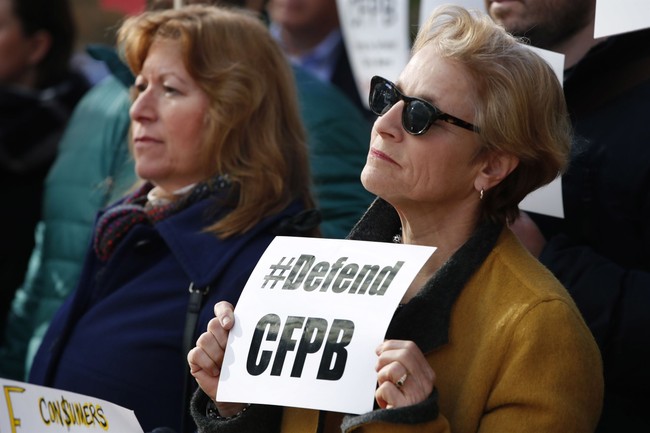
President Donald Trump’s clampdown on the U.S. Consumer Financial Protection Bureau earlier this year has compounded IT security lapses at the agency through the cancellation of contracts, according to an audit report released on Monday.
The information security program at CFPB — which maintains sensitive and confidential data from investigations, the oversight of companies and complaints received from members of the public — is “not effective,” according to the Office of Inspector General, which also covers the Federal Reserve.
Representatives of the agency did not immediately respond to a request for comment. However, in a response to the report, CFPB management accepted its findings and proposed solutions which the report said would be adequate if implemented.
Audit language that labels a security program as “not effective” is blunt and rare because agencies tend to use milder phrases. That bluntness should set off alarm bells for anyone whose name or transaction details might be in the CFPB’s systems. Regardless of who’s in charge, the bottom line is plain: the data may be at risk unless structural and technical gaps are closed quickly and transparently.
For context, this is not a one-off problem confined to a single administration. In 2023 the bureau disclosed an incident in which an employee forwarded hundreds of thousands of consumer records to a personal email account. Human error remains one of the largest vectors for leaks, especially when security controls and monitoring are insufficient.
The CFPB said an employee forwarded the personal information of more than a quarter-million consumers to a personal email account, an incident that the bureau described as a “major” breach.
The employee, who was fired when the data breach came to light, sent spreadsheets with names and transaction-specific account numbers related to those 256,000 consumer accounts at a single institution, according to the bureau. The CFPB did not identify the now former employee.
That earlier breach highlights a double problem: technical vulnerabilities and personnel policies that failed to stop an avoidable export of data. You can harden systems all you want, but if insiders can move confidential spreadsheets to external addresses without adequate controls, the risk remains high. Employees who handle sensitive files need strict limits, monitoring, and fast, enforceable disciplinary processes.
Some argue the solution is structural: remove the agency. Critics say the CFPB is an unnecessary layer of federal power, lacks clear constitutional footing, and has attracted scandals that overshadow its mission. Abolishing an agency is a political answer, not a technical one, and it won’t erase data that are already at risk in other government systems or private-sector databases.
Defunding or dismantling an agency shifts responsibilities elsewhere and may create new gaps if not planned carefully. It also won’t magically restore leaked data or safeguard citizens whose information is already exposed. Practical reforms can include strict access controls, routine third-party audits, mandatory encryption at rest and in transit, and transparent reporting requirements to rebuild public confidence.
At minimum, Congress should demand a clear timeline for remediation, independent verification of fixes, and a public accounting of what happened and who was affected. Accountability must be more than a press release admitting issues and promising corrections. It should come with measurable milestones, outside validation, and consequences for negligence.
Finally, voters and watchdogs should expect no-nonsense transparency about data handling and cybersecurity budgets. Agencies that touch private financial records have a duty to be both secure and answerable. Until those bars are met, every breach becomes evidence in the argument for either major reform or elimination, depending on your view of federal roles in consumer finance.



Add comment