
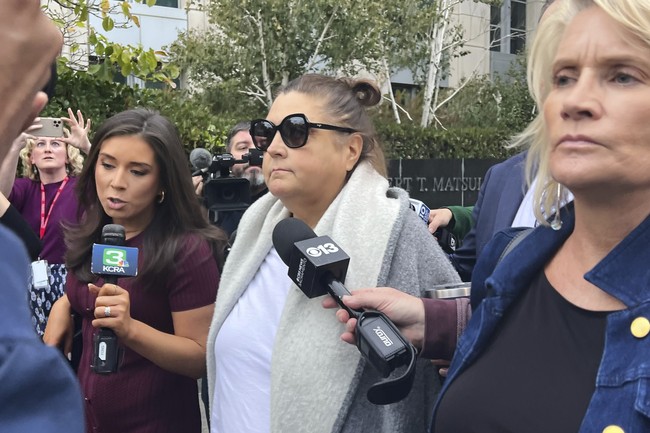
This article examines new details in the federal probe tied to Gavin Newsom’s inner circle, focusing on Dana Williamson’s indictment, an uncharged co-conspirator, and claims that a Sacramento insider secretly recorded conversations for investigators.
The indictment in November 2025 shook California because it accused Gavin Newsom’s former chief of staff, Dana Williamson, of dozens of felony corruption charges connected to misdirected funds totaling roughly $225,000. One name stood out: Alexis Podesta, labeled as co-conspirator 2, who stepped into Williamson’s portfolio after Williamson moved into the governor’s office. Despite being central to the alleged scheme, Podesta was not charged, which raised questions about why prosecutors treated her differently.
Now there’s an explanation circulating from Williamson’s defense counsel that changes the picture: “Alexis wore a wire, and Dana did not.” That claim, attributed to Williamson’s attorney, suggests Podesta may have been cooperating with federal agents as early as June 2024, recording conversations that later became evidence. If true, it clarifies why transcripts exist of a June 2024 exchange between the two women concerning a lawsuit tied to Activision and state legal strategy.
The transcript reportedly captures a back-and-forth about the state’s lawsuit against Williamson’s former client and, according to the indictment, contains the basis for charges that Williamson made false statements to investigators. Prosecutors say Williamson passed along privileged information about the state’s maneuvers, then pushed for a settlement while influencing personnel decisions within state counsel ranks. Those are serious allegations that suggest a pattern of using power and position to steer legal outcomes.
https://x.com/jenvanlaar/status/1988911853884313656
Williamson has denied sharing that kind of information with outsiders when questioned by federal authorities. The alleged recordings, if they exist, would undercut that denial and give investigators a clear record of what was said and when. For Republicans watching this unfold, the case reads like textbook corruption: political operatives manipulating legal processes and protecting allies while leaving taxpayers on the hook.
Podesta’s career history makes her role striking. She previously worked for late Sen. Dianne Feinstein and held senior posts in former Gov. Jerry Brown’s administration, and she was appointed by Newsom to the State Compensation Insurance Fund board in 2020 with a $61,000 annual stipend. Her résumé also includes stints at Disney and PG&E, which ties her to both political and corporate networks in Sacramento.
When federal agents moved in, the FBI sent letters to lobbyists and officeholders warning that some of their communications may have been intercepted during the probe. The department explained, “Some of the communications intercepted during the course of the investigation were from a phone number believed to be associated with you,” and added, “This letter does not necessarily mean you were the target of the investigation or that any criminal action will be taken against you. Rather, the purpose of the letter is to notify you that some of your communications may have been intercepted during the course of the investigation.”
“A lot of people received letters essentially informing us that there were certain periods of time where the FBI was given access to follow phone calls. I don’t know how these investigations work, but it sounds like they cast a pretty broad net across the Capitol community to see what they could find.”
That quote came from a Republican assemblyman who said he received a notification despite not having been in contact with either Williamson or Podesta. His reaction underscores how wide the probe appears to be and how many people in the Capitol community could be swept up merely because investigative tactics pulled in entire communication webs. Broad surveillance like that is unsettling for anyone who cares about civil liberties and the presumption of innocence.
For political operatives and lobbyists, these kinds of intercept letters are a warning light. They signal that investigators are methodically reviewing communications and likely following recorded leads. If a key player indeed wore a recording device while interacting with a former chief of staff, that material can be damning and difficult for a defendant to contest once it’s in the government’s hands.
From a Republican perspective, this case highlights familiar concerns: the cozy overlap between state power, political influence, and private interests. Allegations of steering settlements and firing state counsel to suit political aims feed a narrative that Sacramento’s insiders protect one another and evade accountability until federal agents step in. That dynamic fuels distrust across the state and gives voters reason to demand stricter ethics enforcement and transparency.
The unfolding story will likely keep investigators busy and keep Sacramento on edge for months to come. With claims of recorded conversations, transcripts, and a widening circle of potentially affected individuals, the probe is far from wrapped up. Meanwhile, citizens watching their government should expect answers about how decisions were made and who benefited when public power and private interests intersected.

Add comment