
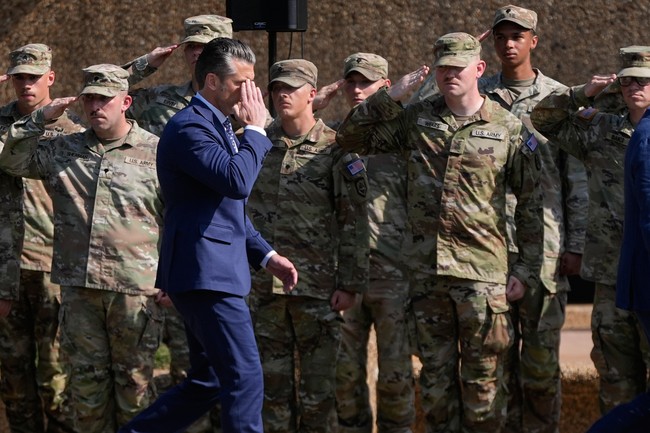
Pete Hegseth intervened to stop the suspension of eight AH-64 Apache pilots after a widely seen flyover during South Carolina’s 250th anniversary celebrations sparked a social media backlash; this move pushed back against snap punishments driven by online outrage and underscored a shift back toward prioritizing combat readiness and sound command judgment in the military.
A four-ship formation of AH-64 Apache gunships from A Company, 1st Battalion, 151st Aviation Regiment, of the South Carolina Army National Guard flew a celebratory route along the state’s coastline for the 250th anniversary event. The flight proved popular with spectators, but once the helicopters returned to McEntire Joint National Guard Base in Eastover they were met with immediate suspensions for unspecified flying violations. That knee-jerk response set off a storm of commentary across social platforms and within parts of the chain of command.
Video of the flyover circulated quickly and raised questions about whether any laws or regulations had actually been broken. The public footage, including shots taken from one of the Apaches furthest from the beach, did not obviously show a reckless act and suggested experienced aircrew were involved. Given the professionalism required to operate these aircraft, it seemed unlikely that an entire crew would intentionally risk their careers for a publicity stunt on camera.
https://x.com/Dronetakeoff0/status/2075748065965638041
Despite the unclear evidence, commanders announced suspensions without a transparent inquiry, a move that highlights how fragile decision-making can be when officials respond to instant outrage. Secretary of War Pete Hegseth stepped in and directed that the suspensions be lifted, pushing back against a reflexive discipline that appeared motivated more by optics than by facts. His intervention made clear he expected the chain of command to exercise judgment rather than issue immediate punishments to placate critics.
Public commentary and partisan sniping predictably lined up on both sides, but the core issue is institutional: does the military govern itself by careful investigation and preservation of unit effectiveness, or by policing every public perception moment? When commanders are quick to suspend without inquiry, training and morale take a hit because units learn to avoid initiative for fear of disproportionate consequences. A military that avoids reasonable risk to prevent any controversy will be less effective in actual combat.
There is an enduring tension between discipline and discretion in military justice. Discipline exists to maintain order and readiness, yet blind adherence to rules for their own sake can create perverse outcomes where sensible decisions are punished. The comparison to literary and cinematic examples of rigid discipline demonstrates the danger of letting procedure override common sense and mission priorities.
Hegseth’s choice also signaled a broader intent to recenter the military on warfighting skills and priorities, a stance he has emphasized since taking office. He inherited a force that many critics say had drifted into bureaucratic obsessions that distracted from training and combat effectiveness. By reversing the suspensions, he reinforced the idea that commanders will not be forced into public displays of contrition simply because a social media pile-on demands it.
Not everyone supported Hegseth, and there were voices ready to criticize him whether he lifted the suspensions or left them in place. That predictability does not negate the practical consequences of his decision: restoring trust in command judgment and preventing future incidents where fear of public outrage dictates operational choices. Units must be able to train, operate, and, when appropriate, celebrate traditions without being paralyzed by the threat of immediate administrative punishment.
Veterans and commentators pointed out that skilled aviators are entrusted to operate complex systems under pressure, often in life-or-death environments around the world. Many argued those same professionals should be presumed competent unless clear evidence shows misconduct. In that vein, a public statement in support of the aircrew emphasized their training and judgment.
The men and women who pilot the world’s most sophisticated aircraft are trusted to do so around the globe; in times of imminent danger and peril. Surely, they know how to safely navigate the coast of South Carolina — and her scores of cheering residents and tourists on our 250th anniversary.
Hegseth’s intervention was about more than one squadron; it was about restoring confidence that leadership will protect good order and mission focus over performative discipline. Allowing commanders to exercise judgment without reflexive capitulation to online outrage is essential if the military is to remain an effective fighting force. The episode should serve as a reminder that maintaining combat readiness sometimes requires pushing back against the instinct to punish first and investigate later.
Seen through that lens, lifting the suspensions was an assertion of command responsibility and a step toward reestablishing a culture that prizes training, courage, and competence. If the goal is a military prepared to face real threats, leaders must resist the erosion of authority that comes from responding to every public uproar with immediate punitive measures. That balance between accountability and protecting mission capability remains the central leadership challenge going forward.
For now the pilots are back on duty and the debate continues about where accountability should live in an age of instant publicity. The broader consequence is that decisions about discipline must be made with an eye to effectiveness, not merely to the desire to appease the loudest online voices. A fighting force that fears consequences more than it pursues victory is a fighting force that will not win.


Add comment