
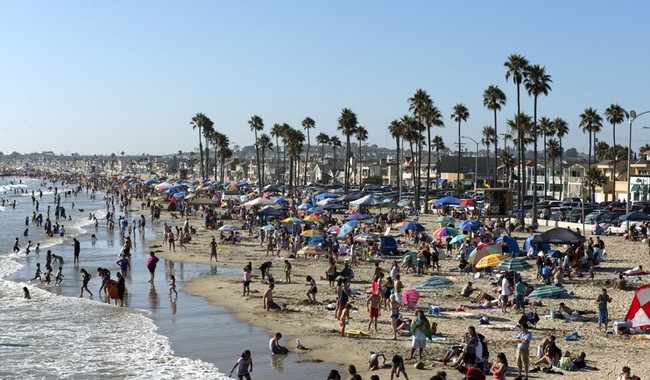
Newport Beach, usually calm and prosperous, saw a violent July 4 takeover by out-of-towners that ended with arrests and damaged property. This article walks through how the chaos unfolded, why officials blame social media for amplifying the problem, and how local police responded decisively while the broader debate over law enforcement and permissive policies continues.
What began as a holiday crowd swelled into an unruly mob by early evening, with fireworks thrown and confrontations erupting across the sand and nearby streets. Newport Beach is known for being orderly, not lawless, so the sudden violence felt like an intrusion into a community that prides itself on public safety. Eyewitnesses reported fireworks detonating at close range and people scrambling to get out of harm’s way, a scene no one expects on Independence Day. The chaos quickly moved from the beach to Balboa Boulevard and nearby parking lots.
The unrest did not look like a small, localized disturbance; it spread fast and included looting and vandalism that targeted local businesses. Authorities say the disturbance was driven in part by a social media-fueled “TikTok Takeover,” which drew in large numbers of young people, some from out of state. Residents watched as street signs were ripped down and a grocery store was ransacked, actions that turned celebration into criminality. That mix of spectacle and law-breaking created a serious public safety threat for visitors and locals alike.
Newport Beach did not treat the takeover lightly; law enforcement moved aggressively once the scale of the incident became clear. Officers on horseback charged into the crowds to restore order as looting and fights intensified, and officials closed bars and shut down sections of Balboa Boulevard to limit movement. The response was not passive: it was forceful and aimed at regaining control before the situation could worsen. The result was a significant number of arrests over the following days.
https://x.com/BuzzPatterson/status/2073867009943917037
In the aftermath, authorities reported hundreds of arrests as they sifted through footage and eyewitness accounts to identify those responsible. Even with arrests underway, the images and videos circulating showed people climbing traffic signals and encouraging chants that escalated the mood into a mob mentality. The spectacle included individuals in masks leading the crowd and people hurling fireworks into tightly packed groups, creating genuine danger. That kind of behavior crossed the line from rowdy celebration to criminal endangerment.
Loitering and vandalism gave way to full-on looting in some locations, with property damage that local businesses will now have to absorb. Videos from the scene show broken glass, stolen merchandise, and shelves overturned in a Pavilions grocery store on West Balboa Boulevard. Residents who counted on the city’s usual order saw their neighborhood transformed for a night into something they barely recognized. The financial and emotional toll on those small businesses and the community will linger long after the fireworks fizzled out.
I spoke to somebody that witnessed the whole thing from the start. It started on the beach with people throwing fireworks at each other, it then move to people harassing the PD horses, which then proceeded to an unruly crowd of Inlanders against officers and throwing fireworks into the parking lots. NBPD ordered all bars and business closed and also completely shut down east and west balboa blvd at 21st street. The traffic is backed up to nearly the entire Peninsula.
Officials and residents alike wonder why places like Newport Beach have become magnets for out-of-state troublemakers on holidays. Mayor Lauren Kleiman warned that social media has changed the dynamic, bringing higher numbers of visitors who aren’t invested in the community’s wellbeing. She noted that this influx, particularly of young people from elsewhere, has increased in recent years and has intensified the risk of disorder. That observation points to a cultural and technological shift that law enforcement and local government must reckon with.
“We always have an influx of visitors to the city for the Fourth of July. It’s been like that for many years, and there’s always kind of a big youth movement that has kind of ebbed and flowed.
“The last couple of years we’ve definitely seen an uptick, in particular kids from out of state. [It’s] not atypical, but I think that social media has really changed things.”
This incident also highlights the contrast between jurisdictions that act and those that tolerate street takeovers without consequences. While Los Angeles has seen recurring, largely unpunished street takeovers, Newport Beach’s law enforcement made it clear they were not going to let chaos stand. As of the most recent counts, more than 400 people had been taken into custody in connection with the disturbances. The arrests sent a blunt message: criminal behavior will be met with a firm response.
There’s a broader political angle here about enforcement and consequences, especially in a state where some policies and prosecutors have signaled a softer approach to crime. When permissive policies meet organized misbehavior amplified online, communities pay the price. Conservatives argue that restoring public order means backing police and holding perpetrators accountable so citizens can enjoy their neighborhoods without fear.
Editor’s Note: The American people overwhelmingly support President Trump’s law and order agenda.

Add comment