
Berlin officials forced a tenant to remove a shower because his bathroom already contained a bathtub, citing neighborhood preservation rules meant to block upgrades that could push rents up; the case highlights how strict regulations can produce costly, pointless interventions while leaving rents unchanged.
In Kreuzberg, a 43-year-old renter named Kasper lived with a tub and a separate shower for about ten years until district authorities noticed the extra fixture. Under Berlin’s “Milieuschutz” rules, local officials scrutinize renovations that might raise a building’s standard and, they argue, lead to higher rents for other tenants.
The dispute began when the landlord tried to regularize earlier work and discovered the shower had no documented approval. Officials determined that a separate shower in addition to a bathtub amounted to an upgrade above the neighborhood’s average standard, and they ordered its removal to maintain the area’s prescribed character.
Kasper was surprised and frustrated. He confronted the administration and argued his case in person, hoping common sense would prevail and that officials would consider practical fixes or additional housing options rather than start by stripping a tenant’s basic convenience.
“Then let’s not start with my shower! Let’s instead look constructively at how we can change something or perhaps add a few apartments.”
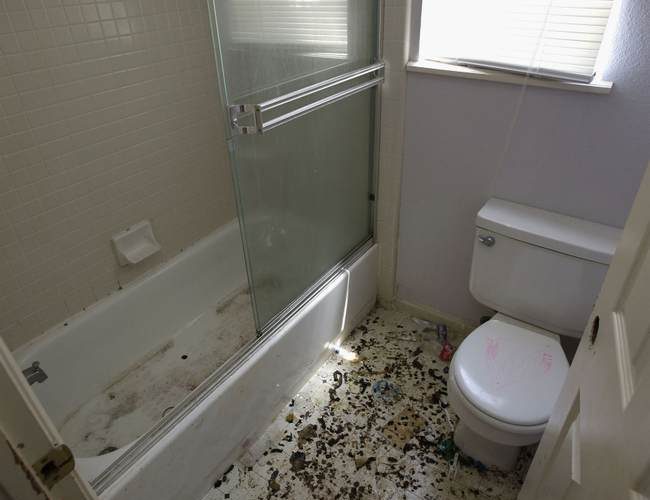
Still, the district pressed ahead and contractors tore out the shower. Work crews later had to return when new tiles were found crooked, stretching the process out over six days and leaving the landlord to foot the bill. The bathtub remained and Kasper’s rent did not change, so the heavy-handed intervention produced disruption and expense without any apparent benefit to tenants.
Berlin currently lists dozens of protected “Milieuschutz” zones where Section 172 of the building code gives district offices broad discretion over renovations. Local guidance specifically flags second bathrooms and, except in rare situations, an extra shower as types of work that generally will not be approved.
Officials defend the policy by warning that allowing fixtures “above the average standard” could set a precedent that encourages luxury renovations and ultimately higher rents across similar properties. In their written statement they argued such approvals “would have a precedent-setting effect for all similarly situated cases in Germany and could ultimately mean luxury renovations and rent increases for a large number of tenants.”
Court rulings have chipped away at some of the strictness, recognizing certain items as standard rather than luxury, but the line remains blurry. In a 2025 decision, judges ruled that wall-hung toilets and towel racks are ordinary, not upscale, yet an additional shower still falls on the wrong side of the line in many cases.
The Kasper episode lays bare how administrative zeal to prevent gentrification can translate into micromanaging everyday life. Officials mobilized, contractors came and went, tiles were reworked, money changed hands, and the tenant lost a convenience he had used for years—all so the building would conform to an internally defined average.
That average is an odd benchmark: it freezes standards in place and treats small personal comforts as potential threats to affordability. The policy assumes that preventing any upgrade, no matter how modest, will block rent increases, but the actual result can be wasted time, unnecessary expense, and shrugged shoulders from residents whose routines are disrupted.
From a policy perspective, the case prompts uncomfortable questions about who benefits from strict preservation zones. Tenants may suffer temporary loss and landlords incur repair costs, while the underlying housing pressures—demand, supply constraints, and market-driven investment—remain untouched.
When regulation focuses on policing fixtures rather than expanding housing supply or encouraging sensible renovations that keep units livable, it risks turning officials into arbiters of domestic choices. The result is a bureaucracy that can remove a shower to enforce equality of amenities instead of addressing root causes of rising rents.
Kasper called the demolition “pointless bureaucracy,” noting that whether he prefers a morning shower or a bath should not be a matter for the district office. In practice, Berlin’s approach ended with the shower gone, the bathtub intact, and the whole neighborhood no better off for the effort.
Approval of fixtures above the average standard would have a precedent-setting effect for all similarly situated cases in Germany and could ultimately mean luxury renovations and rent increases for a large number of tenants.



Add comment