
Checklist: Present Machado’s response to Maduro’s capture; quote her Oslo remarks and recent statements exactly; explain sources of regime funding and foreign influence she named; note U.S. short-term role and succession questions; include the two embedded items in their original positions.
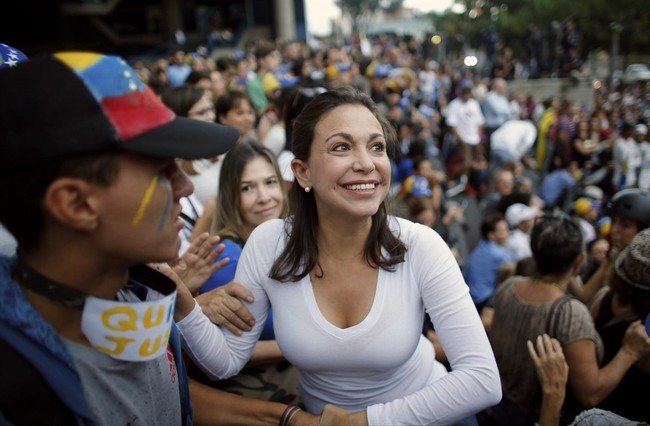
Maria Corina Machado, a leading figure in Venezuela’s opposition and a Nobel Peace Prize recipient, has publicly outlined who she thinks should lead Venezuela after Nicolás Maduro’s capture and why the regime fell. Speaking in Oslo and after the recent operation that removed Maduro, Machado credited external pressure and detailed the criminal networks sustaining the government. She insists foreign influence and illegal revenue streams must be cut to restore Venezuelan sovereignty. Her words frame a post-Maduro transition that emphasizes restoring order and reclaiming the country for its people.
In Oslo last December, Machado accepted the Nobel Peace Prize alongside Edmundo González and used the platform to press for Maduro’s removal and to praise decisive pressure on the regime. She tied the regime’s weakening to international actions that isolated and constrained Maduro’s hold on power. Machado argued the country has been effectively occupied by malign actors, not just threatened by a hypothetical invasion. Those remarks set the tone for her public posture after the U.S.-led operation that resulted in Maduro’s capture.
María Corina Machado said she believes US President Donald Trump’s actions have been “decisive” in weakening the regime of Venezuelan leader Nicolás Maduro.
“I believe every country has the right to defend themselves, and in our case, I believe that President Trump’s actions have been decisive to reach the point where we are right now, in which the regime is weaker than ever,” Machado said.
Following the operation, Machado reiterated a hard line on foreign interference and criminal networks inside Venezuela, insisting those are why the country has suffered. She named specific revenue sources that fueled the regime and vowed they must be severed. Machado described the state apparatus as sustained by a well-funded repression system that would collapse once its money flows were cut. Her analysis points to narcotics, illicit oil sales, arms trafficking, and human trafficking as pillars of the corrupt machine.
She laid out a clear link between those criminal streams and Venezuela’s collapse into authoritarianism, then tied the solution to cutting off the money and influence. Machado argued that without those funds, the regime could not maintain its grip. That reasoning underpins her plan for restoring institutions and ensuring political prisoners are freed. It also informs her stance on how a transition should be structured and what priorities a new leadership must address immediately.
When asked about claims of an “invasion,” Machado answered bluntly, reframing Venezuela’s situation as already compromised by foreign actors and terror groups operating inside the country. Her Oslo comments were pointed and unapologetic, challenging critics who paint the recent operation as an unprecedented intervention. She emphasized that when a nation harbors agents of foreign governments and extremist groups, external pressure becomes a form of defense for its population. The argument shifts focus from sovereignty rhetoric to the reality of who controls Venezuelan territory and institutions.
“Look, some people talk about invasion in Venezuela and the threat of an invasion in Venezuela and I answered Venezuela has been already invaded,” Machado said.
Machado identified specific foreign influences she says have invaded Venezuelan sovereignty and stressed they operate with regime consent and protection. She warned that groups tied to hostile governments and terrorist organizations had been allowed to function freely, turning parts of Venezuela into criminal hubs. That depiction bolsters her case for decisive action and for international involvement aimed at restoring national sovereignty. It also explains why she sees urgent and forceful measures as necessary, rather than optional.
After Maduro’s capture, Machado posted on X declaring the moment for freedom had arrived and promising a swift transition to restore order and rights. She framed the moment as the culmination of years of struggle by Venezuelans who paid a heavy price. In public statements she made clear her readiness to exercise a democratic mandate to rebuild the country. Machado emphasized freeing political prisoners, returning displaced children, and reconstructing institutions as immediate priorities.
“Today we are prepared to enforce our mandate and take power,” Machado said in her first public comments Saturday.
“We are going to restore order, release the political prisoners, build an exceptional country, and bring our children back home.”
…
Machado celebrated Maduro’s capture Saturday.
“The time has come for popular sovereignty and national sovereignty to govern our country. We will restore order, free the political prisoners, build an exceptional country, and bring our children back home,” Machado wrote in a statement.
“We have fought for years, we have given everything, and it has been worth it. What had to happen is happening.”
There are still questions about short-term governance after the U.S. announced it would run Venezuela temporarily with a designated group, and constitutional succession remains a live issue. Machado has said she is open to transitional arrangements that adhere to constitutional rules while prioritizing stability and the swift restoration of civil liberties. She also acknowledged the vice president could play a role in a short-term transition under constitutional provisions. For now, Machado wants to ensure the transition ends the criminalized control of the state and returns power to the Venezuelan people.
Add comment