
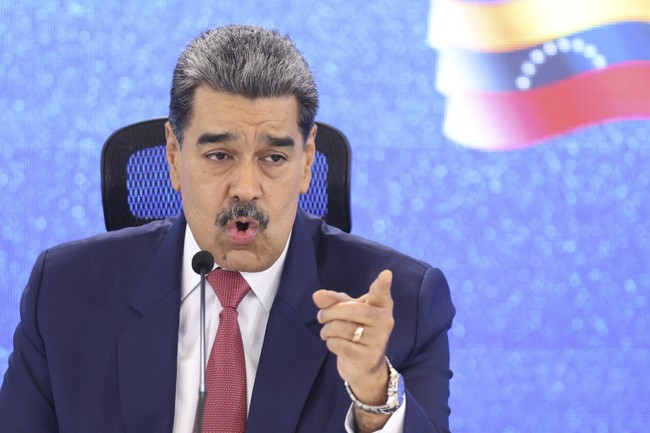
The United States carried out a decisive early-morning operation in Venezuela that resulted in the capture of Nicolás Maduro and his wife, Cilia Flores, according to officials, using elite special operations teams, coordinated regional forces, and precision aviation assets to neutralize threats and extract targets in under 30 minutes.
U.S. Secretary of War Pete Hegseth described the mission as “flawlessly executed,” highlighting a fast, focused raid that officials say targeted Maduro on charges including narco-terrorism and conspiracy to import cocaine. Authorities report Maduro and his wife were taken into custody during the operation, which American leaders framed as a major blow to criminal networks tied to state actors. The operation combined intelligence, special operations, and air power to reduce risk to U.S. forces while achieving its objective.
Sources indicate the extraction was carried out by operators from the U.S. Army’s Delta Force, supported by helicopters from the 160th Special Operations Aviation Regiment. The assault included coordinated strikes to remove air defense threats and secure the objective area, while on-the-ground and technical surveillance provided real-time targeting data. Officials emphasized that the mission required meticulous planning and interagency cooperation to avoid wider escalation.
President Donald Trump publicly stated he observed the raid from Mar-a-Lago and confirmed the mission had been delayed four days because of weather conditions, explaining that despite a helicopter sustaining damage, U.S. forces suffered no fatalities and only minor injuries. In his remarks he said the assault involved overwhelming assets and careful execution to accomplish the goal in a high-risk environment. The entire action capped in just under 30 minutes, according to officials.
At a Mar-a-Lago press conference, the President described the operation as one where “overwhelming American military power, air, land and sea was used to launch a spectacular assault, and it was an assault like people have not seen since World War II.” That language echoed the scale and coordination leaders attributed to the mission, which drew on assets across the hemisphere. The administration presented the raid as a demonstration of capability intended to deter hostile actors and degrade criminal logistics.
Regional buildup under a larger campaign provided the necessary posture to escalate if needed, with a forward-deployed carrier strike group and numerous bases contributing aircraft and support. Joint Chiefs of Staff leadership called the action audacious and noted participation from forces staged at multiple locations across the Western Hemisphere. Commanders said the scale was necessary to ensure timely support and contingency options while minimizing risk to civilians and U.S. personnel.
Nighttime, low-level helicopter operations were central to the extraction, with pilots and aircrews from the 160th Special Operations Aviation Regiment performing the most hazardous phases of insertion and extraction. SOAR, known as the Night Stalkers, specializes in covert, nocturnal flight profiles in hostile environments and is trained to operate under intense air-defense challenges. Their reputation for persistence is summed up in the motto “Night Stalkers Don’t Quit,” which officials cited when describing the unit’s role.
Airstrikes preceded or accompanied the assault to neutralize surface-to-air missile systems and other anti-aircraft threats that could have endangered the helicopters and transport aircraft involved. U.S. intelligence elements reportedly conducted months of covert reconnaissance and cultivated on-the-ground sources to deliver the actionable intelligence that enabled a pinpoint operation. Officials stressed that degrading integrated air defenses and isolating the objective were key to achieving the short timeline and preserving force protection.
The administration framed Maduro’s removal as part of broader efforts to disrupt networks funneling drugs and illicit finance that threaten the United States. Officials referenced an existing indictment from 2020 that alleges involvement in trafficking and conspiracies tied to narcotics distribution. Lawmakers and security officials argue taking down the Venezuelan leadership implicated in transnational crime networks is a step toward reducing fentanyl and other flows into the country.
Casualty reports from the mission indicate limited injuries among U.S. troops and no American deaths, though the operation did encounter resistance and equipment damage during the assault. Commanders emphasized contingency planning, medical evacuation capability, and rapid extraction procedures that contributed to the favorable outcome for U.S. forces. Diplomatic and military leaders acknowledged the risk of international reaction but framed the mission as necessary to protect national security interests.
Details continue to emerge as agencies declassify operational accounts and officials brief partners on the conduct and results of the raid. Expect additional disclosures about timelines, targeting authorities, and the interagency planning that supported the operation as the public record is updated. For now, military spokespeople characterize the action as a compact, high-stakes operation that achieved its primary objective through precision and overwhelming, coordinated effort.


Add comment