
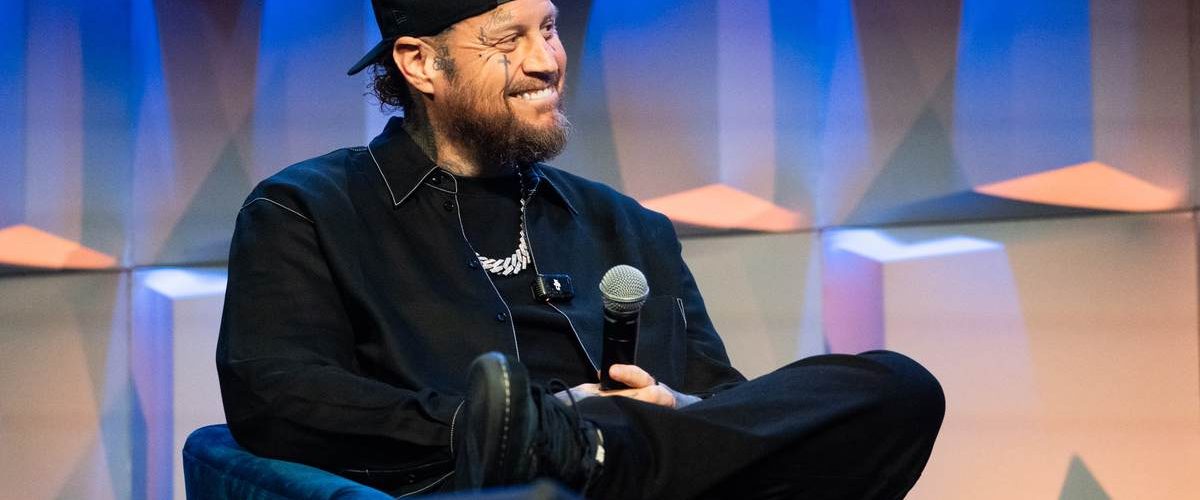
Jelly Roll used a high-profile late-night stage to mock President Trump and then told offended fans to stop listening, leaving many conservative country music listeners feeling dismissed. His guest-host monologue on Jimmy Kimmel Live leaned hard into partisan insults, and his follow-up comments made clear he’s willing to lose a chunk of his audience rather than dial back his rhetoric. That reaction collided with the reality that much of country music’s fanbase leans traditional, making his remarks feel especially provocative. What follows is a straightforward account of the kerfuffle, his background, and why conservatives felt betrayed.
Jelly Roll, born Jason Bradley DeFord, took the Jimmy Kimmel Live stage and delivered sharp barbs aimed at President Trump, adopting jokes clearly crafted for late-night consumption. The performance didn’t come off as playful ribbing; instead, it leaned into personal attacks about the President’s appearance and alleged attitudes. Those lines landed in a venue and at an hour where the audience expects humor, but many fans heard targeted political ridicule instead. For an artist who built much of his image on heartfelt songs and redemption, the tone felt like a jarring departure.
After the monologue, DeFord doubled down and addressed listeners who said they would stop streaming his music, saying, “So, for those who threatened to stop listening to my music based on my comments last night, I just want to say with conviction, go right ahead because I’m going to keep speaking my truth,” he said. “Or my name isn’t Post Malone.” Those words made his position unmistakable: he will prioritize speaking his truth over keeping a large segment of his fan base. That blunt challenge came across to many as a dismissal of the very people who helped lift him to mainstream success.
Country music tends to reflect traditional values for many fans, and Jelly Roll’s public persona — talk of faith, talk of turning his life around — encouraged a perception that he at least sympathized with that audience. That assumption now feels exposed as wishful thinking for some listeners who expect their favorite artists to respect their views. The reaction is not just about politics; it’s about perceived authenticity and reciprocal loyalty between artist and audience. When someone framed as a redemption story adopts a confrontational political posture, disappointment follows.
The singer’s past surfaced in critics’ reactions as well, with reminders of prior arrests, struggles with addiction, and a life that reads more like a reality show arc than a neat political identity. That backstory is part of his appeal — he sells honesty about hard living and recovery — but it also complicates claims of being a principled conservative voice. Calling him a “weapons-grade fraud” in the heat of criticism speaks to how strongly some fans feel misled. The split between an artist’s private evolution and public posturing is widening into a cultural rift.
DeFord has lately dipped into entertainment beyond music, appearing in WWE storylines and reinventing his public image with a dramatic weight loss. He framed the transformation as diet and exercise, pushing back against assumptions about pharmaceutical assistance. Observers remain skeptical, and talk of Ozempic or other aids circulates in gossip even as he insists the change is organic. That tension between image and explanation fuels further distrust among listeners prone to read celebrity moves as marketing rather than personal choice.
In his closing remarks on the show, Jelly Roll argued he was “pretty down the middle” politically and insisted on speaking out for dignity and compassion. He said, “My daddy always told me it is never too late to do the right thing,” and added, “Hurting hearts are more important than poll numbers, and there are no boundaries or borders for broken families.” Those lines read like an appeal to universality, but critics point out that delivering a sermon about neutrality while participating in a clearly partisan late-night format is disingenuous. Context matters, and the platform he chose made his performance look like an explicit alignment.
His quip, “Who would have guessed I’d get in more trouble with the president than Rosie O’Donnell?” aimed to be self-deprecating, but it underscored the spectacle more than it softened the blow. For conservatives who trusted his music, this feels less like a joke and more like a break in the relationship between artist and audience. The consequence isn’t just political; it’s commercial and cultural, as listeners consider whether to keep supporting someone who publicly dismisses their values.
The fallout shows how quickly celebrity statements can reshape an artist’s image, especially in genres tied to identity and tradition. Fans who once saw Jelly Roll as one of their own now wonder if he ever was, or if the persona was always for show. Whatever the intention, the result is a clear schism: an entertainer betting that speaking unfiltered will outrank retaining a conservative fanbase. That gamble will play out in record sales, ticket purchases, and the ongoing conversation about what counts as authentic in modern country music.
At stake is more than a few headlines and a late-night monologue; it’s the trust between performer and audience. When an artist openly tells a segment of listeners to stop paying attention, he forces a choice: accept the new terms or walk away. For many in the country crowd, that ultimatum felt personal, not political, because their support was part of a reciprocal arrangement that now looks broken. The coming months will show whether Jelly Roll’s stance costs him the fan loyalty he once relied on.
https://x.com/TheCalvinCooli1/status/2093023084068389354


Add comment