
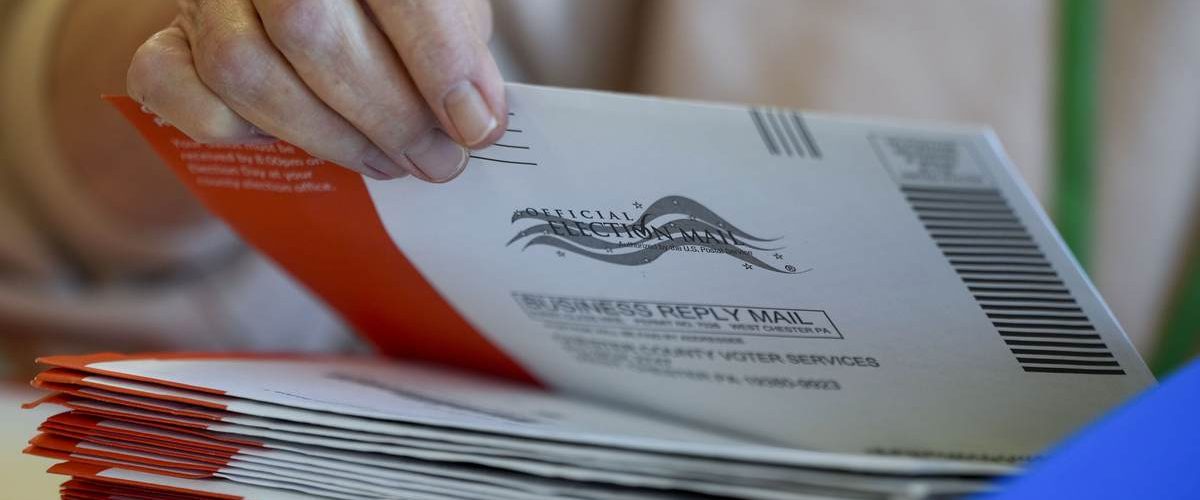
The Postal Service finalized a strict new rule for handling mail-in and absentee ballots, the Supreme Court allowed parts of that process to proceed, and then a federal judge paused key elements with a 14-day restraining order—setting up a fast-moving legal showdown that could affect how ballots are printed, tracked, and delivered ahead of the 2026 midterms. This article walks through the timeline, the odd procedural twist where implementation had to occur before a full legal challenge could proceed, and why the short pause matters for election administrators and voters alike.
The U.S. Postal Service moved forward with a new ballot-handling rule that requires states to identify ballot recipients and use unique identifiers on ballot envelopes so pieces can be individually tracked. The change went into effect after the Postal Service finalized the operational steps the Supreme Court said were necessary before a challenge could be heard. That Supreme Court action cleared the way for implementation but did not rule on whether the policy is lawful.
Almost immediately, several states filed suit arguing the finalized rule exceeded the Postal Service’s authority and improperly put the agency in the middle of federal election administration. Those states said the new requirements would force them to redesign ballots, change production schedules, and upload voter data into a Postal Service portal on a timeline that many cannot meet. The plaintiffs contend this imposes practical and constitutional hurdles just weeks before ballots are supposed to be mailed.
U.S. District Judge Indira Talwani, an Obama appointee, agreed that the plaintiffs had shown enough to justify temporary relief and entered a 14-day temporary restraining order. Talwani emphasized the compressed timeline and the practical impossibility of complying with the new rule before the midterms. Her order means certain portions of the Postal Service’s procedures are paused while the court sorts out the broader legal questions.
What makes this sequence ironic is that the Trump administration effectively had to trigger implementation of the policy to allow the challenge to mature into a case the Supreme Court considered ripe. In other words, opponents needed the finalized rule in place before they could properly litigate whether the Postal Service exceeded its statutory authority. That procedural back-and-forth created a scenario where courts are reacting to an implementation that was itself prompted by a prior court’s guidance.
Judge Talwani spelled out why the states claimed irreparable harm and the logistical nightmare they faced on the eve of the midterms. “Based on the record presently before the court, Plaintiff States face irreparable harm where they are required to comply with a likely unconstitutional regulation for which compliance is practically impossible as to the 2026 midterm elections, now little more than two months away,” Talwani wrote in her 11-page order. “Most Plaintiff States have already ordered their mail ballots, and some are required by state law to send them to eligible voters as early as next week.”
The judge went on to note the cascade of steps states would need to take: redesign ballots, obtain approvals, reorder production, update election management systems, train staff on a new portal, and upload citizen data. “The states, she continued, ‘have neither time nor funds to design new mail ballots, seek approval of the new designs, order production of mail ballots, update their own election management systems, train election officials to use the USPS portal, and upload citizen data to the portal, all before the midterms.'”
The back-and-forth between the courts highlights a larger debate about administrative reach and election integrity. Supporters of strict tracking argue that unique identifiers and clear recipient designations reduce fraud, improve chain-of-custody, and bolster voter confidence. Critics say the Postal Service lacked authority to impose such operational requirements on states and that sudden changes so close to an election risk disenfranchising voters and disrupting long-standing administrative practices.
For election officials on the ground, the window to adapt is already narrow. Many states have printed ballots and set mailing schedules that cannot be easily altered without incurring costs, delays, and potential legal exposure. The temporary restraining order buys a short breathing spell, but the court calendar moves quickly and the stakes are high with ballots soon headed to printers and, in some places, already in transit to voters.
Legal momentum now shifts toward a follow-up hearing set for September 3, when the court will consider whether to extend the pause or allow more of the Postal Service’s rules to take effect. Whatever happens in the next weeks will shape the mechanics of absentee and mail-in voting for these midterms and could set precedent for how much procedural authority the Postal Service may exercise in future federal elections.
https://x.com/scotus_wire/status/2093149110089974089
Republican officials and advocates who favor stricter ballot handling will watch the case closely, arguing that transparent tracking and accountability are critical to election security. Meanwhile, state election administrators and Democratic officials pressing the challenge will emphasize the operational burdens and timing risks imposed by sudden federal-level changes. The 14-day order is temporary, but the legal and practical reverberations could last well beyond it.


Add comment