
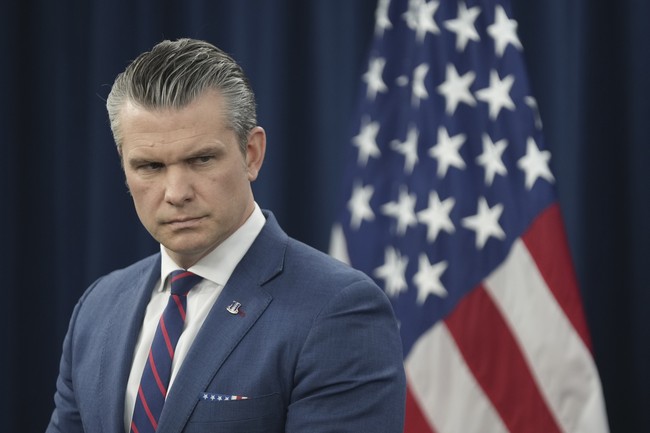
Secretary of War Pete Hegseth briefed the public at CENTCOM about Operation Epic Fury, laying out progress, strategic aims, and the U.S. posture toward Iran while CENTCOM Commander Admiral Brad Cooper detailed mission objectives and results to date.
Hegseth traveled to U.S. Southern Command headquarters earlier in the day and then addressed reporters at MacDill Air Force Base in Florida to update Americans on the campaign against Iran’s ballistic and military capabilities. The press briefing combined operational updates with diplomatic outreach in the hemisphere and a clear message about sustained U.S. resolve. Officials emphasized coalition building and logistical readiness as complementary pieces of the military effort. The tone was firm: deterrence and degradation of enemy capability remain priorities.
That morning Hegseth convened partners across the Americas to shore up regional security cooperation and counter transnational threats, highlighting the interlinked nature of security in the Western Hemisphere. The meeting brought together an international contingent of countries in the Western Hemisphere to secure commitments to shared values and defense. Officials framed this diplomatic work as part of a broader strategy to deny safe havens and choke off malign support networks. Coordination with regional partners is now a continuing element of U.S. policy.
At the CENTCOM presser Hegseth warned against any Iranian miscalculation, reassuring observers that U.S. munitions and stockpiles remain robust. Sec. Hegseth spoke about a possible “miscalculation” on the Iranian leadership’s part, assuring any foes looking on that the U.S. “has no shortage of munitions. Our stockpiles of defensive and offensive weapons” are not running out any time soon::. The message was straightforward: American supply lines and production capacity underpin long-term operations. That clarity is meant to deter escalation by demonstrating sustained capability.
Admiral Brad Cooper was introduced to explain the operational arc and the specific tasks the president assigned to the military. The secretary said of Cooper, “You are the man for this mission,” before the admiral outlined actions taken and systems targeted. Cooper focused on dismantling Iran’s missile production and ensuring the country cannot readily reconstitute the threatened capabilities. The briefing emphasized methodical, strategic targeting rather than aimless escalation.
Admiral Cooper framed the mission as one of lasting capability reduction rather than temporary damage, making clear the administration’s objective to prevent future threats. He described the administration’s direction and the military’s response in precise terms, stressing systemic dismantlement of production networks. In a quoted summary of his remarks, Cooper stated the goal in stark terms: “.@CENTCOM Commander Admiral Brad Cooper: “@POTUS gave us another task — to raze or level Iran’s ballistic missile industrial base. We’re not just hitting what they have, were destroying their ability to rebuild…we will systemically dismantle Iran’s missile production capability for the future, and that’s absolutely in progress.”” That quotation underscores the depth of the plan.
Press exchanges touched on a range of tactical and humanitarian concerns, from the use of new drone systems to questions about refugee flows and regional stability. Officials denied claims that U.S. aircraft had been downed and described such reports as propaganda aimed at domestic audiences inside Iran. The briefers stressed that accurate situational awareness and careful public messaging are vital to maintaining coalition cohesion. They also reiterated that operations are calibrated to degrade enemy capability while minimizing collateral escalation.
During the Q and A Hegseth repeated CENTCOM’s rejection of Iranian propaganda and clarified U.S. expectations for regional partners. Independent reporting from the briefing highlighted key takeaways, captured here in CENTCOM’s summary: – President will have “a heck of a say” in next Iranian leadership; – Reports of F-15 shot down are false, characterized as Iranian propaganda for domestic audience which is cut off; – On reports of chaos, “couldn’t be further from the truth‘; – Iran’s attacks on regional nations is driving them closer to the US. Those points reflect an operational narrative intended to reassure allies and undermine Tehran’s messaging.
Hegseth closed with a firm declaration about control of the campaign timeline and American determination. He left no doubt about who sets the tempo: “Our timeline is ours and ours alone to control. AS LONG AS IT TAKES TO ENSURE the United States of America to achieve these objectives,” Hegseth said. That pledge reinforces a steady, mission-focused posture and signals to both friends and adversaries that commitments will be maintained until strategic aims are met. It also frames the operation as a measured, outcome-driven effort consistent with national security priorities.



Add comment