
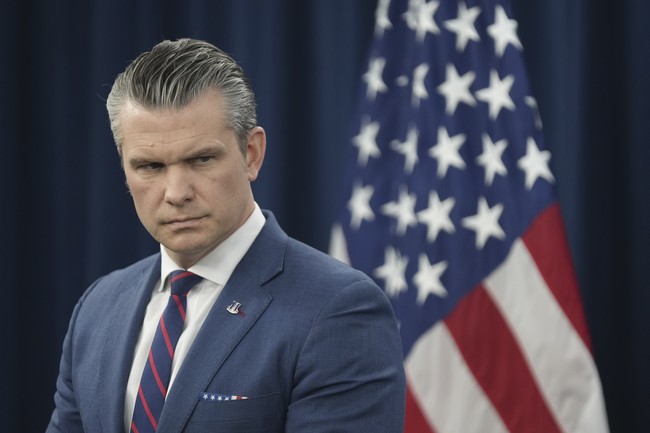
Preamble: This piece covers Secretary of War Pete Hegseth’s sharp West Point commencement speech condemning “woke” leadership, his push to restore a warrior ethos in the military, and the broader Republican argument for a strong, combat-ready force under a Department of War model.
Pete Hegseth used West Point’s platform to make a blunt, Republican case for a fighting force built on discipline, merit, and mission focus. His remarks targeted leaders who, he said, substituted ideological programs for military readiness, turning service academies into cultural projects rather than training grounds for warriors. That pushback fits a larger GOP effort to reassert traditional military values and rebrand parts of the defense establishment to reflect combat purpose. The speech landed as part sermon, part pep talk, and part policy stump about priorities for a country that faces real threats.
Hegseth leaned on an old soldier’s logic, one that values those who can close with the enemy and win. He placed character and combat skill above trendy diversity initiatives, arguing that lethal effectiveness cannot be traded for social engineering. For Republicans, this is not mere rhetoric; it’s a policy direction aimed at rebuilding deterrence and ensuring forces are equipped, trained, and mentally prepared to fight. The idea is simple: a strong military protects liberty, and ideology that weakens cohesion risks everything it claims to defend.
Earlier in the piece I referenced a quote attributed to Heraclitus that captures the warrior mindset and the rare quality of true fighters. I used that to frame Hegseth’s central point: the institution must produce the one who brings the rest home. Restoring that focus requires rejecting programs that emphasize identity over ability. It also demands leaders who prioritize combat power, logistics, and training over curriculum experiments and campus-style culture wars inside academies.
Hegseth did not mince words when he accused some leaders of turning service schools into something they are not meant to be. The argument wasn’t against talent from diverse backgrounds; it was against converting our armed forces into an extension of campus politics. He emphasized that cadets are soldiers, trainees in the profession of arms, and that their education should shape warriors, not activists. That tension reflects a long-running conservative critique of institutional drift away from core missions.
“We saw woke and weak leaders trying to make West Point look like woke Princeton, which happens to be my long lost and lost alma mater,” he said. This line landed as a barb and as a cultural thesis: the people running parts of the system turned it inward. He accused them of introducing academic programs and hiring faculty who, in his view, advanced anti-American ideas. Those exactly quoted lines are central to the speech and were delivered without qualification as a direct rebuke.
“They tried to introduce diversity and inclusion studies. They hire professors who advocated for anti-American ideologies right here in these halls, but no more.” That accusation points to a broader Republican demand for accountability and curricular clarity in military education. Conservatives want admissions, faculty choices, and course content aligned with defense priorities and national security, not party or activist agendas. The claim is that ideological incursions weaken esprit de corps and operational effectiveness.
“Let me be perfectly clear, you are not an ‘army of one’, and you are certainly not an army of woke. You are an American army, an army of warriors,” he said. That line summarizes the speech’s rallying cry: collective duty, unity of purpose, and focus on defeating enemies abroad. Republican policymakers and veterans who support Hegseth’s stance see this as restoring the moral clarity required for a profession that sometimes asks the ultimate sacrifice from its members.
Practically, Hegseth’s argument extends to organizational naming and posture. Calling the Pentagon a War Department again is symbolic but purposeful under this view: words shape institutions. The suggestion is to stop softening the language around national defense and instead make every part of the force structure reflect combat readiness and mission clarity. Symbols matter when you are trying to fix culture, and conservatives believe a return to warrior language reinforces expectations and standards.
Beyond slogans, the speech pushed for tangible outcomes: better equipment, tougher training, and leadership that prioritizes victory. The Republican position is that when troops are called to fight, they must be the best equipped and most prepared on the planet, and leadership must not squander that advantage on internal social experiments. That stance also rejects capricious deployments; when troops go forward, they should do so with overwhelming lethality and purpose.
Viewers can watch Hegseth’s full address embedded below to judge the tone and content for themselves.
Editor’s Note: Thanks to President Trump and his administration’s bold leadership, we are respected on the world stage, and our enemies are being put on notice.
Help us continue to report on the administration’s peace through strength foreign policy and its successes. Join and use promo code FIGHT to receive 60% off your membership.


Add comment