
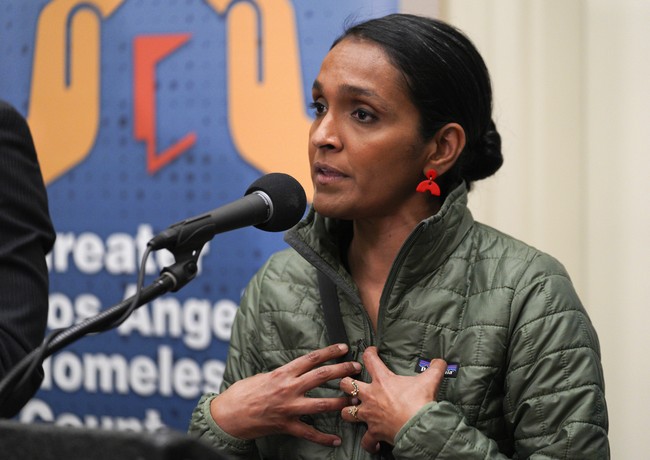
Nithya Raman’s debate performance and campaign choices landed her in hot water when a moderator raised a tough question about her consultant hires, the audience — mostly Democrats — reacted angrily, and Raman’s answers failed to calm concerns about judgment and associations.
California politics often feels like theater to voters who don’t side with the dominant party, and the Los Angeles mayoral contest has been no exception. After a crowded primary left Karen Bass and Nithya Raman as the final two, the campaign trail has exposed awkward strategic calls and missteps that matter to Angelenos tired of bad judgment from city leaders. Voters want leaders who can manage crises, not dodge questions about who they hire to run their messaging.
https://x.com/LAMaterialNews/status/2090523580773658700?ref_src=twsrc%5Etfw
At a recent mayoral debate, reporters pressed Raman about the fact she used a political consulting firm linked to a scandal-plagued campaign elsewhere. The reveal did not land well with the crowd, which reacted with boos and jeers. That kind of reaction from a largely friendly audience is a signal that questions about judgment can cut across party lines.
The moderator posed a direct question about the consultant connection and whether Raman had weighed the potential fallout from it. The interrogation was simple and important: does hiring a firm tied to a failed campaign with serious allegations against its candidate reflect sound decision-making? Voters deserve clarity when candidates pick teams that will shape how they respond in crisis moments.
“[It was] reported that you’ve hired the same political consulting firm that managed Graham Platner’s campaign in Maine, who had to resign amidst sexual assault allegations. Is that true? And is that the best choice? And why did you make that decision?”
Raman’s initial response tried to reframe the hire as a practical choice about producing ads and keeping staff intact. She emphasized her desire to win and to invest in her team, but the answer came across as evasive and repetitive. Voters hearing “I want to win” after detailed concerns about associations are going to ask for more than a slogan.
“Well, I did hire an advertising agency to make my paid ads, who also worked with Mayor Zohran Mamdani’s successful campaign…Here’s what I do want to say, that I do want to win this race. I’ve retained most of my good campaign staff … we’ve made sure to invest in our team, and I hope that we can win this seat, and I’m going to work as hard as I can to win.”
The moderator pushed harder and asked whether Raman had weighed pros and cons of being tied to the Platner campaign. That follow-up was the right move. It forced Raman to address judgment directly, and she stumbled through an answer that repeated itself and failed to make a convincing case.
“Absolutely. But we wanted to make sure that we were hiring good people to make our ads. We have to get talent to be able to run our team. We we we we weighed the issues.”
When pressed further, Raman pivoted to highlighting potential flaws in her opponent’s circle, raising a conflict-of-interest angle tied to an advisor who had done crisis work in the wake of a warehouse fire. Pointing out problems in your opponent’s camp is fair, but it doesn’t excuse weak decisions in your own. Judgment matters in both hiring and accountability.
The ad firm in question released a statement defending its work and framing the partnership as aligned with a campaign “that actually believes in taking on a broken status quo and a corrupt political establishment to finally make things work in L.A. again.” That language is boilerplate for campaigns seeking credibility, but it does not erase the optics of past associations. Voters care about substance over slogans.
“We decided to make ads for the campaign that actually believes in taking on a broken status quo and a corrupt political establishment to finally make things work in L.A. again.”
The moderator summed it up plainly: this is a question of judgment. That’s exactly the point. Raman’s choice to hire a firm with a controversial track record, and her inability to give a crisp, accountable answer when asked, left the audience — and many voters — unimpressed. Campaigns must show they pick partners who won’t create more headaches when things go wrong.
Los Angeles voters now face a choice between two leaders whose decisions have raised concerns, and each side will claim the other has worse judgment. In the end, this race is about who can actually govern a city in crisis, not who can deliver the catchiest line at a debate. Judgment in hires, clarity in answers, and consistent accountability are the basics Angelenos deserve.



Add comment