
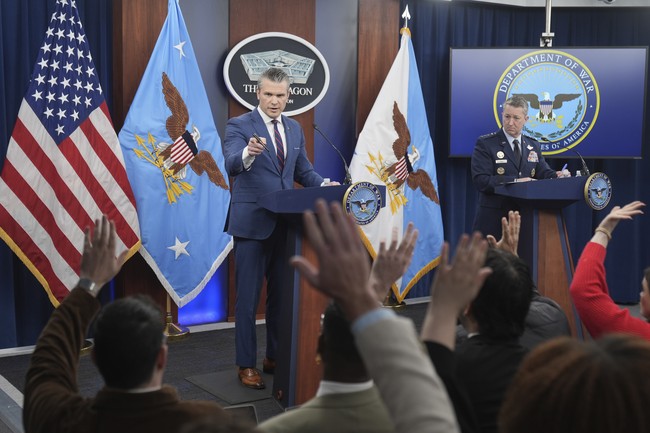
A senior U.S. official says the Pentagon dismissed longtime Stars and Stripes publisher Max D. Lederer Jr. not only for insubordination but also for presiding over years of declining reach and relevance, accelerating a leadership change that senior officials say is meant to modernize the outlet and sharpen its focus on service members’ needs.
On Friday a senior official offered a blunt assessment of Max D. Lederer Jr.’s exit: “Max was fired for insubordination, but he was also fired because he oversaw the massive decline of Stars and Stripes throughout his time as the publisher. He was lazy, terrible at his job, and lacked proper vision.” That frank critique frames the personnel move as more than a clash over editorial direction; it is a reaction to long-term performance failures tied to audience loss and organizational drift. The official’s words were offered as context for separation notices issued to Lederer, editor-in-chief Erik Slavin, and .
https://x.com/lara_korte/status/2090883997651939424?s=20
Public records underline the decline officials described: print distribution fell from roughly 7 million annual copies in 2019 to 6.2 million in 2024, while unique visitors to stripes.com dropped from about 20 million to 14 million over the same span. Stacks of unread papers were reportedly found even inside the Pentagon, a striking sign that the product was not delivering for its core readers. Leadership changes, from the Pentagon’s perspective, are meant to stop the slide and force Stars and Stripes to compete in today’s information landscape.
Navy Capt. Bill Urban, the new Military Deputy to the Publisher, laid out a modernization plan in an open letter to stakeholders emphasizing operational updates, expanded digital and social reach, and a sharper focus on delivering value to the force. “We can do better—that we must do better for our most important constituency, the men and women who make up the U.S. Armed Forces,” he wrote, making clear the priority is usefulness for service members first. That stated aim ties directly to the Department of War’s insistence that the outlet be relevant to warfighting and to the daily information needs of troops.
Officials argue the previous leadership tolerated “woke distractions” that pulled attention away from content soldiers and sailors actually rely on. From the Pentagon’s view, editorial independence is real but not absolute; it exists within the responsibility to serve the uniformed audience and to meet basic performance expectations. Stars and Stripes receives roughly half of its $29 million budget from taxpayers, and civilian leadership says that public funds require a product that earns its keep by connecting with and informing military readers.
Slavin and another staffer reportedly received separation notices that cited insubordination after remarks in a July interview where they suggested content realignment could amount to “censorship” and a “red line.” That stance, officials say, missed the point that serving the troops is the statutory duty of the outlet and that strategic priorities set by elected civilian leadership must be respected. The Pentagon’s position is that independence does not mean exemption from oversight or performance standards when taxpayer dollars and mission effectiveness are involved.
The senior official added a personal rebuke about Lederer’s tenure: “I can’t believe he was allowed to serve in that role for as long as he did. Those mourning him never wanted to see Stars and Stripes become a real competitor.” That comment underscores a broader institutional impatience with leaders who preserve the status quo instead of driving results. For the new team, the insult of stagnation is a call to action: update the product, grow reach, and make the newsroom answerable to metrics that matter to the force.
Critics in some media outlets responded predictably to the firings, framing the story as a fight over press freedom and editorial independence. Pentagon officials counter that modernization and accountability for performance are legitimate goals, especially when the organization is meant to serve a concentrated audience of 1.4 million daily readers that includes large numbers of service members. The objective now is to rebuild relevance without sacrificing professional standards or the outlet’s ability to report freely on issues that affect the military community.
These personnel moves mark a clear shift in priorities at Stars and Stripes: a push toward digital growth, tighter relevance to warfighting issues, and a willingness by civilian leaders to replace long-serving managers who didn’t deliver. The new leadership has been tasked with restoring competitive energy and ensuring the publication meets the needs of the uniformed public. This story is unfolding as officials implement the changes they say were long overdue, and the focus remains on rebuilding a once-prominent institution for a modern information era.



Add comment