
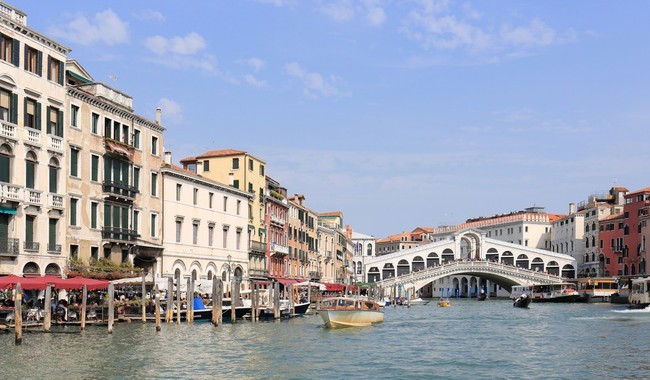
Greta Thunberg staged a protest in Venice that dyed a section of the Grand Canal green, sparking outrage and ridicule from conservatives who see these stunts as attention-seeking vandalism rather than serious environmental advocacy. Critics argue the act did damage to a delicate waterway, drew predictable headlines, and highlighted a broader pattern of performative activism that prioritizes spectacle over substance. This piece examines the protest, the activists’ motives, and why many on the right view such actions as counterproductive and deserving of firmer consequences.
The Venice protest looked like a manufactured photo op more than a thoughtful campaign. Activists poured dye into the Grand Canal to make a vivid statement, knowing full well the image would spread across social media. For many conservatives, this confirms what they’ve suspected all along: modern climate activism often trades real solutions for viral moments.
Those who defend the stunt say symbolic acts can raise awareness, but critics ask awareness of what exactly. Did staining a historic waterway fix pollution, reduce emissions, or change policy at international climate talks? From a practical standpoint, the answer appears to be no. The tactic instead replaced sober debate with theatrics, and that shift frustrates people who want measurable results.
Authorities responded with a small fine, which has only fed the perception that the legal system treats political vandalism lightly. When penalties are minor, the calculus for activists is clear: a few hundred dollars in fines is a small price for front-page attention. Many conservatives argue that if the law is not enforced firmly, these acts will multiply because the reward — publicity — outweighs the risk.
There is also a cultural angle. Mainstream media outlets rushed to cover the stunt with dramatic language, often ignoring questions about environmental impact and legality. That selective framing fuels the divide between activists and everyday people who see things differently. For those on the right, it’s not just the dye or the disruption; it’s the comfortable echo chamber that turns attention-grabbing acts into moral victories.
Greta Thunberg’s critics point to a pattern of escalating stunts — from blocking traffic to vandalism against cultural institutions — and ask where responsibility fits into the narrative. They see a corps of activists who are celebrated for breaking norms but rarely held to account for the consequences. This criticism isn’t a disagreement over climate science; it’s a demand for accountability and tactics that actually work instead of performative gestures.
The spectacle also has international implications. The protest coincided with global summits where diplomats and negotiators are trying to strike complex deals, not stage photo shoots. To many conservatives, hijacking iconic sites like Venice for dramatic effect undermines the quieter, often tedious work of policy-making. If the goal is long-term change, disrupting the forums where change can be negotiated seems like a strange strategy.
Public reaction has been mixed, but the conservative critique is unequivocal: stunts that damage public spaces or historic sites are unacceptable, even if the goal is raising awareness about climate issues. There’s a belief that activists should pursue durable solutions — technological innovation, market-based incentives, and sensible regulation — rather than courting viral outrage. Until that balance shifts, similar confrontations between activists and the public will likely continue.
Beyond the protest itself, there’s a conversation to be had about consequence and deterrence. If fines remain trivial and arrests rare, the incentives will favor repetition. Conservatives argue for clearer enforcement and penalties that reflect the harm done, not just token fines that allow repeat performances. Without stronger deterrents, the cycle of spectacle for attention’s sake is likely to continue.
Ultimately, the Venice incident is a snapshot of a larger debate about how environmental advocacy should be conducted in a democratic society. Those on the right want focused, responsible action that respects property, culture, and the rule of law while addressing environmental concerns. Until activists and institutions move toward that model, expect more headlines and more frustration on both sides of the issue.
— Samantha Smith (@SamanthaTaghoy)



Mʏ ʟᴀsᴛ ᴘᴀʏ ᴄʜᴇᴄᴋ ᴡᴀs 8500 ʙᴜᴄᴋs ᴡᴏʀᴋɪɴɢ 10 ʜᴏᴜʀs ᴀ ᴡᴇᴇᴋ ᴏɴʟɪɴᴇ. My younger brother friend has been averaging 11k ʙᴜᴄᴋs for months now and he works about 22 hours a week. I cant believe how easy it was once I tried it out…….
Tʜɪs ɪs ᴡʜᴀt I ᴅᴏ__________ PayAtHome1.Com