
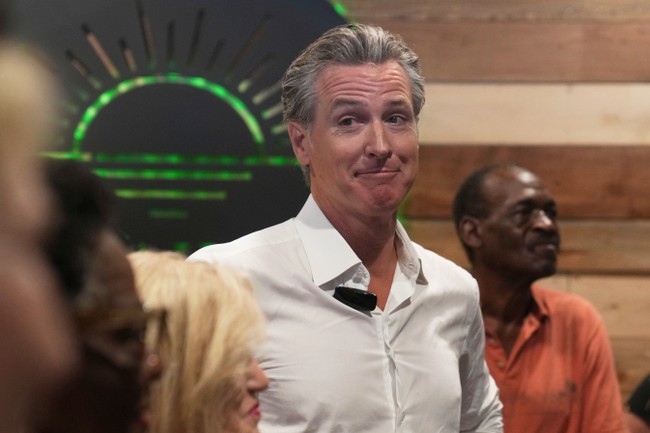
Gavin Newsom’s recent appearances reveal a pattern of vague answers, performative gestures, and misplaced references to historical figures, raising real doubts about his readiness for the presidency from a conservative perspective.
We’ve watched candidates self-destruct under the national spotlight before, but Newsom’s stumble while still unofficially courting a campaign is striking. He’s been traveling on a book tour, trying to raise his profile, yet his public moments have often come off as awkward and unfocused. That disconnect matters when voters expect clarity and concrete goals from anyone seeking the White House.
Press encounters that should expose policy and priorities instead highlight style over substance. At one appearance he faced easy questions and even received what amounted to flattery about his looks, an exchange that did nothing to test his vision. That kind of soft treatment won’t prepare a candidate for the rigors of a general election or the tough scrutiny presidents face daily.
More damaging are the incidents that revealed deeper problems in messaging and temperament. In Georgia he told a mayor, “I’m just like you,” followed by a reference to scoring a 960 on the SAT and an admission that he couldn’t read a speech. Those remarks prompted backlash and left supporters scrambling. Then he lashed out at Sean Hannity, and his staff reportedly told a reporter to “f**k off” when pressed about documents related to a dyslexia diagnosis, actions that underline a poor command of campaign optics and restraint.
There’s also a pattern of trying to define himself by attacking President Donald Trump rather than by laying out a positive agenda. Attacking an opponent is part of politics, but it looks weak when it substitutes for a concrete plan. Voters want to know what a candidate will accomplish, not just whom they oppose.
When asked directly about his goals for a possible 2028 run, Newsom’s answer was thin and unfocused. He mentioned figures like Mahatma Gandhi, Vaclav Havel, and Nelson Mandela, invoking their names without offering a clear policy throughline or specific objectives. Those leaders had definable agendas; borrowing their aura without substance reads as vapid name-dropping rather than leadership by conviction.
His mannerisms during that exchange — numerous hand motions and a lot of theater — added to the impression that he was avoiding the real question. A candidate’s gestures can be memorable, but not in a good way when they hide a lack of content. If the goal is to ride nostalgia or aesthetic appeal, that’s not a strategy that convinces skeptical, results-focused voters.
Compare this to past campaign misfires to see why the tenor of Newsom’s remarks matters. Kamala Harris struggled in 2024 to differentiate herself from Joe Biden, which left voters wondering what she would do differently. Similarly, Ted Kennedy’s poor response in the 1980 cycle cost him momentum before he was fully in the race. The lesson is the same: campaigns require concrete priorities that connect to voters’ daily concerns.
Policy clarity is the litmus test for presidential readiness. When a candidate can’t articulate a basic set of goals — for example, how they would secure the border, restore economic growth, or protect public safety — they fail the fundamental test of leadership. Donald Trump offered focused promises like fixing the border and delivered policy changes that voters could measure; that focus is what wins trust and results.
Newsom’s record in California raises further doubts about his claims to be a results-oriented governor. Problems in his home state — from public safety challenges to economic and regulatory issues — provide a real-world record for opponents to point at. Without a clear, persuasive plan to address national problems, he risks being judged by those outcomes rather than by campaign speeches.
Ultimately, voters tend to favor candidates who offer specific solutions and a record of execution over those who trade on charisma or iconography. Naming admired historical figures is not the same as articulating a roadmap for action. If Newsom hopes to be taken seriously on the national stage, he’ll need to trade style for substance and give the American people straightforward answers about what he intends to achieve.

He is one evil and twisted sick bastard!