
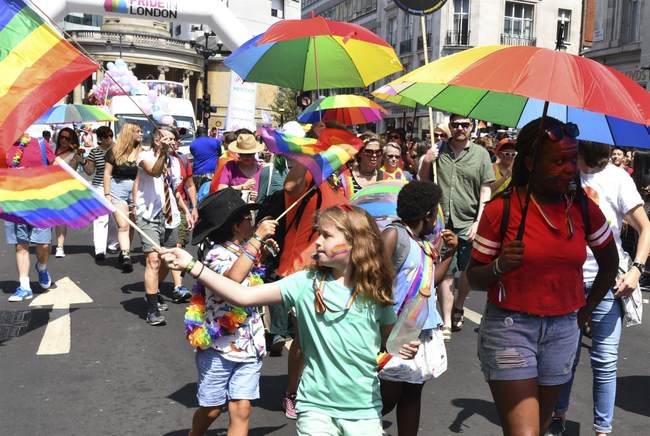
The Fort Worth incident where police threatened to ticket Christian street preachers for allegedly “offensive” speech exposed a worrying misunderstanding of the First Amendment, sparked local outrage, and forced the department to promise retraining while conservatives demand accountability.
Two Fort Worth officers confronted a Christian street preacher and a retired federal agent at a Trinity Pride Fest event and suggested they could be cited for speech that might offend someone. The idea that officers can issue tickets for mere offense shows a dangerous lack of constitutional literacy among those sworn to uphold the law. Texans expect police to protect rights, not to invent new restrictions based on someone’s discomfort.
The first officer involved identified herself as Sarah and asserted she would issue a ticket if the preacher’s words offended passersby. That exchange, caught on camera, quickly became central to the controversy and drove calls for immediate action. Conservatives and pro-police voices alike found the officer’s claim baffling and constitutionally unsupportable.
A prominent police news outlet called for the officer’s resignation or termination, calling the interaction “a blatant violation of the First Amendment.” The outlet’s statement argued that officers do not have the authority to ticket people for speech that offends others and said the behavior erodes public trust in law enforcement. In a charged cultural climate, clarity on constitutional limits is nonnegotiable.
https://x.com/bluelivesmtr/status/2075233516795592932
On behalf of the largest police news outlet in the world, we’re officially calling for the resignation or termination of this officer IMMEDIATELY.
A female Fort Worth police officer was caught on camera threatening to ticket a retired federal law enforcement officer and Christian street preacher for “offensive speech.”
The officer told the man that if someone is offended by his preaching, then “we have a problem” and said she would issue him a ticket. When he asked if she was really going to ticket him for offensive speech, she replied, “Yes, I am.”
This is a blatant violation of the First Amendment. Police officers do not have the authority to ticket people for speech that offends others. That is the exact opposite of how freedom of speech works in America.
The fact that this officer targeted a retired federal law enforcement officer who was simply preaching makes this even more unacceptable.
Departments that employ officers who openly disregard the Constitution need to clean house. This kind of behavior erodes public trust and makes every good officer’s job harder.
Pass this along so more people see what is happening on our streets.
Colleagues on the right raised eyebrows at the officer’s approach, with one asking whether her prior training came from abroad, a jab at policies perceived as importing misguided approaches to policing. The question underscored a broader concern: are some police departments losing touch with American legal fundamentals? The public deserves officers who know the bounds of lawful enforcement and protect basic liberties rather than curtail them.
Another clip shows a different officer fumbling through legal logic when the preacher asks if the protesters who allegedly offended him would be ticketed for their conduct. The interaction revealed confusion about equal application of law and about what constitutes an actionable offense. The officer’s uncertainty was not a small mistake; it was a demonstration of why robust, constitutionally grounded training matters for every patrol officer.
The preacher presses, asking what happens if he is the offended party when others swear or behave in a way he finds shocking, especially around children. The officer hesitates, then admits there is “not much on our side to do anything [about that],” reflecting a disturbing double standard. Officers are supposed to enforce the law evenly, not pick and choose whose rights matter more or less.
Public reactions quickly escalated, and pressure mounted on the Fort Worth Police Department to respond. Critics demanded accountability and argued that training must emphasize constitutional protections and impartial enforcement. The department acknowledged the need for careful handling of First Amendment activity and promised additional education for officers involved in such incidents.
Officials released a statement asserting the City of Fort Worth and the Fort Worth Police Department recognize that incidents involving First Amendment activity require thoughtful consideration and understanding of the law. That admission is welcome but it must lead to real action, not empty words. Citizens should see clear policy changes and concrete training modules focused on free speech and public demonstrations.
The department said in a obtained by local media: “The City of Fort Worth and the Fort Worth Police Department recognize that incidents involving First Amendment activity require thoughtful consideration and understanding of the law.” The statement signals the department knows this was mishandled, but words must be followed by measurable steps. Officers must be armed with the legal knowledge to protect rights, not to threaten them.
Observers on the right noted empathy for the male officer who seemed overwhelmed but no sympathy for the officer who threatened enforcement without legal basis. The critique was sharp and direct: if you’re going to act authoritative, know the law. Citizens rely on police to uphold constitutional freedoms, and when officers assert powers they do not possess, they damage trust and invite political backlash.
Fort Worth now faces a simple choice: implement meaningful training, clarify policies, and hold accountable any officer who disregards constitutional limits, or risk continued erosion of public confidence. The stakes are clear because constitutional freedom of speech is not negotiable, and law enforcement should be the first line of defense for those liberties, not their contesters.

Add comment