
I’ll explain the incident at the Ford plant in Detroit, describe the interaction between President Trump and the employee, report on the employment and union responses, include exact quoted statements from the involved parties, and place the original embeds where they appeared.
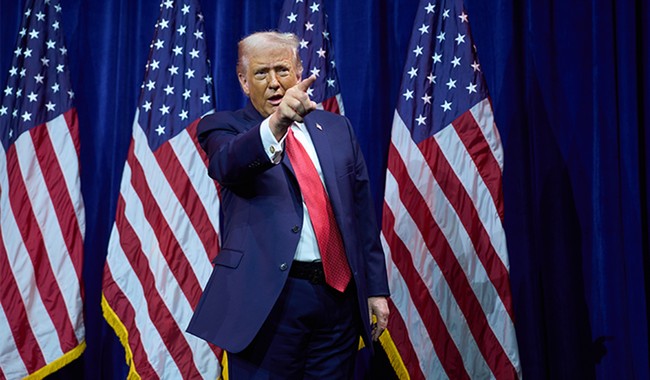
President Trump visited a Ford truck plant in Detroit and later spoke at the Detroit Economic Club, where a line worker interrupted his tour with a loud accusation. The employee, identified as T.J. Sabula, shouted “pedophile protector” at the president while he walked through the facility. That outburst quickly drew attention from those nearby and from people watching the footage later.
According to observers, Trump responded with a raised middle finger toward the worker and may have added a verbal retort. The exchange was short but vivid, and an onlooker captured some of it on video. The moment highlighted the tension that can flare when political figures visit workplaces and face direct confrontation from disgruntled employees.
Word of the confrontation spread fast on social media, and within a day Sabula was suspended from his job pending an internal investigation. Sabula, a 40-year-old line worker, told reporters he had no regrets about calling out the president. He stated, “As far as calling him out, definitely no regrets whatsoever.”
Details about Sabula’s online behavior emerged as well, with observers noting his public posts and profile choices. A report indicated his social media showed a photo of Trump with a raised middle finger and anti-Trump political cartoons previously shared. Records also suggested he did not vote in the 2024 election despite being registered in Detroit.
A Democratic congresswoman urged caution and sympathy for the suspended worker, saying he was “rattled” and “fearful for his family.” That response offered a different frame from the one Sabula presented in his own remarks. At the same time, the United Auto Workers union issued a forceful defense of the member’s rights under the collective bargaining agreement.
STATEMENT ON FORD PLANT VISIT FROM VP LAURA DICKERSON, FORD DEPARTMENT DIRECTOR
The autoworker at the Dearborn Truck Plant is a proud member of a strong and fighting union —the UAW. He believes in freedom of speech, a principle we wholeheartedly embrace, and we stand with our membership in protecting their voice on the job.
The UAW will ensure that our member receives the full protection of all negotiated contract language safeguarding his job and his rights as a union member.
Workers should never be subjected to vulgar language or behavior by anyone—including the President of the United States.
The White House did not retreat from the exchange and defended the president’s reaction as measured given the circumstances. White House Communications Director Steven Cheung said, “A lunatic was wildly screaming expletives in a complete fit of rage, and the president gave an appropriate and unambiguous response.” That language framed the incident as a response to an aggressive provocation.
Management at the facility visibly reacted to the outburst, with some executives appearing to scold or confront the employee after the incident. Sources said Ford officials were displeased and that a one-on-one conversation likely followed the public exchange. The company’s decision to suspend Sabula while investigating the matter signals that employers can and will enforce workplace conduct standards during high-profile visits.
The episode also became a political flashpoint, with activists and commentators using it as proof points for opposing narratives. Supporters of the president emphasized personal accountability and the expectation that visitors should be treated with respect, while critics highlighted free speech and worker protections. The clash of perspectives reflects a broader national divide over civility, protest, and consequences.
Beyond the headlines, the case raises practical questions about protest in the workplace and how unions, management, and public officials handle confrontations. The UAW’s insistence on protecting negotiated rights will now play out against Ford’s duty to maintain order and a safe work environment. Whatever the final outcome, the incident underscores that loud, public interruptions at political events rarely end quietly for the person who chose to act.
Add comment