
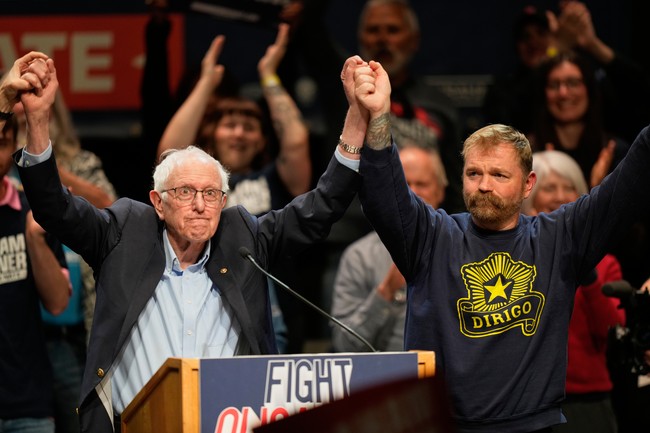
This piece examines the Democrats’ plan to center Brett Kavanaugh and abortion in Maine’s Senate fight, contrasts that strategy with the state’s current abortion laws, and highlights how questions about the Democratic nominee complicate the message. It argues that pushing an eight-year-old confirmation vote in a state where abortion is legal is a risky gambit, and it lays out why independent voters and the broader electorate may react differently than the party base.
Democrats have chosen to make Senator Susan Collins’ 2018 vote on Brett Kavanaugh a central attack line in the general election, hoping it will energize their voters. From a Republican perspective, that move looks like a sign they lack better arguments about the present realities in Maine. The choice to reframe a past confirmation fight as the defining issue of 2026 deserves scrutiny given how Maine law actually stands today.
Maine currently protects abortion access, with no waiting period and medication abortion available by mail, so voters here are not deciding over a looming ban. That practical fact undercuts the emotional power of resurrected confirmation drama, especially for independents and persuadable conservatives. Democrats are essentially asking Mainers to relitigate a dispute that played out years ago rather than focus on the immediate contrast between candidates’ records and character.
Sahil Kapur lays out the Democrats’ strategy to tie Collins directly to abortion
https://x.com/sahilkapur/status/2065064050451460547?ref_src=twsrc%5Etfw
New: Brett Kavanaugh takes on a starring role in Maine’s Senate race.
Platner and Democrats plan to re-weaponize Susan Collins’ pivotal vote to confirm him; in 2022 he cast a pivotal vote to nuke Roe.
Collins indicated in 2018 he wouldn’t do that. She’s said she was misled on that front but stood by her vote.
Her campaign says Dems are repackaging “6-year-old leftovers” that failed in 2020, all to “distract from the complete dumpster fire happening on their side of the street.”
And there’s another Kavanaugh link in this race that is ruffling feathers. @natashakorecki & me:
The Collins campaign has pushed back hard, calling the attack recycled political theater that failed once and is unlikely to flip persuadable voters now. Republicans in Maine point out that Collins has a long record of standing on her positions and attracting crossover support in a generally blue state. For voters who weigh current policy impact first, a confirmation vote from years ago is a hard sell as the decisive issue in 2026.
The Democratic nominee, Graham Platner, won his primary despite a stream of damaging reports and controversies that drew national attention. Those stories included inflammatory online posts and a disputed tattoo, plus questions about the authenticity of his claimed background. Primary voters accepted him as the best available option, but the general electorate will be less forgiving and less likely to view every allegation through a partisan lens.
Complications multiply because Platner faces separate and serious allegations about his behavior that he denies, including claims of threatening conduct from a former girlfriend and prior reports about sexualized messages. Those controversies create a vulnerability when Democrats try to elevate questions about Kavanaugh and character. Raising Kavanaugh opens a two-way debate about credibility and treatment of women that does not play exclusively to the Democrats’ advantage.
“Now, with Senate control on the line, Kavanaugh’s shadow is looming large in Maine in more ways than one. In 2018, Collins defended the Supreme Court nominee as he faced allegations of sexual assault and sexual misconduct that Democrats called disqualifying for a position of power.”
Each reference to Kavanaugh invites fresh discussion of allegations and how leaders respond, which in turn invites scrutiny of Platner himself. That dynamic weakens the singular focus Democrats hope to achieve and hands Republicans an opening to compare conduct and judgment across the field. When the opposition’s nominee has unresolved credibility questions, it becomes much harder to make a clean, one-sided moral case.
Platner has also made claims on the campaign trail that do not align neatly with the timeline of events, including blaming a 2002 congressional Iraq War vote for his own later enlistment decisions. Those kinds of rhetorical missteps matter in a close state where voters prize candor and consistency. Portraying Collins as the architect of his military service is a line that independent voters can easily see through, and it risks undermining his broader appeal.
Democratic polling apparently shows abortion as one of the stronger motivators for their base, behind healthcare and Medicaid cuts, which helps explain the strategy. But energizing the base is not the same as persuading the electorate, particularly in a state where Collins has outperformed polls before. The campaign math tilts toward caution for Democrats, who need to expand beyond motivated core supporters to win statewide.
Internal polls released by campaigns should be read carefully; they often paint the most favorable picture available and can mask underlying weaknesses. Nate Silver’s observation that internal numbers typically err on the positive side suggests the race is closer than party releases imply. Given Collins’ track record of outperforming polls, Republicans see a path that depends on persuadable voters rejecting a relitigation of an old confirmation fight.
Collins has held this seat by winning over voters who cross party lines and value a degree of independence in Washington, and that profile complicates a strategy built around nostalgia for a past confirmation battle. Whether Mainers will prioritize an eight-year-old vote over current controversies surrounding the challenger is the real unknown. For Republicans, the bet is that practical realities and present-day concerns will matter more to swing voters than resurrected confirmation drama.



Add comment