
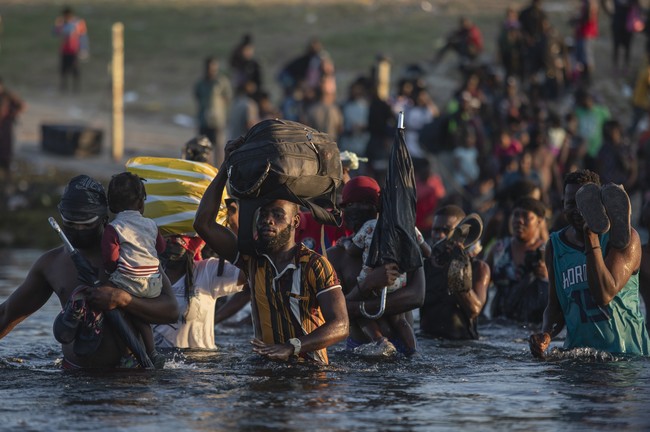
The U.S. Conference of Catholic Bishops publicly opposed President Trump’s executive order to end automatic birthright citizenship, calling the move “immoral” and an affront to “God-given human dignity,” and that stance has sparked debate over law, theology, and institutional funding as the Supreme Court prepares to hear argument on the matter.
The bishops framed their brief in moral terms, asserting that denying automatic citizenship violates human dignity. That moral language contrasts with the constitutional and historical arguments that many legal scholars and historians raise against unconditional birthright citizenship. The clash is now both legal and political as the Supreme Court schedules argument on the issue.
President Trump signed an executive order titled Protecting The Meaning And Value Of American Citizenship early in his term, and that action triggered immediate litigation. Courts have already engaged with parts of the order, allowing aspects to take effect in certain states while challenges proceed in others. The legal fight has moved quickly and now centers on constitutional interpretation and statutory authority.
Birthright citizenship, broadly understood, means anyone born in the United States becomes an American citizen except children of a narrow class of diplomats and certain government agents. Critics point to the debates around the Fourteenth Amendment and argue that the modern practice of unrestricted jus soli is not supported by those historical records. That historical contention remains a focal point for those urging reform.
Historically, some groups did not automatically become citizens at birth, such as American Indians, who did not receive citizenship until the Indian Citizenship Act of 1924. Even before that act, Native men living on reservations were subject to selective service. These anomalies in citizenship history are often cited to show that citizenship rules have evolved and have not always been as broad as current interpretations suggest.
Globally, unconditional birthright citizenship is rare; only around three dozen countries grant it without parental ties. Most nations condition citizenship on parentage, and many European states require at least one parent to be a citizen for a child to claim nationality at birth. That international pattern is used to argue that the United States is an outlier rather than the norm.
The bishops’ brief was criticized by some who said it mixes pastoral concern with political advocacy. Opponents argue the brief’s reasoning does not align with settled Catholic teaching and seems more like policy advocacy than theological guidance. That critique intensified when commentators scrutinized the brief’s authors and their past positions.
Debate on social media and among theologians has been heated. A tweet by John Piper provoked a vigorous discussion about the difference between someone passing through a country and someone choosing permanent residence, with many participants arguing language matters in legal and moral claims. That public back-and-forth highlights how the issue touches both technical legalities and everyday moral intuitions.
Some analysts point to the practical consequences of rescinding automatic birthright citizenship, noting that children born to foreign parents would still possess rights under law and would typically inherit the nationality of their parents. Claims that such children would become stateless are generally disputed by immigration experts who note parentage-based citizenship remains widely recognized. The technical legal pathway for such children is different from automatic U.S. citizenship but not nonexistent.
Critics also suspect institutional self-interest shapes parts of the debate. Catholic charities and affiliated organizations received substantial federal funding for refugee and immigrant services in recent years, and some observers argue that those funding streams influence advocacy choices. Allegations about funding and influence have intensified scrutiny of the bishops’ public positions.
The USCCB brief was read by some as conflicting with other passages from Catholic teaching, which balance hospitality to the stranger with the responsibilities of public authorities. The Catechism states: “The more prosperous nations are obliged, to the extent they are able, to welcome the foreigner in search of the security and the means of livelihood which he cannot find in his country of origin. Public authorities should see to it that the natural right is respected that places a guest under the protection of those who receive him.” That passage also acknowledges that political authorities may impose juridical conditions on immigration in the interest of the common good.
The more prosperous nations are obliged, to the extent they are able, to welcome the foreigner in search of the security and the means of livelihood which he cannot find in his country of origin. Public authorities should see to it that the natural right is respected that places a guest under the protection of those who receive him.
Political authorities, for the sake of the common good for which they are responsible, may make the exercise of the right to immigrate subject to various juridical conditions, especially with regard to the immigrants’ duties toward their country of adoption. Immigrants are obliged to respect with gratitude the material and spiritual heritage of the country that receives them, to obey its laws and to assist in carrying civic burdens.
The intersection of law, theology, and public funding makes this debate unusually fractious. The issue will be decided in court on constitutional grounds, but the public conversation will keep focusing on moral language, institutional roles, and political incentives. Whatever the outcome at the Supreme Court, the dispute has already reshaped how Americans talk about citizenship and belonging.

How many Bishops are paying taxes to support all these anchor babies of non-working parents? I’ll bet it’s ZERO!
For sure! Zip Nada!
These bishops need to stay out of politics and do more to advocate Faith in Jesus Christ! Birthright Citizenship is a terrible idea and has been abused extensively for decades; time to toss the whole idea into the dust bin of history! Bishops many of you are doing a crappy job and God only knows how many souls you have led astray already so clam up and work only as men of the cloth not political advocates or shills for the Globalists!
The Church needs to stay out of this issue. The church does not pay taxes so they do not have any skin in this game. We pay for that decision which ever way it is decided. Too many cheat the system and come here just to have a anchor baby to use that as an excuse to stay and we have to support both. If you come here legally and have a baby, that is a different argument for the child to be a US citizen under present law. But it is still not a reason that the mother if illegal can not be sent home with the child even if a US citizen and the parent can not just leave the child.
Correct; and this has become a avalanche of human invasion and a heavy burden on the taxpayer Citizens! Too many Crooked and even Criminal politicians infest our system! All of them have to be stopped and even booted out of office no matter who they are or how long they’ve been in the system scamming it!