
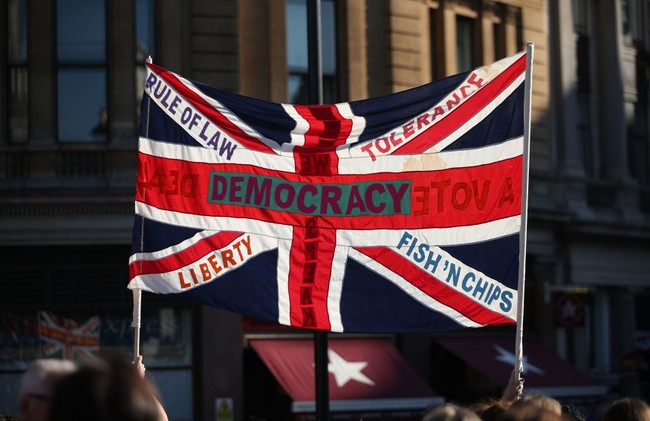
The story here is simple: many Britons are pushing back against choices by the Labour government that they see as erasing national identity, and the Union Jack is making a public comeback as people assert pride in their country and its symbols.
For years a cultural tug-of-war has played out across Britain, with the current government often blamed for policies that many feel weaken traditional British identity. Conservatives here and on both sides of the Atlantic are watching as citizens reclaim visible reminders of nationhood, starting with the Union Jack. That reclaiming is less about nostalgia and more about asserting who belongs in the public life of the country.
The debate heated up after widespread displays of foreign flags in public spaces, which many locals perceived as a challenge to national cohesion. People who grew up with the stories of Churchill and the wartime generation see this as a betrayal of a shared heritage. For them the flag is the simplest, clearest symbol that signals unity across England, Scotland, Wales, and Northern Ireland.
A battle over British identity and the nation’s flag is just the latest issue to widen the political divide in the United Kingdom in 2025. As the Labour government continues to face growing criticism over a number of issues, from cracking down on free speech to its migration policies, many Britons are concerned about their country’s future.
The issue simmered over the summer amid concerns of a growing rift between the ruling elites and members of the public centered on the nation’s flag. The debate, while ongoing for several years, gained new life since anti-Israel protests erupted after Hamas’ mass terror attack against Israel on Oct. 7, 2023, when Britain saw a proliferation of Palestinian flags across the country.
That proliferation left a lot of people feeling like the state had stopped representing them, and flags became an obvious flashpoint. People expect government buildings to display the national flag, not banners tied to particular causes or foreign conflicts. When councils allowed other flags to fly, a visible number of citizens reacted by returning the Union Jack to front and center.
Many critics point to immigration policy as the root of the issue, arguing that waves of newcomers who do not assimilate have changed community norms. From a conservative viewpoint, national identity is not a shameful relic but a public good that deserves protection. The argument is not framed as racial in intent but as cultural: a nation has the right to expect newcomers to respect its symbols and laws.
Tensions were further heightened over the display of Palestinian flags on public buildings, with critics arguing it represents an abandonment of traditional British values, and that immigrant communities are dictating community values. Several councils in major cities bowed to public pressure. Those cities — all with sizable immigrant communities — including Sheffield, Preston, Bradford and others chose to raise the Palestinian flag last month to honor the United Nations International Day of Solidarity with the Palestinian People.
“There’s only one flag that should be flying on public buildings in the U.K., and I include the home nations of England, Scotland, Wales, and Northern Ireland, and that’s the Union flag. We need to start cohering around national stories and symbols, and the flag is the simplest, most visual, visceral way of doing that,” Colin Brazier, a commentator on British culture, told Fox News Digital.
Flags are visual shorthand for shared stories and commitments, and those who defend them argue they do more than stir emotion. Flying the Union Jack on official buildings communicates a clear commitment to the political community that binds citizens together. When public authorities prioritize other banners, many see that as a sign of political elites losing touch with everyday people.
Polling shows a split in perception, with some groups interpreting national symbols as exclusionary, while others see them as neutral or unifying. The disagreement has become political, and Labour’s stance on migration and identity has intensified it. Conservatives and nationalists favor reaffirmation of British symbols as part of a broader push to restore national coherence.
A recent YouGov study found mixed views on the Union flag and England’s flag of St. George. 58% of 2024 Labour voters perceive the English flag as a racist symbol but just 19% of Conservative voters and 8% of Reform voters feel the same way. The poll said that a majority of ethnic minority adults (55%) believe those putting up St George’s flags do so “mostly as a way of expressing anti-migrant and/or anti-ethnic minority sentiment”, with a plurality (41%) saying the same goes for the union flag.
From a Republican perspective focused on national strength and cultural continuity, visible affirmations like flag-flying matter. They signal that a nation expects allegiance, respect for institutions, and a shared civic story. For many in Britain today, restoring the Union Jack’s prominence is a straightforward way to say they want their country back in shape.
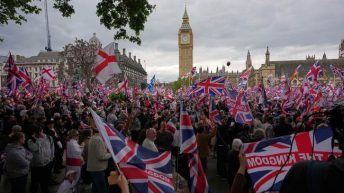
Public pressure has forced some councils to change course and prioritize the national flag, and that shift reflects a larger, ongoing conversation about who Britain is and who it should be. Citizens are taking action in streets and town halls, and the flag is now a centerpiece of that movement.


Add comment