
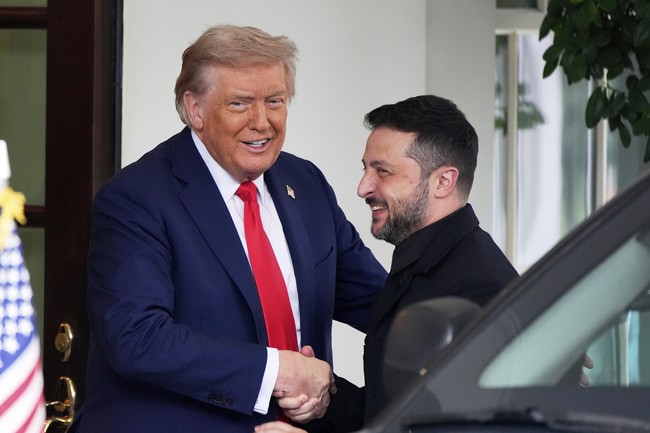
President Donald Trump hosted Ukrainian President Volodymyr Zelensky at Mar-a-Lago in an effort to push talks toward a swift end to the war with Russia; he also discussed a recent phone call with Vladimir Putin, took pointed questions from reporters, and shared a famously casual lunch with journalists before private negotiations continued with a team of envoys and advisers.
Trump framed the meeting as part of a concentrated push to get fighting to stop, saying he sees momentum and “the makings of a deal.” He emphasized speed and results, making clear that his priority is ending the conflict rather than setting an arbitrary deadline for talk stages. The president also characterized the discussions as nearing their “final stages,” signaling both urgency and a willingness to hold parties accountable if progress stalls.
He told reporters the process could “move very rapidly” and suggested the outlines of an agreement will include a meaningful security guarantee. At the same time, he made it obvious he isn’t playing by the usual media script; when a reporter asked about specifics in the security agreement he snapped back and dismissed the question as unhelpful. Trump’s posture combined toughness with a direct promise that the eventual deal would deliver a credible protection plan.
“I do believe that we have the makings of a deal,” Trump told reporters as he stood beside Zelenskyy, adding that he believes the process can “move very rapidly.”
The president repeated that his only real deadline is the objective itself: getting the war ended. He warned that failure to secure a settlement would simply mean a prolonged conflict with greater human cost. That blunt realism underpinned his message: negotiate fast, or brace for more loss and instability.
Trump also used sharp language to push negotiators and reporters alike to focus on results. He called out a question from the press as “dumb” when it probed details he said weren’t public, then doubled down on the intention for a robust security arrangement. The tone was unapologetic and deliberate, the kind of straight talk his supporters expect when high-stakes foreign policy is on the line.
“I think we’re in the final stages of talking, and we’re going to see,” Trump said. “Otherwise, it’s going to go on for a long time. It’ll either end, or it’s going to go on for a long time and millions of additional people are going to be killed.”
After the public remarks, the leaders gathered inside with a small negotiation team that included key American figures in foreign affairs and national security. The presence of close advisers signaled that the meeting wasn’t just photo op theater but a working session intended to hammer out terms and assess options. Those present were there to translate the political will expressed outside into concrete steps on the table.
Before moving into private talks, Trump loosened the room with a gesture that was equal parts levity and provocation: he offered lunch to the assembled press corps and joked about whether feeding reporters could be called a bribe. That joke landed as an example of his willingness to mock the media while controlling the scene, and when the reporters agreed to eat, staff were instructed to bring food. The moment underlined how Trump manages optics as much as policy.
The menu was simple and deliberately informal: sliced steak, pigs in a blanket, coconut shrimp, fries, and chocolate chip cookies, plus bottled water labeled with the Trump brand. The choice was as much a cultural signal as a culinary one, reinforcing his outsider image and tendency to deflate solemnity with a wink. It also reinforced the contrast between the polished rituals of diplomacy and the unvarnished approach he prefers.
What happens next depends on the will of the parties and the speed at which negotiators can finalize terms that offer a credible exit to the fighting. Trump’s posture was unmistakable: he wants an agreement that works, and he is willing to apply pressure to get it done. Whether that pressure translates into a practical framework that Ukraine and Russia can accept remains the central question.
The meeting at Mar-a-Lago came during the holiday period, showing the administration’s readiness to use every available minute to pursue peace. For supporters who favor decisive action over prolonged stalemate, the effort reads as the kind of leadership that prioritizes outcomes and accountability. The day ended with private work continuing, leaving observers to wait for any public confirmation that the “final stages” have produced a lasting result.


Add comment