
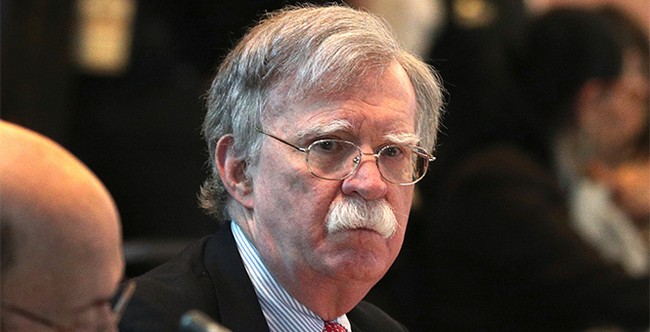
President Trump and his team have been pursuing a negotiated end to the Ukraine war, and this piece critiques former National Security Advisor John Bolton’s public advice that Ukraine reject Trump’s peace outreach and lower its draft age to 18, arguing those suggestions risk prolonging conflict rather than resolving it.
President Trump and his administration have pushed hard for an end to the fighting in Ukraine, pursuing diplomatic channels and high-level meetings to secure a ceasefire or peace framework. From a Republican perspective, the priority is stopping the killing and restoring stability, not scoring political points. That makes public efforts by outsiders to undermine negotiations particularly frustrating when real lives are at stake.
John Bolton has a long, well-known history in national security circles, and many see him as aligned with hawkish elements of the military-industrial ecosystem. Critics point to his record as someone who favors strong military responses and who, some argue, has been more comfortable with prolonged engagement than with negotiated settlements. Given that background, it is no surprise that his recent remarks would skew toward a more confrontational posture.
In an interview with France 24, Bolton advised Ukraine to resist making concessions and accused President Trump of seeking a Nobel Peace Prize. That claim is quoted directly from the interview and is preserved here exactly: “I think it’s a mistake for Ukraine to make concessions at this point. I don’t think Donald Trump is really motivated by U.S. national security interest or the issues for NATO or Ukrainian interest, I think he wants the Nobel Peace Prize. I think it’s been on his mind since the first term. He knows Barack Obama got one and didn’t deserve it, which I think a lot of Americans agree with, but that’s not a reason to give Trump a Nobel Peace Prize when he doesn’t deserve it either.”
The idea that President Trump is maneuvering purely for personal accolades ignores several concrete diplomatic moves his team has already made. The Abraham Accords and other diplomatic breakthroughs happened on his watch, and those accomplishments factor into how foreign leaders evaluate any American president. From this angle, Trump’s peace initiatives toward Ukraine are a continuation of an administration that prioritizes results and deals over needless escalation.
Bolton’s criticism goes beyond questioning motives; he urged Ukraine to lower its draft age from 25 to 18 to increase manpower. His exact words on this point are also preserved here without alteration: “I think Ukraine needs to do more to show the fight against corruption continues. You can have local elections in places where the Russians aren’t occupying. And I think — this is advice from a friend — I think they need to lower their draft age from 25 to 18 to get more manpower on the battlefield and to make sure that the country as a whole is bearing the burden of this war equally.”
That suggestion reads as tone-deaf and strategically risky. Recruiting more young people into front-line combat does not guarantee a quicker victory, and it carries a heavy moral and social cost. Pushing for a broader mobilization without a clear endpoint or plan for ending hostilities risks turning a defensive struggle into a long-term attritional war.
Putting more bodies on the battlefield can sometimes be a stopgap, not a solution. History shows that manpower increases alone rarely resolve asymmetric advantages such as logistics, air power, and strategic depth. For Ukraine, the goal should be to strengthen defenses while creating space for a negotiated outcome that preserves sovereignty without endless bloodshed.
It’s understandable that Ukrainian leaders and families feel profound anger and grief, and there’s no question they have sacrificed tremendously. That emotional reality makes sober strategic advice all the more important, not incendiary rhetoric that could compel leaders into choices that prolong suffering. Responsible counsel should balance the urge to resist with the imperative to end loss of life where possible.
From a Republican viewpoint, constructive diplomacy isn’t appeasement; it’s about protecting American interests, supporting allies, and seeking durable peace. If Trump’s team can leverage negotiations to halt aggression and secure Ukrainian self-determination, then those efforts deserve careful consideration rather than reflexive dismissal. Advisers who reflexively call for more and more fighting risk missing the pragmatic path to peace.
Public comments from prominent figures like Bolton shape perceptions in Kyiv, Brussels, and among Ukraine’s partners. When influential voices urge rejection of diplomatic openings, they can harden positions and complicate bargaining. That effect matters when a realistic settlement might end the destruction sooner and spare more lives.
Ultimately, the strategic question for Ukraine and its allies is simple: what mix of pressure and diplomacy brings the war to a close with the least permanent damage? Adding troops by lowering the draft age is not an automatically sensible answer, and dismissing diplomatic overtures out of hand risks extending a conflict that has already cost too much.


Who the hell is this POS ‘bolton’ telling a foreign nation to do anything especially involving the President of the United States! I thought he was up on charges and getting reamed out as the government was preparing to tear him a new one for all of his underhanded and mutinous traitorous dealings during Trump’s first term in office!
So in other words the our Government Mafia Fake-Out continues with it’s gaslighting and mass formation psychosis of the general public!