
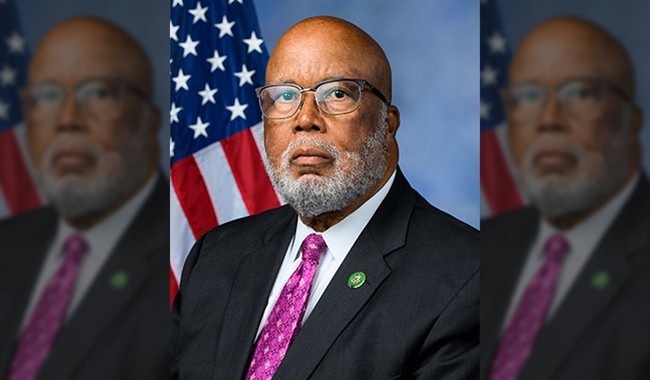
This piece takes a hard look at Rep. Bennie Thompson’s description of a deadly November attack on two National Guardsmen as an “unfortunate accident,” the reaction from Secretary Kristi Noem, Thompson’s later interview on CNN, and how the exchange fits into a broader partisan pattern about political violence. It covers the initial hearing remark, the CNN follow-up where Thompson backtracked, public responses, and the concern that some on the left minimize or excuse politically motivated attacks. The article keeps the original quotes intact and places the episode in the context of public debate over safety, responsibility, and media coverage.
At a Homeland Security Committee hearing, Rep. Bennie Thompson called the November shooting of two National Guardsmen an “unfortunate accident,” a description that many found shocking given that one guard was killed and the other critically wounded. The shooter reportedly shouted religious phrases while carrying out the attack in Washington, D.C., which most observers and officials labeled a terrorist act. To call that a mere accident felt callous to many conservatives and to anyone who respects the sacrifices of service members.
Secretary Kristi Noem publicly reacted with disbelief, saying, “You think that was an unfortunate accident?! It was a terrorist attack.” Her response expressed the outrage felt by family members, colleagues, and citizens who want clear language when a violent act is plainly political or terror-driven. Thompson’s initial reply to Noem — “I’ll get it straight” — did not land well and looked like a weak attempt at damage control.
Thompson later appeared on CNN News Central and was asked directly whether he stood by the “unfortunate accident” line, and he answered in a way that still left many unconvinced. In the interview he claimed he was trying to make a procedural point about asylum approvals and shifted the focus to policy rather than owning the emotional impact of his words. That deflection, combined with a perfunctory apology, did nothing to reassure observers who expected a firmer condemnation.
“Oh, absolutely not,” he replied. “And obviously, let me be clear, I was moving toward the discussion that [Kristi Noem] could not blame Joe Biden on the situation because she approved this person’s asylum application and that’s where we were headed and so the issue is…”
[Anchor Kate] Bolduan then interrupted the congressman, asking him, “You’re saying you misspoke?” “Oh, absolutely. Absolutely,” he responded, before she shifted to a conversation about healthcare.
The segment included an awkward exchange where Thompson repeatedly tried to steer the conversation toward immigration policy, saying the discussion was about how the suspect entered the country and who had approved the application. That framing may be relevant to broader policy debates, but it felt evasive coming from someone who had just minimized a lethal attack. Conservatives argued that when public officials downplay political violence, it signals a dangerous tolerance or indifference.
On social media and among conservative commentators, the reaction was swift and harsh, with many calling Thompson’s comment “soulless” and demanding clearer support for the victims’ families. Thompson later posted language stating, “I condemn all targeted violence and political violence,” but he still did not label the incident terrorism or explicitly comfort the families. That omission fed a narrative that Democrats sometimes avoid strong language when confronting politically inconvenient violence.
Critics also took aim at CNN’s handling of the interview, saying anchor Kate Bolduan asked the required clarifying question and then moved on without pressing follow-up. From a Republican perspective, that felt like another example of soft treatment for Democratic figures and a missed opportunity to hold an official accountable for minimizing violence. The perception that mainstream outlets ignore follow-through on serious failures adds to public cynicism.
Beyond this single incident, the episode was cited by conservatives as one more example in a pattern where left-leaning voices allegedly tolerate or even excuse violence when it aligns with partisan narratives. Commentators referenced recent episodes where individuals claimed political killings or threats were justified or where celebratory reactions emerged after attacks on conservatives. Those examples are used to argue that rhetoric matters and that public leaders must be careful to condemn attacks clearly.
For many Republicans, the central concern is accountability: call it terrorism when it is, comfort victims’ families, and avoid minimizing violent acts for political convenience. Words from public leaders shape how Americans interpret security failures and assign responsibility, and when language appears to downplay clear political violence, it erodes trust and inflames division rather than promoting healing.

Add comment