
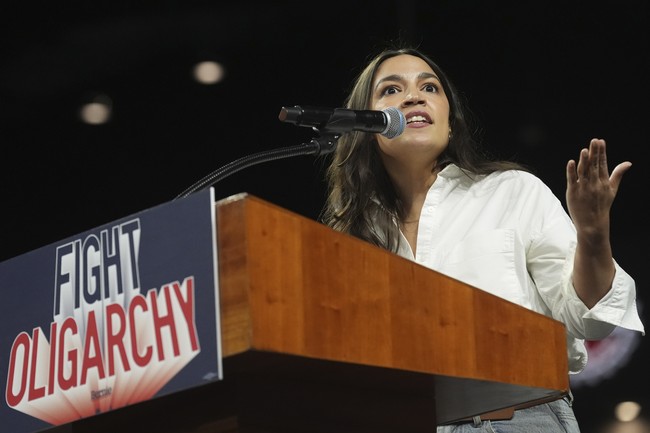
Alexandria Ocasio-Cortez told a podcast audience she feels “sorry” for Trump voters, calling many “oppressed” and “neglected,” while praising New York City services as worth high taxes. Her comments landed as tone-deaf to critics who point to visible failures in Democratic-run cities and ask why long-standing liberal control hasn’t solved basic problems. This piece takes her remarks, the context she offered, and recent examples of urban dysfunction and asks whether her worldview matches reality.
On the Ilana Glazer podcast, AOC argued that red states are often red because of neglect rather than sincere political belief. She insisted the scenes she’s seen driving through rural areas show real deprivation, which she believes explains voter resentment. That framing treats conservative voters as victims of circumstance instead of people who hold different values and policy preferences.
She went on to compare that neglect to how she sees New York City functioning, saying the city’s services make high taxes worthwhile. AOC highlighted mass transit, teachers, and sanitation workers as examples of what tax dollars should buy. That contrast is meant to underline why she supports progressive taxation and public spending.
She stated, “I don’t care if you’re a red state or voted for Trump. A lot of these red states, they’re not red. They’re oppressed. I’ve driven across the country many times, and I’ll drive through really rural areas and I see the level of neglect, and I’m like, yeah, I’d be pissed off at paying taxes, too.”
Her claim that she has driven across the country stands in for a broader argument about how experiences shape politics, but critics question whether her observations are representative. Plenty of Americans who live in rural or red areas would argue their communities have strengths and responsibilities that AOC’s narrative overlooks. Painting whole regions as simply “oppressed” dismisses real cultural and economic differences that drive voting choices.
She also suggested New York’s tax-and-service model is superior because it funds public transportation and sanitation that make daily life easier. That’s a tidy talking point, except New York faces a $5.4 billion budget gap, transit crises, spikes in crime, and service failures that complicate the picture. Pointing to the ideal without acknowledging the city’s real fiscal and operational problems weakens her case.
“When it snows out, I get to look out my window and I get to see well-paid sanitation workers clearing that stuff out in a minute. I get to walk out of my house and take the subway, which is publicly funded, and I say, ‘Yeah, this is worth it.’”
That quote frames city living as a straightforward return on taxes, but recent events show that public services can and do break down even in places with high spending. Critics note months-old storm damage in Democratic-run municipalities and instances where basic services have not reached some neighborhoods. Those examples suggest that tax dollars alone do not guarantee competent management or public safety.
Her line about subway convenience also invites skepticism given security and safety incidents on New York transit, including violent attacks earlier this year. For many residents, the subway is not a carefree commute but a place where concerns about crime and cleanliness are real and ongoing. The lived experience of commuters can differ sharply from the polished vignette AOC painted.
The congresswoman’s broader tone implies that MAGA voters are either misled or too distracted by deprivation to understand their own choices. That stance risks alienating voters who feel dismissed rather than heard. Dismissing large swaths of Americans as merely “oppressed” is not persuasive to those who believe in different priorities and policy prescriptions.
There’s also a pointed contrast raised by critics: long-term Democratic control of some cities hasn’t always led to durable recovery or equitable service delivery. Tornado recovery in parts of St. Louis, for example, remains slow in areas with long histories of Democratic governance. That kind of long-term failure feeds frustration among residents regardless of how national pundits describe their politics.
For many conservatives, AOC’s remarks confirm a pattern: left-leaning politicians celebrating the ideal of big-city services while glossing over fiscal strain and management failures. Pointing to high taxes as the simple solution feels detached from the reality of budget shortfalls and poor outcomes voters see on the ground. That disconnect fuels the very resentment she claims to sympathize with.
If AOC wants to bridge divides, critics say she should do more than lecture about oppression; she should reckon with why people in many places reject her party’s policies. Listening to different perspectives and confronting municipal failures honestly would be a better start than treating millions of Americans as victims of their own geography.



Most of the illegals that kill or rape or steal are in BLUE cities!!! ALL sanctuary cities are BLUE 🤔🤔 and you clowns think you know what’s good for us/ America!!!! So sad that you hate America so bad
AOC is proof positive that anyone in the United States can become a member of congress. No education, common sense, or ability to lead is necessary. All you need is to be able to convince voters that you have what they want. Simple. She did it, so can you. The salary and perks are hard to beat.