
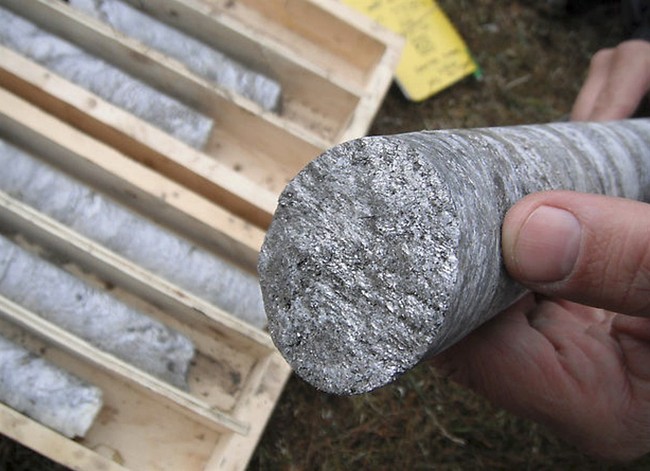
This article explains how Graphite Creek in western Alaska, long known for large graphite deposits, now shows evidence of valuable rare-earth elements in garnet-rich zones, why that matters for supply chains, and what logistical challenges and economic opportunities the site presents.
Graphite serves many industrial uses, from electrodes and batteries to aerospace carbon-fiber and nuclear reactor applications, and the United States has a significant deposit in western Alaska known as Graphite Creek. Recent analyses of the site reveal that, beyond graphite, garnet-rich zones may contain several strategic rare-earth elements. Those findings could shift the project from a single-commodity mine to a polymetallic source, changing its economic and strategic profile. Understanding that potential helps explain why this remote Alaska prospect attracts attention from industry and government alike.
New testing focused on garnet-bearing schist within the planned pit area and found elevated concentrations of rare earths used in high-strength permanent magnets and advanced alloys. The specific elements identified include neodymium, praseodymium, dysprosium, terbium, samarium, plus scandium and yttrium. These elements are central to electric vehicle motors, wind turbine generators, and defense technologies that rely on compact, powerful magnets. Recovering them alongside graphite could increase the project’s strategic value.
“America’s largest deposit of graphite could also be an important source of the rare earth elements essential to automotive, defense, and high-tech manufacturing, according to new testing of garnet-rich zones running through Graphite One Inc.’s Graphite Creek deposit in western Alaska.”
In April, a Pentagon-supported feasibility study outlined a 20-year operation producing 175,000 metric tons of graphite annually and proposed a processing plant elsewhere in the country. The study reviewed a deposit accounting for about 12 percent of a roughly 10-mile-long mineralized trend at Graphite Creek. That scope suggests much of the resource remains unassessed for co-located materials, so follow-up exploration could expand the known inventory. If rare-earth recoveries prove economical, production scenarios would be reassessed to capture additional value.
“In April, Graphite One finalized a Pentagon-supported feasibility study detailing plans for a financially robust mine at Graphite Creek and a processing plant in Ohio. The study outlines a 20-year operation producing 175,000 metric tons of graphite annually. The deposit considered for this mine only accounts for about 12% of a roughly 10-mile-long trend of graphite- and garnet-bearing mineralized zone identified at the project.”
Garnets are minerals that can incorporate heavy rare earths and yttrium into their crystal structures, effectively concentrating these elements in certain metamorphic rocks. That geological behavior makes garnet-bearing schists compelling targets when both graphite and rare earths are present in the same system. The presence of such minerals at Graphite Creek raises the possibility of by-product recovery during graphite processing, which could greatly improve project economics. Strategically, it would also reduce dependence on foreign suppliers for critical inputs.
“Garnets are known for their ability to uptake heavy rare earths and yttrium into their mineral structure,” said Graphite One Chief Geologist Kirsten Fristad.
The global supply picture is important context: China currently dominates worldwide graphite production and is a major producer of many rare-earth elements. Co-located deposits, where graphite and garnet-rich rocks contain rare earths, are not unusual in certain geological settings. Building domestic sources can diversify supply chains for items crucial to electrification and defense. For manufacturers and policymakers, more domestic feedstock options mean greater resilience.
“The rare earths found within the deposit, which are essential for the magnets used in electric vehicles, wind turbines, and precision-guided munitions, elevate Graphite Creek to a potential polymetallic source of six of the elements on the final 2025 critical minerals list published by the U.S. Geological Survey last week.”
“Given the robust economics of our planned complete graphite materials supply chain, the presence of rare earths at Graphite Creek suggests that recovery as a by-product to our graphite production will maximize the value,” said Graphite One President Anthony Huston.
Logistics remain a practical hurdle: Graphite Creek lies north of Nome on the far side of the Kigluaik Mountains, accessible only by a limited one-lane gravel route and not adjacent to major highways. Alaska’s terrain and distance routinely complicate exploration and construction projects, raising costs and schedule risks. Still, engineers and project planners account for such constraints when evaluating remote mineral developments, and the presence of high-value by-products can make remote projects feasible.
If the garnet-hosted rare earths at Graphite Creek can be economically recovered, the site could become a meaningful domestic source of materials that are currently concentrated in a few overseas jurisdictions. That outcome would affect not just local development prospects but also broader industrial supply chains that rely on graphite and rare-earth magnet materials. Ongoing assay work and feasibility planning will determine whether recovery pathways are commercially viable.



Add comment