
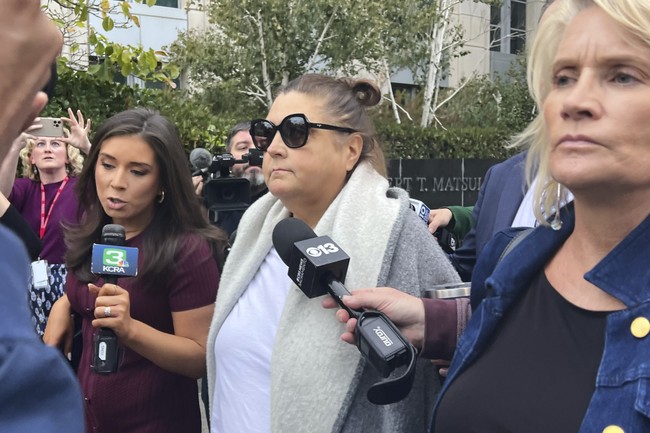
This article explains the federal indictment against Dana Williamson, Gavin Newsom’s former chief of staff, outlining alleged tax and PPP fraud, details of disputed personal expenditures, connections to lobbyists and PG&E, claims about pressure to implicate the governor, and reactions that compare her conduct to that of a “mafia boss.”
The indictment against Dana Williamson accuses her of participation in a scheme to divert campaign funds and of serious tax and loan fraud. Prosecutors allege she and co-conspirators siphoned roughly $225,000 from a dormant campaign account to personal use and then hid other income through false business deductions. Alongside the campaign diversion counts, the indictment claims Williamson underreported $1,718,277 across her 2021–2023 tax filings by treating personal spending as business expenses.
The document lists specific alleged personal expenses improperly deducted as business costs, providing a clear picture of what federal prosecutors say they uncovered. In 2021 the indictment claims $160,201 in false deductions, including luxury goods, home upgrades, and travel. That year’s items allegedly include a Chanel handbag and ring for $15,353, a Fendi handbag and wallet for $5,818, an HVAC system at her residence for $19,498, a $10,000 payment to a relative, a $9,589 watch for a close friend, a $6,324 couch, a $21,175 private jet charter, and a $15,662 luxury hotel stay.
Prosecutors say the pattern continued and escalated in 2022, with $861,033 in purportedly false business deductions listed in the indictment. Among the items flagged for that year are a $156,302 luxury hotel stay and activities in Mexico for a 50th birthday celebration, an $11,100 yacht rental, a $4,037 second luxury hotel stay in Mexico, Chanel earrings and bag for $12,437, $35,550 to a family law attorney, Gucci purchases totaling $7,712, a $10,620 theme park trip, $100,000 reported as salary for a no-show job, and $4,083 paid to a moving company.
For 2023 the indictment alleges another $697,043 in false deductions while Williamson was employed full-time in the governor’s office and barred from lobbying. The filing includes payments to relatives: $105,769 to one relative and $118,154 to a second relative for purported work at no-show jobs. The indictment leaves roughly $450,000 in questionable items less specifically detailed, and prosecutors appear to be continuing their inquiry into the origin and purpose of those funds.
Williamson also faces charges over Paycheck Protection Program loans tied to her consulting firm, Grace Public Affairs, with authorities alleging she fraudulently obtained $300,000. The CARES Act expressly prohibited use of PPP funds for lobbying, and investigators say Williamson applied for and received loans before scrambling to retroactively create contracts when asked for documentation. That effort to manufacture paperwork is one of the elements federal prosecutors point to when alleging fraud.
Her attorney has asserted that federal agents approached Williamson more than a year ago seeking cooperation in a probe that might touch Governor Newsom, and he suggested the indictment followed her refusal to implicate the governor. A quoted passage in the public record states that Williamson was contacted and “told them she had no information to provide them.” A second, unattributed source reportedly said investigators tried to pressure her into implicating Newsom but that she denied any knowledge of misconduct by the governor.
The indictment traces a web of lobbying relationships that predates Williamson’s time in the governor’s office, tying her to a network that includes a consultant identified in filings as Co-Conspirator 2. That person previously worked with high-profile California figures and is alleged to have taken over clients Williamson transferred when she joined the administration. The filings reference a Collaborative Company, described as a hub for lobbyists and consultants with long-standing ties to state officials, and allege coordinated activity among those linked individuals.
Williamson’s attorney has also raised her severe health problems, saying she is on a waiting list for a liver transplant and criticizing authorities for executing an arrest without prior notice. The attorney argued that arrest warrants are generally reserved for violent offenders or flight risks and suggested different handling might have been appropriate given her medical condition. The indictment, however, proceeds to outline alleged misleading statements to investigators and other counts that federal prosecutors deem serious enough to justify the actions taken.
Media figures and commentators who have followed Sacramento politics described Williamson’s behavior in stark terms, with one broadcaster saying she operated “like a mafia boss.” The quoted criticism portrays Williamson as reckless, bullying, and abusive of power, alleging she used influence to intimidate prospective employers and manipulate outcomes. Those remarks add to the broader narrative about how power and access in state government allegedly enabled questionable conduct.
The filings also accuse Williamson of sharing inside information about a high-profile lawsuit between the state and a major corporation with her former lobbying colleagues, and of intervening in ways that prompted internal personnel moves. Prosecutors allege she discussed the lawsuit with partners at the Collaborative Company, transferred client accounts, fed outside consultants information about state strategy, and played a role in orchestrating a settlement while contributing to the removal of the state’s chief counsel after objections to the governor’s involvement.



Add comment