
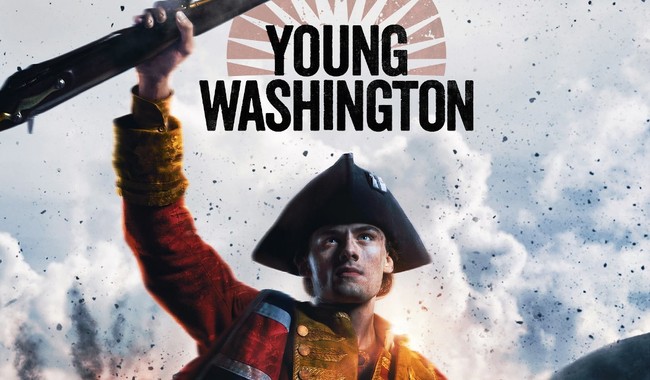
The film “Young Washington” presents an unfamiliar side of America’s first president, tracing his rise from genteel poverty to the edge of leadership while reshaping familiar events for dramatic effect. This review looks at the movie’s portrayal of character, the choices the filmmakers made with historical detail, the performances that stand out, and how the film communicates its theme of personal grit overcoming social limits.
The movie opens with Augustine Washington’s death in 1743, which leaves 11-year-old George and his mother in reduced circumstances and sets a tone of ambition constrained by status. That constraint becomes the engine of the story: Washington’s talent and perseverance push him against a world that values lineage and money above promise. A youthful romance with Sally Cary and her later engagement to George Fairfax becomes one of the film’s emotional touchstones about class and loss.
The plot moves through Washington’s early missions, including the trip to Fort LeBoeuf and the trek back to Williamsburg with Christopher Gist, and it stages the clashes at Fort Necessity and Braddock’s defeat with a dramatic eye. Some action scenes rely on modern effects, which occasionally feel clumsy, but the battle sequences largely convey the chaos and danger of frontier warfare. The filmmakers compress and alter events for clarity and tension, which sometimes distorts who did what and when.
Cinematography emphasizes the scale and isolation of Colonial America, often making the landscape a character in its own right. The script keeps the characters rooted in their time, avoiding contemporary moralizing about institutions like slavery or debates over land; these facts are present but not foregrounded as modern talking points. That approach gives the film a particular atmosphere: it aims to show people living within their world rather than commenting on it from ours.
William Franklyn-Miller takes on the central role and succeeds at making a believable, driven young Washington who is learning to trust his own judgment. Mary-Louise Parker portrays the widowed mother with simmering frustration and resilience, and Kelsey Grammar fits naturally as a patron figure. Ben Kingsley brings texture to Governor Robert Dinwiddie, delivering warmth beneath a brusque exterior.
The film diverges from strict biography in significant ways, a choice the director treats as creative license rather than a history lesson. The writer-director’s approach forced this reaction: chanting “It’s only a movie…It’s only a movie” helped shift focus from historical fidelity to cinematic craft. Some changes are defensible for drama; others alter relationships and timelines to the point where viewers should not treat the film as a reliable guide to primary sources.
Specific liberties are notable. Lawrence Washington’s age and fate are compressed to heighten familial drama, and the film reshapes George’s existing ties to the Fairfax family, making friendships and rivalries more antagonistic than records suggest. The decision to show Sally Cary marrying an arrogant Fairfax rather than charting the more layered historical connections softens a poignantly tragic detail: Washington actually remained a frequent guest of the Fairfaxes and never publicly sowed scandal despite private pain.
Supporting figures receive mixed treatment. Christopher Gist is cast as a rugged mentor who saves Washington at critical moments, and his screen persona captures frontier toughness even as some factual elements are simplified. Captain James Mackay, who had real rank disputes with Washington, is flattened into a caricature instead of the more complex comrade he became. The film also trims outcomes and deaths to sharpen plot beats, which erases some of the messy realities of survival and alliance on the frontier.
One strong portrayal is Ryan Begay’s turn as Tanacharison, the so-called Half King, who registers as a pragmatic and volatile leader navigating French and British pressures. The movie hints at brutal frontier acts without lingering in gore, and it occasionally opts for suggestion over explicit reenactment. Those choices reflect a larger pattern: the film wants to evoke the era’s moral ambiguities without turning into a lecture.
Ultimately, the picture functions as classic cinema where history is scaffolding for an American tale of talent meeting opportunity. It frames Washington as an emblem of perseverance and civic restraint, and it clearly intends to reclaim a public image too often reduced to caricature. The film is crafted for viewers who want a stirring, character-driven story rather than an academic retelling, and it asks audiences to engage with the spirit of a young leader more than with every archival fact.



Add comment