
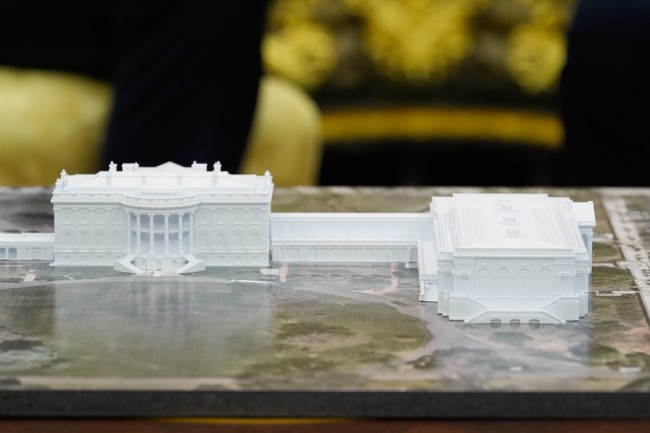
The debate over tearing down the White House East Wing for a new ballroom has spiraled into predictable outrage, but the history and function of 1600 Pennsylvania Avenue tell a different story about renewal, practicality, and political theater. This piece examines the facts of the White House’s continual reconstruction, the mismatch between modern presidential needs and aging infrastructure, and the deeper cultural split that underlies the furor over a ballroom.
Outrage hit hard when the administration announced plans to remove the East Wing to build a permanent ballroom, and commentators treated the move like sacrilege. The truth is the White House has never been a static museum of untouched rooms; it has been rebuilt and reimagined many times since the first structure in 1792. People often forget the building burned in 1814 and that the current residence is effectively the third on the same site.
Engineers concluded in 1948 that the old interior posed a collapse risk, prompting a near-total gutting of the structure while leaving only the exterior walls. President Truman lived across the street in Blair House while crews demolished and rebuilt the interior—so much for the idea of pristine, continuous floors traced by the Adams family. Even rooms with famous names, like the Lincoln Bedroom, are largely reconstructions rather than untouched relics from the 19th century.
Over time, practical additions have been made: east and west wings, porticos, underground spaces, bunkers, a swimming pool, a bowling alley, and a press briefing room. Modern presidencies require modern security and operational capabilities, which is why subterranean additions designed to withstand serious threats were installed in recent administrations. The White House functions as a living, working executive complex, not a frozen monument to an idealized past.
It has been a long-standing inconvenience that large state dinners were sometimes held in temporary structures outside the main residence. Despite the charm of informal settings, hosting heads of state and high officials in tents or makeshift pavilions is not fitting for the world’s leading republic. A permanent ballroom solves practical problems and reflects the dignity of official events without turning the presidency into an exercise in pretension.
The equipment supporting the modern commander-in-chief also lags. Recently, President Trump traveled to South Korea while Chinese leadership flew on a modern 747-800; the U.S. leader used a 39-year-old VC-25 built on the obsolete 747-200 platform. Fewer than 20 of those older frames remain in service, mostly as freighters or tankers, and the disparity highlights how the presidency sometimes operates with outdated tools.
Private funding for upgrades, when used appropriately, can bridge gaps too slow to fix through routine budget cycles. If donors or private sources help fund improvements that enhance functionality and security, that can be a responsible complement to federal spending. The goal should be a presidency equipped to represent American strength and hospitality on the world stage.
Critics quickly branded the ballroom as proof of an inflated ego, but ambition in leaders is nothing new. The United States should not accept second-rate facilities for its head of state simply because of rhetoric about humility. There’s a practical difference between reasonable improvements and vanity projects, and a formal ballroom is a sensible, functional addition rather than an extravagant palace feature.
The reaction to the East Wing demolition also exposes a deeper divide in how Americans think about change. Conservatives tend to tear down and rebuild toward better ends; that is a creative, forward-looking impulse. Much of today’s progressive movement, by contrast, often frames tearing down as an end in itself, celebrating destruction without a clear plan to replace what was lost with something durable and constructive.
That mindset is visible in recent history: the toppled statues and the relocation of monuments and remains have left cultural voids in many communities. Events since 2020 and actions in 2022 show a pattern where symbolic destruction became a substitute for thoughtful restoration or improvement. Those decisions reshape the public landscape, sometimes with little regard for the consequences.
The rhetorical staples of the left—words like Deconstruct and dismantle—reflect a posture that prefers undoing to building. That attitude surfaces in academic circles and political campaigns alike, where leveling established norms is treated as a moral good rather than a tactic requiring careful reconstruction. The better path is to build durable institutions and policies rather than reducing everything to rubble.
https://x.com/WalshFreedom/status/1982536510940586373
Anyone can tear something down; building takes skill, planning, and vision. The White House ballroom debate is less about architecture than about what kind of public life we value: one that maintains and upgrades critical institutions or one that revels in symbolic destruction. As this controversy plays out, the practical needs of the presidency and the long arc of the building’s history should matter more than theatrical outrage.
Editor’s Note: The Schumer Shutdown is here. Rather than put the American people first, Chuck Schumer and the radical Democrats forced a government shutdown for healthcare for illegals. They own this.
Use promo code POTUS47 to get 74% off VIP membership.



Add comment