
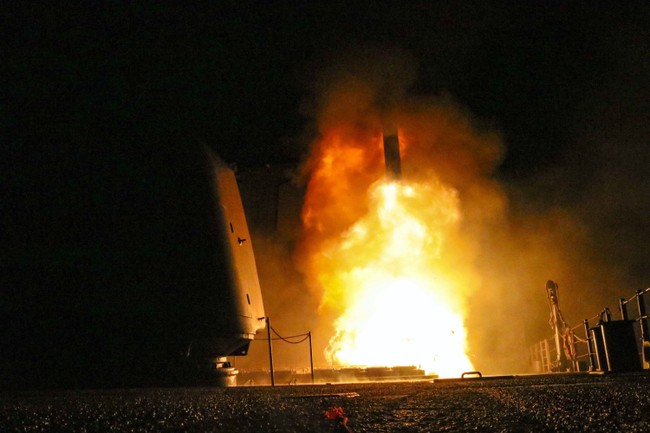
The U.S.-led strikes on Iran in Operation Epic Fury used large amounts of munitions, and while we are not about to run out of missiles, the pace of expenditure has defenders and strategists worried and the Pentagon is moving to expand production to avoid gaps in deterrence.
The weekend’s strikes did what they were meant to do: degrade Iran’s military leadership and capabilities. Those operations, however, also consumed significant numbers of interceptors, cruise missiles, and defensive rounds, prompting fresh questions about stockpile endurance. From a Republican point of view, using overwhelming force to remove a threat is the right choice, but it must be paired with a clear plan to replenish what we expend. Policymakers should be honest about the trade-off between swift, decisive action and the logistical strain it places on our inventory.
Planners warned that high-tempo operations can accelerate depletion, and that is precisely what we’re seeing. Missile families like the Tomahawk have been central to precision strikes for years, and anti-missile sectors such as THAAD and Standard Missile interceptors are being drawn down as well. That does not mean strategic collapse, but it does mean the industrial base and stockpile management must be treated as national security priorities. If we want to preserve deterrence against China and Russia while finishing the job against Iran, production lines must follow our strategy.
The Wall Street Journal and other outlets reported military insiders cautioning that an extended campaign could stress stocks of interceptors and cruise missiles. Critics who panic at headlines forget that the Pentagon already has authorities and programs to surge production when required. The modern defense supply chain is not perfect, but it is capable of ramping up when leadership commits to that course. From a conservative perspective, winning should include both battlefield success and the ability to sustain that success.
Donald Trump was warned that America’s stockpile of missiles and interceptors could run dry if his war in Iran is prolonged, sources say.
Military insiders said Trump was cautioned that an extensive, resource-draining war in Iran could put US targets at risk if Iranian missile and drone capabilities are not destroyed quickly, per the Wall Street Journal.
The outlet cited current and former military officials who said the US missile stockpile – including air defense interceptors and Tomahawk cruise missiles – has been eaten away by conflicts with Iran and its proxies in the Middle East.
The strikes launched on Saturday started a race against time to destroy Iran’s missile force before the US runs out of interceptors to fend off retaliatory strikes, insiders warned.
Tomahawks remain a core tool in U.S. options for long-range, low-collateral strikes, and they were used extensively in the recent campaign. The facts are straightforward: use costs inventory, and inventory has to be replenished. The right approach for conservatives is to accept operational necessity, press for mission success, and ensure our industrial base is unleashed to replace what we expend. That means contracts, surge authorities, and a political will to fund production at scale.
Experts note systems such as THAAD and SM-series interceptors are distributed globally to deter North Korea, China, and rogue actors, so maintaining adequate reserves matters beyond any single theater. The quoted experts put it bluntly: we can deplete these stocks quickly if we do not accelerate replacement. That’s why the Department of Defense has been preparing procurement actions and invoking surge authorities where needed. Deterrence is not just about striking first; it is about being able to absorb and respond to counterattacks without losing posture.
Kelly Grieco, a senior fellow at the Stimson Center think tank who used to teach at the Air Command and Staff College, told the Wall Street Journal that with more strikes and interceptions likely, the size of the US stockpile may become a factor.
‘One of the challenges is you can deplete these really quickly,’ Greico said. ‘We’re using them faster than we can replace them.’
Among the most vital pieces of weaponry in the US arsenal is the Thaad antimissile system, which are stationed across the globe to monitor and track potential incoming fire.
Military insiders said keeping stocks of the Thaad’s weaponry high is vital, with the systems also set up outside of the Middle East such as in South Korea and Guam, to deter North Korea and China.
Industry is responding. Manufacturers have announced plans to boost output of Tomahawks, AMRAAMs, and SM-series interceptors, and formal agreements have been made to expand capacity. That’s exactly the kind of industrial mobilization conservatives should push for: decisive defense power backed by American production. We won World War II because America unleashed industry in service of victory, and modern production lines can be scaled when political leaders demand it.
There are real operational risks if a prolonged conflict is fought without a clear plan to replace munitions, but the right answer is to combine relentless pressure on the enemy with a muscular industrial response. Panic and defeatism help no one; what matters is resolving the conflict on terms that protect Americans and restore stability. Expect military operations to continue until the threat is neutralized, while Congress and the administration work to keep our arsenals ready for the next fight.
Editor’s Note: Thanks to President Trump and his administration’s bold leadership, we are respected on the world stage, and our enemies are being put on notice.


Add comment