
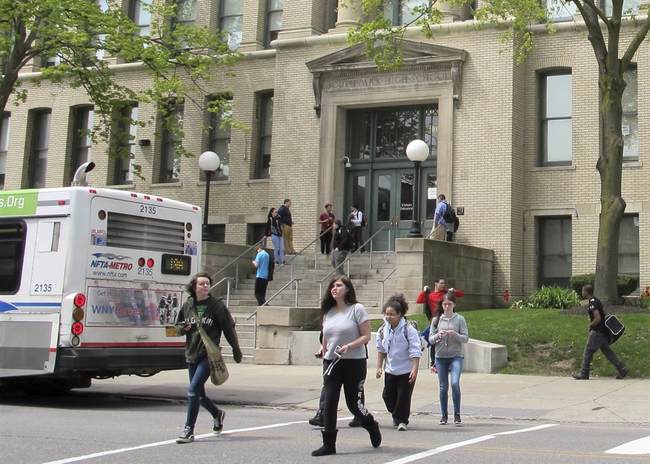
The Buffalo Public Schools controversy began with a veteran Special Victims Unit detective going public about alleged reporting failures and safety breakdowns, which led to a commissioned independent investigation; that report found systemic operational weaknesses, legal friction, and emergency-response confusion, confirming many of the whistleblower’s core concerns without alleging criminal intent by administrators.
For more than a year this issue has simmered, dragging district leadership into a national conversation about school safety and accountability. What started as a whistleblower disclosure evolved into a legal and institutional clash, with law enforcement raising questions and district officials pushing back. The independent review has now put much of the dispute into a clearer context.
Detective Richard Hy publicly described incidents involving sexual assault, child abuse, and an attempted kidnapping inside Buffalo schools and said the district resisted proper reporting. He discussed one case on a national podcast and later on another radio program, laying out what he believed were systemic failures that affected children. Those claims forced a deeper look into district operations.
The independent report stopped short of accusing administrators of criminal wrongdoing but documented serious gaps that match Hy’s concerns: inconsistent emergency protocols, muddled evidence handling, and strained communication between school staff and investigators. Those findings make clear that this was not merely a dispute over details but a failure of systems meant to protect students. Parents and law enforcement were left dealing with the consequences of procedural confusion.
One of the most alarming episodes involved an adult entering a school, approaching children, and a staff member being assaulted while protocols were not uniformly applied. Detective Hy said two children were approached and that the school reported only one victim and mishandled video evidence; the district contested that narrative. The report confirmed protocol confusion between shelter-in-place and lockdown and noted weaknesses in video retention, though it did not substantiate deliberate deletion of footage.
Legal tension compounded the operational problems when prosecutors and district legal representatives clashed over disclosure and subpoenas. The independent review outlined that grand jury subpoenas were issued, redacted materials were initially provided, and judicial intervention was necessary to compel full access. That sequence describes a contentious investigative process during a child-related criminal case and highlights the stakes when cooperation falters.
Hy’s broader allegation was institutional resistance to investigation, claiming district lawyers discouraged cooperation and ignored subpoenas. The district publicly disputed those claims while the report captured moments of legal friction, including communications from an assigned ADA expressing concern that the inquiry was being obstructed. Those excerpts show how fragile the investigative chain became in a case where timely disclosure matters most.
After the initial email exchanges, one of the assigned ADAs sent an email to BPS Legal advising both that it made the motion to obtain the judicial subpoena, asking again for the portion of FERPA that the District was relying upon (to address it further, as needed, in the motion), and advising of belief that their ‘ability to fully and completely investigate what may amount to an attempted kidnapping from BPS School 59 is currently being obstructed by the continued withholding of relevant and material information.’
Mandated reporting failures are at the heart of the alarm. Hy described instances where allegations of abuse were not reported promptly, including one case where a child allegedly suffered repeated harm before authorities were notified. The independent review documented weak documentation, inconsistent reporting practices, and unclear chains of communication that make delays unsurprising when discretion replaces strict enforcement.
Hy also said he received messages from other jurisdictions describing similar incidents, suggesting the problem may not be isolated to a single district. The independent review didn’t examine national parallels but did highlight how local bureaucratic patterns can produce predictable failures. When systems allow too much human discretion without clear enforcement, kids pay the price.
The report did not exonerate or condemn individuals; instead it sketched a picture of institutional dysfunction. It found emergency protocol confusion during a live intrusion, disputes over legal disclosure, long-standing staff complaints, and weaknesses in documentation and evidence handling. Those findings point to a system that relies too heavily on who happens to be on duty rather than on robust, dependable procedures.
“The investigation confirmed that many dedicated professionals within BPS are committed to student safety, but they are operating within a framework that often impedes rather than enables their effectiveness. Teachers report feeling unsupported when raising safety concerns, security officers describe being underutilized as doormen rather than active safety professionals, and administrators struggle with outdated communication systems and unclear protocols. The recurring theme across all stakeholder groups is that individual dedication cannot overcome systemic deficiencies.”
Detective Hy has argued that distrust between certain school administrators and law enforcement intensified after the “defund the police” movement gained traction, and he described staff reluctance and ideological resistance to cooperation in follow-up interviews. Whether one accepts that causal link or not, the independent report confirms a practical reality: safety outcomes often depended on individuals rather than reliable systems. That reality validates the whistleblower’s broader claim that systemic change is necessary.
For parents, taxpayers, and law enforcement professionals, the report raises clear policy questions about how schools handle emergencies, preserve evidence, and cooperate with criminal investigators. The district’s statement acknowledged receipt of recommendations and said it will review them, but accountability and concrete reform remain the unresolved next steps. The central issue now is whether Buffalo Public Schools will turn findings into enforceable action or simply wait for another preventable crisis to force change.
Hy analyzed the report for nearly two-and-a-half hours on a livestream for his audience on Feb 20.
Buffalo Public Schools immediately pushed back, the district was prepared to “vigorously address these untruths.”


Add comment