
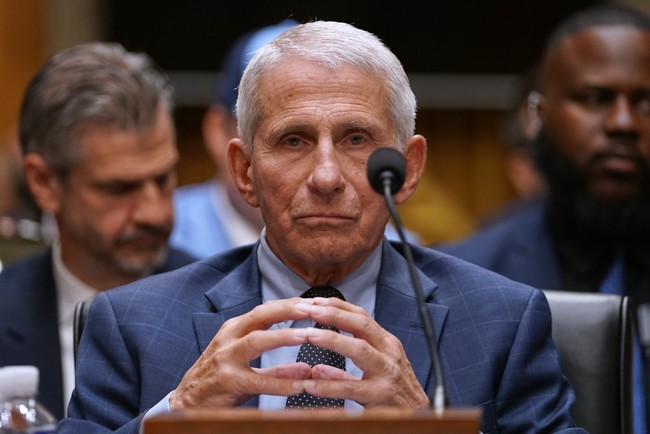
The Senate hearing where Anthony Fauci invoked the Fifth more than 100 times has provoked sharp debate about strategy, legal exposure, and public trust. This piece looks at the legal analysis offered by a former Defense Department counsel, the political fallout from repeated silence, and how pardons and state probes factor into what happens next.
The decision by the former NIH director to plead the Fifth repeatedly has become the dominant image from the hearing. To many conservatives, the move looked defensive and politically tone-deaf, especially given the public’s hunger for straightforward answers about the pandemic. Critics argue the spectacle did more to harm Fauci’s credibility than to protect him.
Ryan Goodman, a law professor who once served as Defense Department counsel, told CNN that the strategy may have backfired. He suggested the choice to repeatedly refuse answers raised more questions about legal advice and overall tactics. “I think it makes it worse,” he told anchor Erin Burnett.
Goodman noted that the Biden administration’s broad pardon complicates the typical Fifth Amendment calculus. “It’s even a curious way in which you wonder what his legal advice was, why they decided to do that. Because he does not face criminal jeopardy for the pardon.” That reality, he argued, undercuts the classic justification for pleading the Fifth in congressional testimony.
Because a federal pardon likely shields Fauci from prosecution for actions prior to January 2025, Goodman said the invocation of privilege can look unnecessary and legally risky. “In all likelihood, he’s pardoned for all actions before January 2025. But that also means that you’re forced to testify,” he added, highlighting how the pardon and silence interact in unexpected ways. Lawmakers and commentators immediately began talking about contempt votes and enforcement options.
Senators in Washington reacted quickly, with at least one committee scheduling a contempt vote to address the refusal to answer. From a Republican perspective, enforcing accountability in public hearings matters for restoring trust in government institutions. Refusing to answer while protected by a pardon looks like avoidance in the eyes of many voters.
Beyond federal protections, state-level investigations could still pose real legal peril, which may have influenced Fauci’s legal calculus. Florida officials have indicated interest in pursuing their own probes, and state inquiries are not covered by a federal pardon. That creates a messy legal landscape where political theater, legal maneuvering, and potential state charges all collide.
Public perception remains a parallel battlefield. Even if a pardon eliminates federal criminal risk, repeated invocations of the Fifth in a high-profile setting feed narratives of secrecy and unaccountability. For elected officials and voters focused on transparency, that perception matters more than technical legal defenses.
Fauci’s legal team has said the Fifth was invoked to avoid perjury traps in what they view as a partisan setting, but opponents see a calculated effort to dodge tough questions. Observers on both sides are now parsing whether the refusal to testify will produce practical consequences, symbolic consequences, or both. Either way, the episode has amplified calls for more aggressive oversight and clearer rules around testimony for government advisers.
The hearing also underlined a broader distrust of the pandemic-era decision-making process and the need for clearer accountability. Lawmakers pressed him on the origins of COVID-19, funding for foreign research, and private communications during the crisis, and the silence left many of those lines of inquiry unresolved. That unresolved business will likely feed further oversight efforts and state-level actions in the months ahead.
https://x.com/VigilantFox/status/2082640440466211082


Add comment