
The Supreme Court struck down Louisiana’s congressional map in Louisiana v. Callais, a decision that reshaped the debate around race and partisanship in redistricting and set off loud reactions from Democrats and commentators, including former President Barack Obama. This piece examines those reactions, highlights the inconsistency in Democratic arguments about gerrymandering, and calls out how recent map fights reflect long-standing partisan tactics. Embedded posts and commentary are preserved to show how the conversation unfolded online.
The Court held that Louisiana’s second majority-black district violated the Equal Protection Clause by relying on race, and it found the Voting Rights Act did not compel a second majority-minority district. “The court held that the Voting Rights Act did not require Louisiana to draw a second majority-minority district. Without that requirement, the state had no compelling reason to use race in drawing its lines,” RedState’s Joe Cunningham reported. That ruling immediately sent the left into panic, with predictable cries about voter suppression and assaults on minority representation.
Responses from some Democrats were extreme and unapologetic, urging creative workarounds to blunt the ruling’s effects rather than accept the legal limits set by the Court. The social media noise included demands to make every seat in certain states safe for one party, a transparent political aim dressed up as a civil-rights cause. Such calls sounded less like principled defense of voting rights and more like partisan strategizing aimed at cementing power.
Some commentators tried to frame the decision as an invitation to racial gerrymandering under the label of partisanship, warning that states could now mask race-based maps as political choices. That argument risks conflating two distinct legal and political questions: when race predominates in districting and when legitimate partisan strategy is used. The Court’s opinion drew a line between racial classifications that trigger strict scrutiny and ordinary political map drawing.
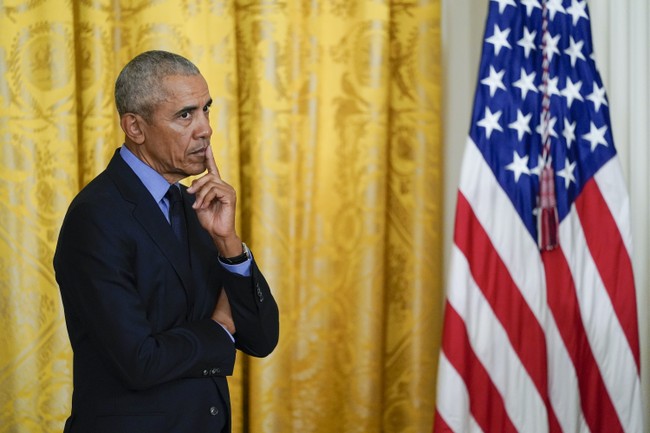
One reaction that drew particular attention came from former President Barack Obama, who posted a pointed critique about the ruling’s implications for minority voting power. “Today’s Supreme Court decision effectively guts a key pillar of the Voting Rights Act, freeing state legislatures to gerrymander legislative districts to systematically dilute and weaken the voting power of racial minorities – so long as they do it under the guise of “partisanship” rather than explicit “racial bias.” And it serves as just one more example of how a majority of the current Court seems intent on abandoning its vital role in ensuring equal participation in our democracy and protecting the rights of minority groups against majority overreach.” That statement resurfaced long memories of partisan map fights where Democrats were not always consistent about race and partisanship.
Obama followed with a call to mobilize voters: “The good news is that such setbacks can be overcome. But that will only happen if citizens across the country who cherish our democratic ideals continue to mobilize and vote in record numbers – not just in the upcoming midterms or in high profile races, but in every election and every level.” Those remarks are earnest, yet they sit awkwardly next to past examples where Democratic map drawing shifted districts in ways that benefited their party.
Critics pointed out that Democratic gerrymanders have sometimes removed Voting Rights Act-protected districts, weakening the very minority protections Obama now laments. The Virginia situation was highlighted as one such example, where maps favored Democrats by diluting certain minority concentrations into broader districts. That history undermines arguments that only one side practices partisan mapmaking and shows how both parties have weaponized redistricting when it suited them.
You can see heated examples and reactions preserved online in the embeds below, which capture the raw tenor of the discussion across social platforms. These posts illustrate the immediate, emotional responses that followed the ruling and how quickly the issue was framed as existential by activists and elected officials alike.
Onlookers noted a pattern: Democrats frequently accuse opponents of racial bias when map lines hurt their electoral prospects, yet they defend or deploy partisan lines that produce similar results when they benefit. That inconsistency fuels a broader argument for treating electoral disputes with a consistent standard rather than selective outrage. When parties have spent decades drawing maps to their advantage, accountability requires equal scrutiny of both sides.
For conservatives and many voters in red states, recent moves to redraw maps feel like overdue pushback after long stretches of Democratic dominance in certain regions. The reaction from Obama and other national Democrats reveals anxiety about the shifting playing field ahead of key elections. Republicans see these changes as reclaiming fair competition rather than as a threat to democracy.
Discussion of this ruling will keep playing out in courts and legislatures, and voters will have the final say at the ballot box. The stakes are high for representation and party control, and the debate over how to separate race from partisan advantage in maps is far from settled.
Debate over past practices and current rulings will continue to shape the 2026 election season, with both sides sharpening their arguments and leveraging legal and political tools. It’s a fight over how lines are drawn, who draws them, and what rules govern that process moving forward.
As this drama unfolds, historical examples get dragged into the present to make quick points, but they also expose the cyclical nature of partisan tactics in redistricting. Scrutiny of all mapmakers, regardless of party, will be key to any claim of principle on this issue.
Ultimately, conversations about maps, courts, and minority representation will remain messy, partisan, and consequential. Readers can follow the embedded posts for direct context and the immediate reactions that turned a technical court opinion into a flashpoint for national debate.



Add comment