
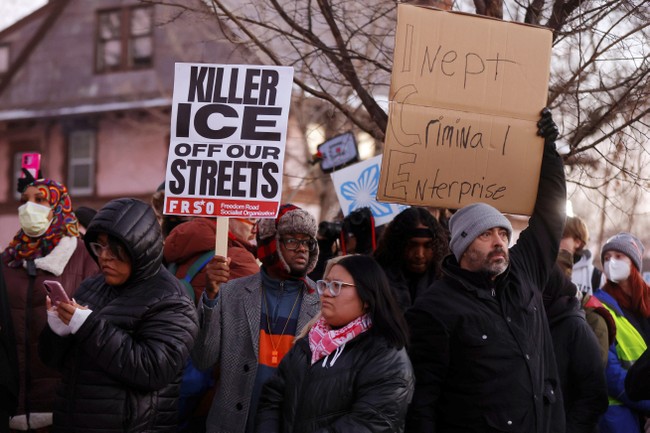
The Trump administration is stepping up federal enforcement in Minneapolis by sending more than 100 U.S. Customs and Border Protection agents to supplement roughly 2,000 law enforcement officers already working in the Twin Cities, and the move is being framed as a necessary assertion of federal authority amid violent protests and efforts to obstruct immigration enforcement.
Federal officials describe the operation as a direct response to unrest that has made Minneapolis a focus of broader enforcement actions. The city has become what senior voices are calling the focal point for removals and other immigration operations that pause only briefly when violence spikes. Leaders in Washington insist the job is to restore order where local officials have resisted federal authority.
DHS has said it has already ramped up its presence in Minnesota, deploying roughly 2,000 law enforcement officers to the Twin Cities, and has pledged to continue operations despite opposition from local officials.
ICE Acting Director Todd Lyons said Thursday that agents briefly paused enforcement efforts after the shooting but have since resumed operations.
“We’re going to keep doing the work,” Lyons said.
The extra CBP agents are being sent to reinforce a larger, ongoing effort to carry out federal immigration law. Officials here and in other cities have emphasized that these are law enforcement operations, not political theater, and that agents will press on despite protests aimed at blocking their work. The emphasis from supporters is that federal duties cannot be vetoed by street demonstrations or local political pressure.
This posture reflects a view that certain responsibilities belong squarely to the national government, and enforcing immigration statutes is one of them. If federal agents are prevented from doing their jobs because of mob action, the practical effect is to cede authority that Congress and statute explicitly assign to the federal level. Those who back the deployment argue that allowing that to happen would invite copycat obstructions elsewhere.
The new surge is intended to be both tactical and symbolic, sending a clear message that the enforcement pause after the recent shooting was temporary and that operations will continue. Supporters of the move say the message must be unmistakable: citizens who voted for tougher enforcement expect the federal government to use the tools it has. They see a duty to reassert federal control over immigration matters where local leaders fail to cooperate.
Local opposition has been fierce, and activists have made it a point to confront agents and attempt to disrupt enforcement activity. That tactic, according to federal supporters, cannot be allowed to determine who enforces national law. The practical concern is that if demonstrations can indefinitely block arrests and removals, enforcement becomes functionally optional in certain jurisdictions.
There are also legal and institutional concerns at play, including the proper scope of federal authority and the responsibilities of agencies sworn to uphold federal statutes. Advocates of the enforcement action argue that the intent is not punitive for its own sake but to maintain the rule of law in situations where illegal entry and related conduct are concentrated. They point to the need for consistent nationwide application of immigration policy, particularly in areas that have been labeled sanctuary jurisdictions or have otherwise limited cooperation.
Civilians and politicians alike are watching how this plays out in Minneapolis and across Minnesota, with the expectation that outcomes here will influence enforcement approaches elsewhere. If federal operations proceed without being stymied by protests, proponents say it will reinforce a precedent that federal officers can carry out their duties despite local resistance. Conversely, any retreat or permanent pause would be seen by supporters as conceding an important federal function to mob pressure.
The debate is raw and politically charged, reflecting larger national disagreements over immigration, law and order, and the proper relationship between local governments and federal agencies. For those backing the Trump administration’s approach, the sending of additional CBP agents is a practical step toward restoring control and a principled stand for the supremacy of federal law where it applies. The next few days and weeks in Minneapolis will be closely observed as a test case for whether federal enforcement can proceed in the face of organized obstruction.
Editor’s Note: Democrat politicians and their radical supporters will do everything they can to interfere with and threaten ICE agents enforcing our immigration laws.
Help us hold these leftists accountable and expose their obstruction. Join RedState VIP and use promo code FIGHT to receive 60% off your membership.


Add comment