
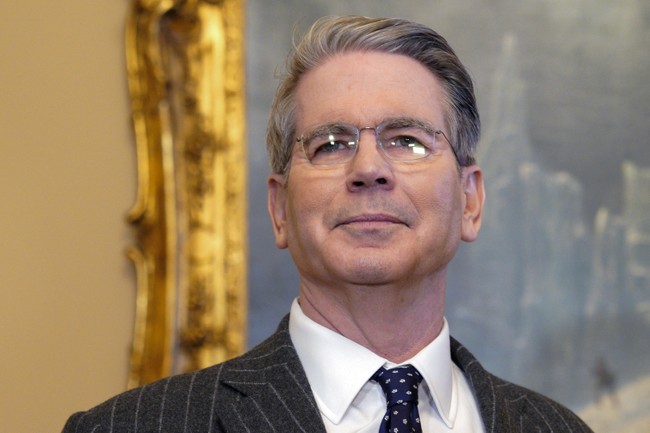
President Trump’s recent Asia trip produced multiple agreements that his team says reset relationships and advanced U.S. economic and strategic interests, including commitments on trade, shipbuilding collaboration, and cooperation with China on key issues like soybeans and fentanyl. Treasury Secretary Scott Bessent praised Trump’s personal diplomacy and argued these outcomes flow directly from American leadership on the world stage. Officials describe the moves as part of a broader effort to rebuild alliances and to bring manufacturing and sensitive industries closer to reliable partners. These developments are being framed as proof that assertive, deal-focused diplomacy can deliver measurable wins for the United States.
Trump wrapped up a fast-paced tour of Asia with headline deals that extend beyond a single agreement with China to buy soybeans. Senior officials emphasize that the trip stitched together distinct diplomatic threads — trade, defense-related industrial cooperation, and bilateral relationships — into a coherent push to strengthen U.S. influence. The administration’s messaging centers on leverage: the president’s relationships and direct negotiations opened doors that were previously shut. That approach is being presented as practical, transactional, and results-oriented.
On Fox Business, Treasury Secretary Scott Bessent gave an unreserved endorsement of Trump’s role in securing the deals and tied the outcomes to the president’s rapport with foreign leaders. “All the congratulations should go to President Trump,” Bessent said. “He has a fine relationship with President Xi. The mood in the room was one of great respect. But also between two men who knew each other quite well and knew what they were getting into.”
Bessent argued the China engagement offers a chance to recalibrate ties on the basis of mutual respect and clearer expectations. “I think the Chinese realize that with President Trump in office, it is an opportunity to reset the relationship in terms of mutual respect,” he added. “President Trump is commanding respect around the world like no other leader.” The comment underscores the administration’s theme that personality and clarity matter in high-stakes diplomacy.
Beyond China, the trip produced a notable bilateral understanding with South Korea that officials are calling historic, especially around industrial capacity and defense logistics. Bessent highlighted an agreement intended to revitalize U.S. shipbuilding capacity by integrating it with skilled partners in Korea and Japan. “President Trump agreed last night with the president of Korea on a historic deal that is going to bring shipbuilding back to the U.S.,” Bessent explained. “And the Koreans are great shipbuilders and Japan are great shipbuilders. So, we are going to integrate our shipbuilding with our Western allies.”
The administration is pitching that bringing shipbuilding work back to the United States will strengthen supply chains and national security while creating jobs. Officials say the plan uses allied strengths to rebuild domestic industrial capabilities rather than outsourcing critical manufacturing. Framed this way, the initiative is both economic policy and strategic hedging against future disruptions or coercion from adversaries.
Bessent repeatedly returned to a simple line about leadership and follow-through. “And Maria [Bartiromo], this is what leadership looks like,” he added. “When the U.S. leads, the world follows, and President Trump has been doing that. I’ve been fortunate enough that over the past nine months I’ve seen President Trump in action.” The remark was used to stitch together events from the G7, the United Nations, and the ASEAN summit as a pattern of U.S. reengagement.
He reviewed recent diplomatic scenes as evidence of momentum: encounters with European leaders at the G7, convening major delegations at the United Nations, and gathering leaders across Asia at ASEAN. “I saw him at the G7 in Canada with the Europeans. I saw him at the United Nations, where he gathered I would expect 85 percent of the Muslim speaking world in the room that set the stage for the deal in Gaza,” Bessent continued. “And then two days ago at the ASEAN conference, we had the leaders in Asia. And it is the respect for President Trump in all three of these groups that is allowing U.S. leadership to reassert itself.”
The administration links these diplomatic openings to tangible economic outcomes, saying U.S. citizens and the broader free world will benefit. Bessent insisted the combination of strengthened alliances and economic deals will move the U.S. economy forward under American leadership. That message ties foreign policy directly to domestic prosperity and security, a consistent theme of the current messaging strategy.
Officials also point to a fresh understanding with Beijing that touches on trade and law enforcement cooperation, as well as agricultural purchases. Reported elements include resumed purchases of U.S. soybeans by China and commitments related to rare earths and synthetic opioid production. In describing the China engagement, the president himself said, “We have a deal,” and described the arrangement as something that could be renegotiated annually while remaining durable.
A quoted passage in public reporting summarized specific concessions and expectations: Trump said that Washington’s dispute with Beijing over the supply of rare earths had been settled, China would resume buying US soybeans, and Washington would reduce its tariffs on China. It also noted claims that China would work to prevent the production of synthetic opioid fentanyl, with adjustments to tariffs in exchange. Those are the components officials point to when defining the trip’s diplomatic payoffs.
Add comment