
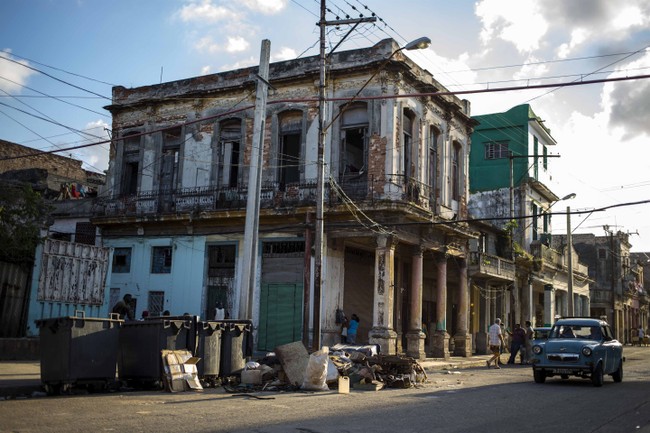
Cuba’s economy is collapsing under a U.S. oil chokehold while Moscow and Beijing talk about helping but clearly worry about provoking President Trump; the island faces fuel rationing, transport shutdowns, tourism paralysis, and a humanitarian strain that foreign pledges look unlikely to solve at scale.
Cuba has long been a struggling command economy, but recent developments have pushed it toward systemic failure. The removal of Venezuela’s oil exports combined with U.S. measures targeting any country that supplies oil to Cuba has produced a sharp, immediate fuel shortfall. Rationing, shortened school days, and suspended public services are no longer theoretical scenarios; they are happening now as lines form at gas stations and hotels shutter rooms during rolling blackouts.
To deal with the national emergency declared in this order, I determine that it is necessary and appropriate to establish a tariff system, as described below. Under this system, an additional ad valorem duty may be imposed on imports of goods that are products of a foreign country that directly or indirectly sells or otherwise provides any oil to Cuba. In my judgment, the tariff system, as described below, is necessary and appropriate to address the national emergency declared in this order.
Those U.S. measures are designed to isolate Havana economically and to deprive its security-state apparatus of resources that underwrite overseas adventurism. Washington’s strategy is to make the cost of aiding Cuba politically and economically painful for third parties. That puts Russia and China in a bind: they can issue statements of support, but any concrete resupply risks triggering tougher U.S. responses and broader sanctions that both powers prefer to avoid.
The Caribbean island’s Communist authorities are rationing dwindling fuel supplies, curtailing public transportation and furloughing workers. Children are being sent home from school early, people can barely afford basic food like milk and chicken, and long lines have sprung up at gas stations.
Cuba’s crucial tourism industry is paralyzed. Some popular hotels, crippled by ongoing blackouts, have begun to shut down, ferrying remaining guests to other lodging, according to Russia’s tour-operator agency.
Moscow has publicly offered a humanitarian delivery of oil and oil products, but the math and geopolitics make that offer largely symbolic. Cuba needs roughly 3 million barrels monthly to maintain basic operations, and domestic production accounts for only a fraction of that. Even if Russia wanted to supply the full shortfall, risks of seizure, interdiction, and subsequent U.S. retaliation make sustained shipments politically dangerous and economically costly.
Russian officials have been candid about the limits. “We would not want any escalation, but, on the other hand, we currently don’t have much trade [with the US], that is the reality,” a Kremlin spokesman said. That assessment hints at a pragmatic calculation: aiding Cuba at scale would invite a stronger U.S. sanctions response, undermining Russia’s broader interests, including its ability to finance operations elsewhere.
China has echoed supportive language, reaffirming a posture of sovereignty and assistance for Cuba, but rhetoric is not relief. Beijing’s recent behavior toward foreign aid shows caution and tight prioritization of resources. Sending cash to buy oil for Cuba would undercut Beijing’s recent track record of guarded economic engagement and risk escalation with Washington at a time when China prefers containment of conflict, not open confrontation.
China has pledged continued support for Cuba as the island grapples with worsening fuel shortages, pushing back against what Beijing called external pressure on Havana.
“China firmly supports Cuba in safeguarding national security and sovereignty, and opposes external interference,” Foreign Ministry spokesperson Lin Jian told reporters in Beijing on Tuesday.
He said China would continue providing assistance and rejected what he described as moves that undermine the Cuban people’s right to basic subsistence and development.
Practical help would require a monthly supertanker delivery, flagged and routed in ways that avoid seizure and retaliation, and paid for by funds diverted from other strategic priorities. That scenario is improbable. Every barrel diverted to Havana is a barrel not available for other geopolitical commitments, and both Moscow and Beijing must weigh the costs against potential U.S. punishments that could follow.
The central question now is political: how hard will the United States push to finish what these measures began? From a conservative standpoint, pressure that targets the regime’s resource base is a valid tool to reduce its destabilizing activities abroad. The upcoming weeks will test whether economic isolation forces any change in Cuba’s leadership choices, their appetite for confrontation, or their ability to maintain basic services for citizens.

Add comment