
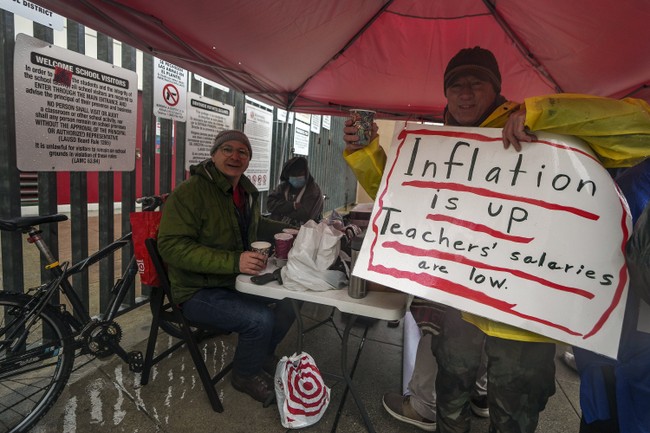
The San Francisco teachers’ strike has turned confrontational, with union leaders asking parents not to use district-provided independent study packets during the work stoppage, arguing that doing so weakens the union’s leverage; this piece lays out the dispute, public reactions, the district’s academic fallback, and the broader questions about priorities in education from a Republican perspective.
What About the Kids? San Fran Teachers Demand Parents Eschew Homeschooling During Strike… to Help Them
Teaching is a challenging job and deserves respect, but when unions pressure parents to avoid doing anything that keeps kids learning during a strike, priorities get murky fast. The San Francisco Unified School District is in the middle of a strike that has kept more than 50,000 students out of classrooms, while negotiations over pay and benefits drag on. Parents and taxpayers want students’ education protected first, not used as leverage in a labor fight.
The district offered a practical solution: independent study homework packets that provide five days of English Language Arts and math practice so students do not fall behind. Instead of being welcomed as a safety net for kids, those packets have been attacked by some teachers who say they undermine the strike and reduce pressure on district negotiators. That reaction flips the usual argument about who’s really looking out for students.
Union social media posts urged families not to participate in independent study during the strike, framing participation as effectively crossing a picket line. The message put parents in an impossible spot: support their children’s learning or follow the union’s strategy to increase bargaining power. Such an ultimatum raises uncomfortable questions about whether educators are prioritizing adults’ interests over children’s daily needs.
“If many families participate in independent study, it reduces pressure on the district and can prolong the strike. If you are able, we ask that you do not participate in the independent study provided by the district.”
That exact statement sparked anger among many parents who called the stance “messed up” and criticized asking families to withhold learning opportunities from their kids to make a labor point. Other parents sided with teachers, arguing the packets amount to scabbing, and claimed that district-provided materials were a tactic to blunt union demands. Either way, the debate exposes a deep distrust between families, districts, and unions.
There are real stakes here: districts claim they could lose significant funding with each strike day, and teachers demand a nine percent raise over two years plus expanded family health benefits. The district says those costs are unaffordable, creating a classic budget showdown. Yet while adults haggle over compensation and benefits, the students’ classroom time and educational continuity hang in the balance.
Test scores in the district are middling; only certain reading metrics for high schoolers exceed the halfway mark, suggesting room for improvement. When educators step away and then actively discourage stopgap learning, the immediate losers are students who miss instruction and practice. From a Republican viewpoint, this highlights the need to return control and accountability to parents and local communities rather than leave curriculum and access hostage to union strategy.
Conversations about educator compensation are legitimate, but they should not come at the cost of students’ daily learning or force families into a political choice between schooling their children and supporting labor action. Parents should be trusted to decide how best to keep their kids on track during disruptions, whether that means using district packets, arranging childcare, or temporarily switching to homeschool routines. Policies and practices must center children first.
Moreover, the strike raises broader concerns about what is being taught and to whom teachers answer. Some parents worry that classrooms focus more on ideological priorities than on foundational skills, and a strike that discourages temporary learning solutions only deepens that worry. The public deserves transparency about how decisions in classrooms affect student outcomes and who benefits when schools are shut down.
Negotiations between the district and the union continue, and both sides claim to want a resolution that serves the community. But practical steps that reduce disruption for students should not be politicized as tools of retaliation. If districts can provide meaningful independent study work, parents should be free to use it without being shamed or threatened for putting their child’s education first.
The dispute in San Francisco is a microcosm of a larger national debate about education, local control, and the proper role of unions. While teachers deserve fair compensation and respect, labor tactics should not weaponize students’ learning or force families into a choice between education and politics. Communities should insist that negotiations protect classroom time and student progress above all else.



Add comment