
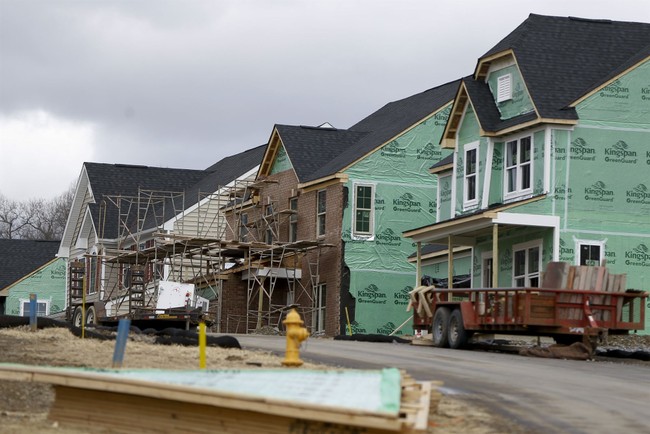
The piece looks at President Donald Trump’s plan to bar large institutional investors from buying single-family homes, the role hedge funds and private equity have played in U.S. housing, the political and lobbying power that protects them, and the policy options and tensions around defining who counts as a disallowed buyer.
Washington has long been accused of selling off American economic space to well-heeled interests, and housing is a prime example of that trend. For years, hedge funds, private equity firms, and other deep-pocketed investors have bought neighborhoods, pushing prices up and shrinking supply for would-be homeowners and young families. This shift has real consequences for wealth formation, since owning a home remains a major vehicle for building family equity over decades.
The concern is especially sharp because institutional buyers often make all-cash offers and outcompete ordinary buyers, driving sale prices higher than the market might otherwise bear. At peak pandemic buying, investors accounted for a remarkably large share of single-family purchases in some markets, and that concentrated buying has squeezed inventory. The result is fewer homes for sale and higher entry costs for typical Americans trying to buy their first house.
I am immediately taking steps to ban large institutional investors from buying more single-family homes, and I will be calling on Congress to codify it.
That is President Trump’s clear statement of intent, and it has pushed the debate from think tanks and trade papers to the realm of potential law. There are already legislative proposals on the table that aim to stop hedge funds and similar entities from dominating the starter-home market, though the details of any bill will matter a lot. If Congress ever moves, the key questions will be who is covered, what market segments are protected, and how enforcement would work.
One sticking point is a proposed legislative threshold that treats entities above a certain size differently. Some discussion has centered on a $50 billion floor, which would capture giants but leave out many large players that still exert local market power. For example, a major hedge fund with a roughly $65 billion market cap would fall within such a definition, illustrating how size thresholds can matter to real outcomes on the ground.
Data cited in public debates show that institutional investors purchased nearly 19% of homes sold in a recent quarter, with higher figures in hot markets. The trend toward buying whole blocks or blocks of starter homes for rent rather than sale has concentrated ownership and shifted neighborhoods toward a rental model in areas where homeownership used to be an entry point for wealth building. That change alters community incentives and long-term family stability.
(H)omeowner associations for years have sought to stop investors from buying and renting out houses in their neighborhoods….
(I)nvestors that have scooped up hundreds of thousands of houses to rent out (and) are contributing to the dearth of homes for sale and driving up home prices….
(I)nvestors of all sizes spent billions of dollars buying homes during the pandemic. At the 2022 peak, they bought more than one in every four single-family homes sold….
Those observations from reporting and research underline that investor buying isn’t just an abstract problem; it shows up in homeowner association fights, in bidding wars, and in markets where starter homes vanish from sale lists. Critics argue that the cumulative effect has been to lock out thousands of potential first-time buyers. Supporters of institutional participation counter that investors provide rental housing and professional management, but that defense does not erase the displacement effect.
Hedge funds and private equity firms are actively buying homes, especially in high-growth areas and lower-priced markets where rental yields are strongest.
Their presence has grown steadily over the last decade, with nearly 19% of all U.S. homes sold in Q1 2024 going to investors. In some markets, that number is even higher.
For many homebuyers, this has created tougher competition, especially when going up against wall street hedge funds with all-cash offers and fast timelines.
Beyond purchases themselves, these investors bring lobbying dollars and policy influence to Washington, hiring lobbyists, giving to political causes, and funding think tanks to shape public discussion. Combined spending by top hedge fund and related industry actors in a recent period reached into the hundreds of millions of dollars, and individual firms spent staggering sums on federal influence campaigns. That investment in influence raises concern that market practices will be defended in the corridors of power even as they harm average Americans.
Meanwhile, some reputable policy groups and research bodies have pushed back on broad-brush critiques, arguing that the market is complex and that small and medium investors are often lumped together with huge institutional buyers. Those nuance arguments matter for lawmakers trying to craft workable, constitutional rules that target bad actors without hampering ordinary property investment. But the lived experience of displaced buyers and rising prices has driven a political appetite for change and a push to protect the housing ladder for families.
Any real policy will need precise definitions, enforceable standards, and mechanisms to preserve buyer access while maintaining healthy capital flows for rental supply. The tension between protecting aspirational Americans seeking homeownership and allowing large investors to operate freely will be the central battleground if congressional action is ever serious. How that balance is struck will determine whether starter homes return to reach more families or remain the province of institutional landlords.



Add comment