
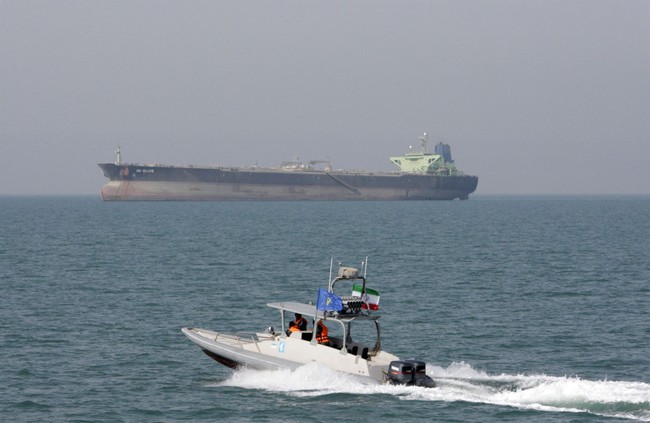
President Donald Trump posted a blunt 48-hour ultimatum to Iran demanding the Strait of Hormuz be fully reopened or face strikes on power plants, a message that underscores tensions over oil flows, regional security, and U.S. willingness to use force to protect global energy routes.
On Saturday evening the president used social media to set a strict deadline, saying the 48-hour countdown began at 7:44 p.m. ET. The post left little room for interpretation and explicitly named the targets said to be at risk if Iran did not cease interfering with maritime traffic.
The full post was concise and menacing, laying out the consequence in plain language and identifying power plants as the initial targets. The message reads in part:
If Iran doesn’t FULLY OPEN, WITHOUT THREAT, the Strait of Hormuz, within 48 HOURS from this exact point in time, the United States of America will hit and obliterate their various POWER PLANTS, STARTING WITH THE BIGGEST ONE FIRST! Thank you for your attention to this matter. President DONALD J. TRUMP
That strait is not a regional side road; roughly 20 percent of the world’s oil transits that narrow passage, and disruptions have immediate global consequences. Iran’s recent harassment of ships and threats to fire missiles have already stoked volatility in energy markets and raised alarms among trading partners in Asia and Europe.
Trump has repeatedly pointed out that Europe and Asia depend more on the oil moving through Hormuz than the United States does, and he has used that reality to argue that those partners should take a bigger role in keeping the waterway open. The president’s message makes clear he expects others to pay attention and act if necessary, while also signaling U.S. readiness to strike if deterrence fails.
The president specifically said the operation would “obliterate” Iranian power plants, “starting with the biggest one first!” That language raises the specter of attacks on high-value energy and infrastructure sites, and commentators immediately noted the potential implications. Iran’s largest power facility, the Bushehr Nuclear Power Plant, sits on the Persian Gulf and is the nation’s only commercial nuclear plant, making it a sensitive and consequential target in any escalation.
Iran’s largest power plant is the Bushehr Nuclear Power Plant, located on the Persian Gulf in southwest Iran. It is Iran’s only commercial nuclear power plant.
The Strait of Hormuz has been effectively closed to most ship traffic by Iran’s military forces since the war began three weeks ago. The crucial waterway is responsible for the movement of approximately 20% of all global oil, and its shuttering has led to a spike in gas prices.
Mr. Trump’s statement comes after the Treasury Department Friday announced that it was lifting sanctions on Iranian oil at sea as it attempts to bring down those prices.
Tension in the region has escalated to the point where military options are discussed publicly and market behavior reflects that risk. If Tehran continues to impede shipping lanes or attack commercial vessels, the administration’s message suggests a posture of decisive action rather than prolonged diplomacy.
The administration has already coordinated operations that severely degraded Iranian military capabilities, and the president’s warning focuses attention on the next layer of pressure: infrastructure. Cutting power would magnify disruptions inside Iran and could be used to coerce a reversal of hostile behavior, though it also carries humanitarian and strategic risks.
U.S. officials argue that protecting freedom of navigation in international waters is a legitimate national security aim, and allies in Europe and Asia face the direct economic fallout if the strait remains closed. That fact shapes the calculus: countries dependent on Gulf oil have a clear incentive to pressure Tehran or join efforts to secure shipping.
What unfolds in the next two days will test whether the Iranian regime responds to a short, hard deadline or doubles down on obstruction. Military planners on both sides will be watching closely, and markets will keep pricing in the uncertainty until the waterway’s status is resolved.
Editor’s Note: For decades, former presidents have been all talk and no action. Now, Donald Trump is eliminating the threat from Iran once and for all.


Add comment