
This article explains why the recent confrontation over the Strait of Hormuz under President Donald Trump proves deterrence still matters, how clear red lines backed by force can prevent wider war, and why defending global trade routes and coordinating with allies—without ceding strategy—is the responsible course for American leadership.
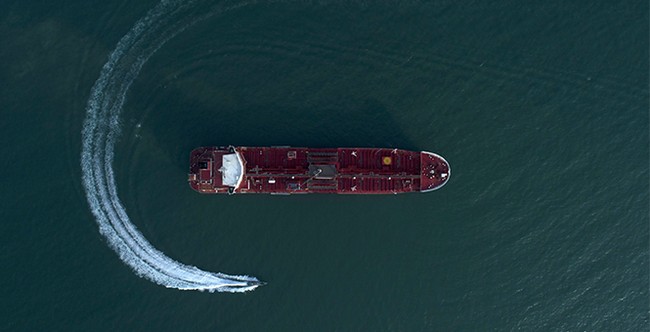
The situation around Iran, Israel, and the United States has thrust a vital shipping chokepoint back into the headlines, with real stakes for global energy and security. The Strait of Hormuz carries roughly a fifth of the world’s oil supply, and threats to close it are not abstract—they would ripple through markets and daily life worldwide. President Trump set a public ultimatum tied to reopening the strait and has adjusted timelines based on diplomatic signals while American and Israeli forces target Iranian military and regime assets.
The basic facts are straightforward and concerning. Tehran has launched missiles at Israel and other Gulf targets and has flirted with closing a major artery of commerce, while allied operations have struck Iranian facilities identified as part of its military and terror infrastructure. That posture forced a choice: either tolerate a regime that weaponizes trade lanes and proxies, or impose a cost that changes its calculations. Treating both sides as equally culpable in such circumstances only rewards aggression.
Critics call this brinkmanship, but deterrence is not recklessness when it prevents worse outcomes. For too long Western policy treated Tehran as a neighbor to be managed rather than a revolutionary actor willing to use asymmetric means to gain advantage. When actors threaten vital trade routes, the response must be clear: weaponizing trade invites decisive consequences, or the behavior becomes an inexpensive and effective strategy for coercion.
That does not mean threats are cost-free or unfettered. The president’s public vow to “obliterate” Iranian power plants if the strait remains closed is a blunt warning with serious human and economic consequences. Energy analysts warn the current shocks are deeper than the oil crises of the 1970s, with markets reacting violently to each new strike, and Iran’s health ministry reports more than 1,500 deaths in the campaign so far. When hospitals, schools, and aid facilities are hit, the moral and strategic stakes rise simultaneously; military choices must weigh both.
President Trump’s approach rests on two plain principles that Americans can understand. First, freedom of navigation is not up for bargaining—if Iran can close the strait without consequence, every rogue actor will see global trade as a leverage point rather than a shared public good. Second, alliances matter but do not transfer American judgment; coordinating with Israel and other partners is vital, but Washington must not be dragged into operations that serve foreign agendas at the expense of U.S. interests.
Extending a deadline for Iran to reopen the waterway reflects a deliberate mix of pressure and space for diplomacy under the shadow of force. That posture is designed to give negotiations a chance while making clear there are tangible costs to continued aggression. The calculus is simple: diplomacy backed by credible punitive options is what alters Tehran’s behavior, not patient appeasement that normalizes attacks on civilians and commerce.
Americans rightly recoil from endless wars, and that instinct should shape strategy, not substitute for it. The danger is that ambiguity about what we will defend invites miscalculation and a gradual escalation into the very quagmires we want to avoid. A focused mission—keep the strait open, protect U.S. forces and partners, and raise the price of turning trade routes into battlefields—offers a narrow, achievable set of objectives that reduces the odds of a larger, prolonged conflict.
Good policy balances prudence and firmness. Using force sparingly but unmistakably, coordinating with allies while preserving U.S. operational control, and signaling consequences for attacks on infrastructure and civilians all work together to restore deterrence. If adversaries conclude that threats to global commerce or attacks on partners will be met with serious responses, they are less likely to gamble on escalation.
At stake is not swagger or spectacle but the practical protection of American interests and global stability. Allowing Iran to weaponize its geography and proxy networks without repercussion would create a dangerous precedent. Deterrence is not about seeking war; it is about structuring choices so that war becomes less attractive to those who would start it.
History shows that clear commitments backed by credible capability prevent catastrophes more often than they provoke them. In a volatile region where missteps spread quickly, the hard truth is that defending trade routes and standing with partners sometimes requires decisive signals and the willingness to act. That combination remains the best path to reduce the risk of a wider, costlier conflict while protecting the flow of global commerce and American security.

Add comment