
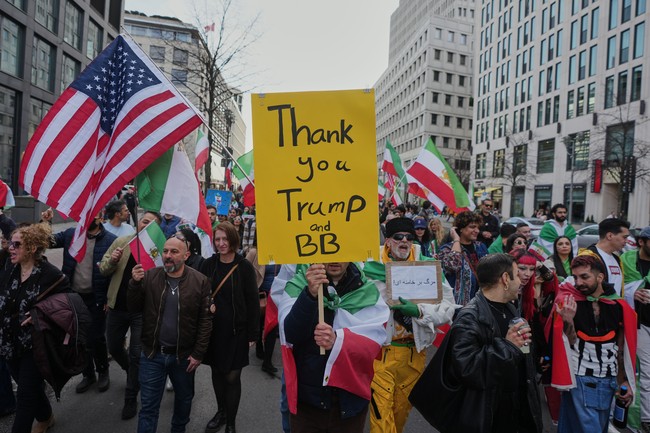
The Trump administration has taken a direct approach to the Iranian people, bypassing Tehran and delivering a concise message of support for freedom, opportunity, and self-determination while criticizing a regime that funds terror and crushes dissent. This article explains what that message contains, why it matters now, how it fits into broader U.S. policy, and what conservative leaders have said in public about backing the Iranian people.
Back in January, President Donald Trump told the Iranian people, “Help is on the way.” That promise shifted from rhetoric to action in February when the administration released a targeted public message aimed at Iranians rather than the regime. Conservatives see this as a long-overdue correction: for decades, some leaders talked tough while leaving ordinary Iranians to suffer under brutal rule.
https://x.com/MOSSADil/status/2060789414024946055
The new State Department video, narrated in Farsi, intentionally speaks across the heads of clerical rulers to the men and women living under their control. It underscores themes familiar to conservatives: personal liberty, economic opportunity, national sovereignty, and a clear distinction between the Iranian people and the regime that oppresses them. By airing on Persian-language outlets, the message is meant to reach Iranians both inside and outside the country despite lingering internet curbs.
The video is blunt about where blame lies and why the United States will not conflate the people with their rulers. It stresses that Iran’s future belongs to its citizens, not to those who prioritize funding terror and pursuing nuclear weapons over domestic prosperity. That framing reinforces a conservative foreign policy line: support freedom and punish bad actors without accepting false equivalence between authoritarian governments and their people.
The narration makes the case for basic human aspirations as universal: opportunity, stability, and the right to speak and live without fear. It also paints a picture of Iran’s potential—talented youth, natural resources, and an educated populace—arguing that those assets are wasted while the regime siphons resources into violent activity abroad. This appeals to the American conservative belief that freedom and markets unlock national greatness, and that repressive regimes are the obstacle, not the people.
The State Department timing is notable. The message coincides with the partial restoration of internet service after an 88-day blackout following widespread protests. Even with some access restored, restrictions remain, so the administration chose to use external Persian-language channels to get the message in anyway. That decision reflects a pragmatic, results-oriented approach favored by many Republicans: use available tools to support dissidents and amplify pro-freedom voices.
Embedded within the message is a moral argument about accountability. The video calls out the regime’s priorities plainly: funding terror and pursuing a nuclear bomb while denying Iranians basic rights. It argues, in essence, that American policy can and should separate its negotiations with a hostile government from its sympathy for the population suffering under that government. For conservatives, that separation is not hypocrisy; it is clarity.
Republican leaders have echoed that clarity. In March, Secretary of State Marco Rubio said, “We hope the Iranian people can overthrow the government.” That statement aligns with a strand of conservative foreign policy that supports regime change when a government is fundamentally illegitimate and hostile to its neighbors and its own people. It also recognizes the messy reality inside Iran: opposition forces are divided and need unity and support to succeed.
Among Iran’s opposition figures, Crown Prince Reza Pahlavi remains a prominent voice advocating a return to liberty and rule of law, and many expatriates view his platform as a blueprint for a different future. At the same time, internal opposition remains fractured among monarchists, reformists, and ethnic movements, which complicates any straightforward path to overthrowing the regime. Conservatives who back the Iranian people argue that outside pressure and direct broadcast messaging can help create the space for unity and leadership to emerge.
While U.S. negotiators pursue diplomatic channels, the administration is simultaneously signaling moral and practical support for those inside Iran who want change. The video’s message reiterates that America sees the people of Iran as partners in a future shaped by freedom, not as adversaries because of their government. That rhetorical stance matters: governments that rely on fear respond to isolation and targeted pressure, while direct outreach can empower citizens.
The human-rights record of Tehran remains dire, with executions and crackdowns continuing even as talks elsewhere proceed. The administration’s message highlights those abuses and ties them to the regime’s external aggression, framing American policy as defending both national security and universal liberty. For Republicans, that dual focus—security plus human freedom—is the right recipe for confronting a hostile theocracy while supporting the people who deserve a different future.
Delivering a message directly to civilians in a closed society is not novel, but it is politically significant when backed by an administration willing to call out tyranny without softening its language. This approach threads conservative priorities together: protect the homeland, expose and punish bad actors, and uplift people seeking liberty. The video is a signal that the United States will use both policy and public messaging to stand with those who value freedom over fear.


Add comment